With his imaginative modernist buildings, Antoni Gaudí has left his mark on Barcelona. Here you can discover his architectural gems.
La Sagrada Familia
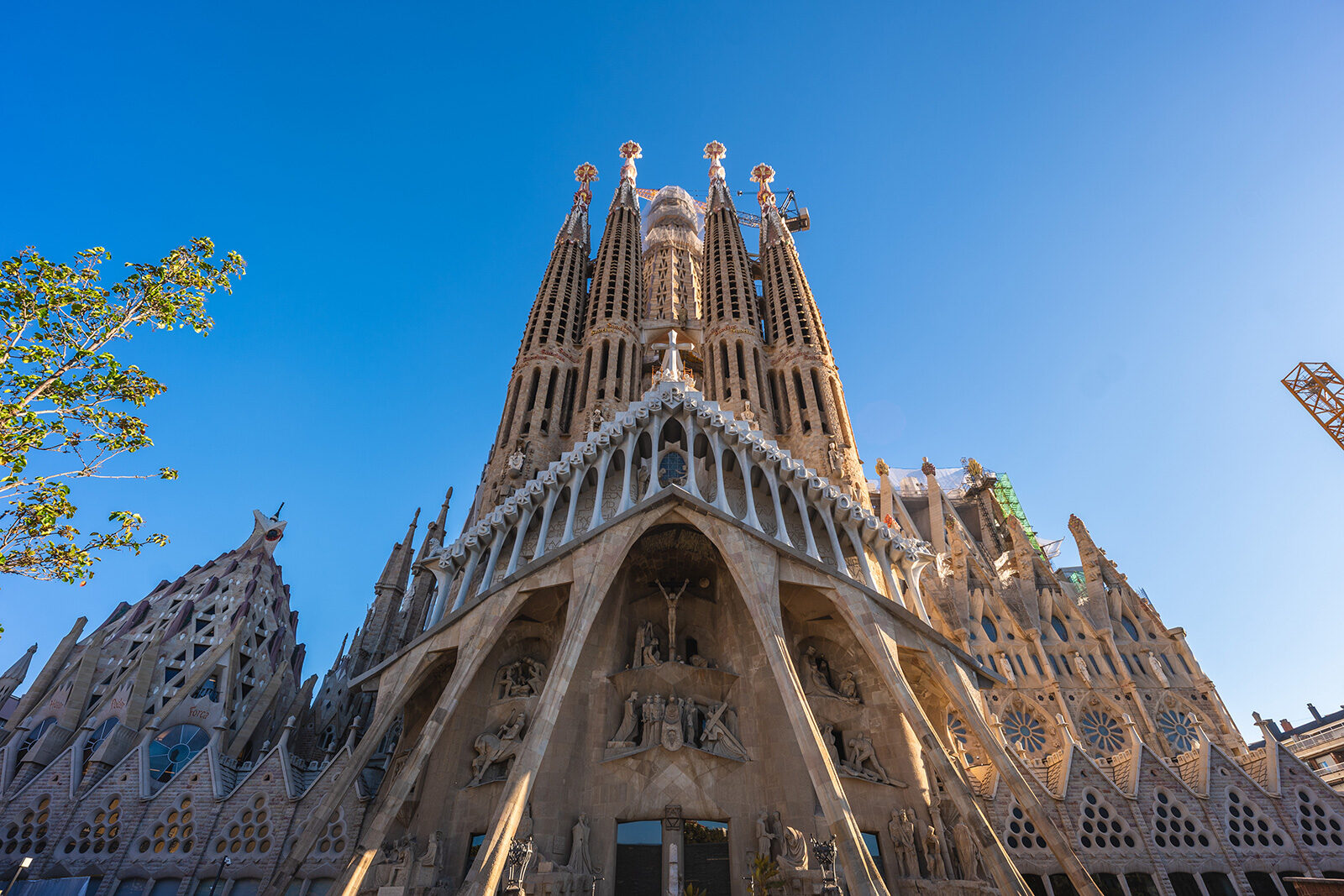
At first glance, La Sagrada Familia (The Holy Family) looks like a giant Gothic church that has been doused in candle wax. As you get closer, a complex sculpture reveals itself, which, in creative natural objects and creatures, fabulates the Bible.
Gaudí’s temple has three facades representing the birth, passion, death and resurrection of Christ, but only the Nativity, apse and crypt were built by him.
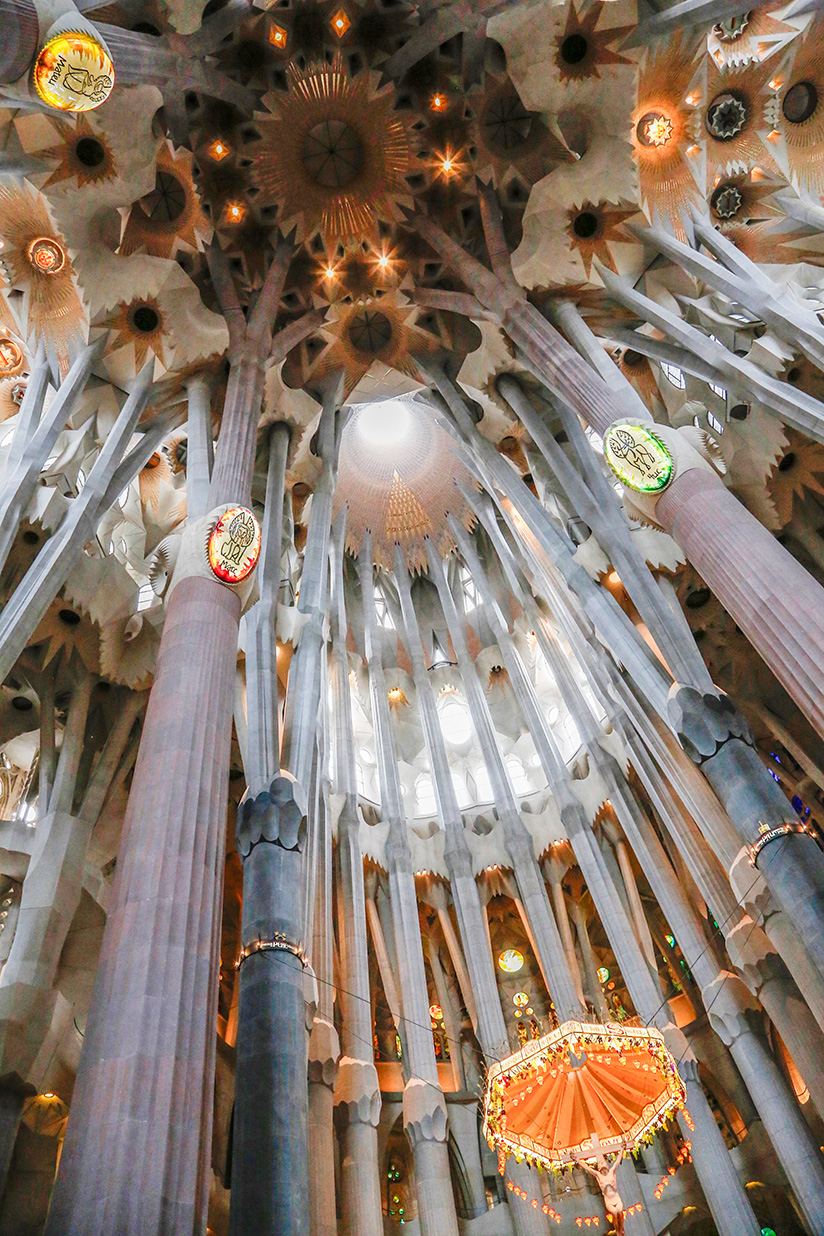

Gaudí’s fascination with nature is evident throughout the temple, including the church, which is decorated with an impressive colonnaded forest. The light that streams in through the colored glass mosaics has been carefully designed by Gaudí. There are blue and green mosaics to the east and yellow and red to the west to create an atmosphere suitable for looking inwards.
Outside, there’s plenty of symbolic detail to study, so make sure you walk all the way around the building.
 If you’re not afraid of heights, take the elevator up to the Nativity or Passion Facade towers, which are open to visitors. From June 10, 2026, you can also visit the Christ Tower.
Head back down the narrow spiral staircase with small rests, where you’ll not only get a great view of the city, but also the chance to get up close to the many detailed decorations.
Antoni Gaudí spent 43 years on his unfinished masterpiece, and he himself expected the construction to last more than 200 years. After Gaudí died and was buried in the crypt, construction has stalled many times. Partly because his drawings were burned during the Civil War and partly for lack of money.
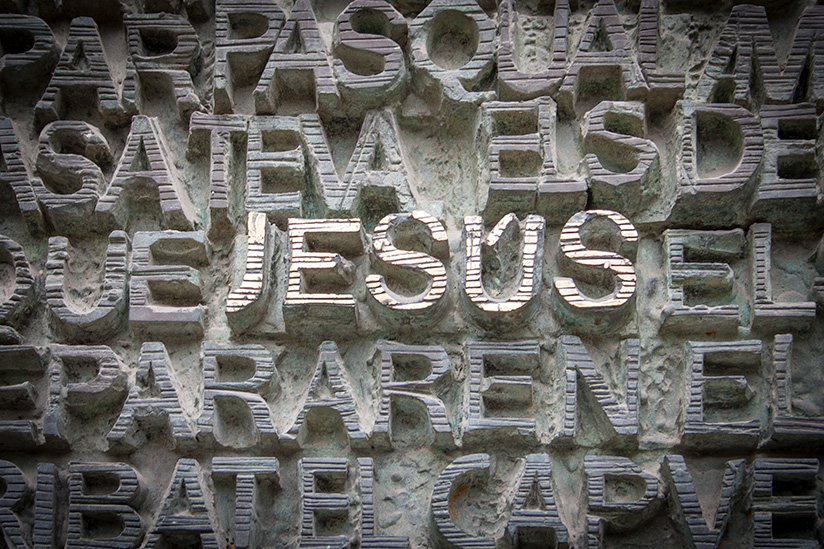 The Sagrada Familia has 18 towers. 12 towers represent the apostles, four represent the evangelists, and in addition there is a Virgin Mary and a Christ Tower.
After the top arm of the 17 meter high cross on the Christ Tower was lifted into place on February 20, 2026, the tower is 172.5 meters high. And La Sagrada Familia is officially the tallest church in the world.
The temple was consecrated by the Pope in 2010 and the entire church is expected to be completed in 2034.
You need to buy a one-way ticket in advance and you can choose with or without access to one of the towers. You can buy tickets for the Sagrada Famila here. (advertising link)
La Sagrada Familia, Carrer de Mallorca 401
Casa Batlló
Located in the Eixample district, Casa Batlló is my favourite of Gaudí’s buildings. The building is known locally as casa dels ossos (house of bones) or casa del drac (dragon house).
When you stand in front of the six-story house, you’ll have no doubt why. The facade is strewn with green, blue and purple tiles around undulating windows with a columned structure that looks like bones and balconies that look like the jawbones of strange animals.
The roof is shaped like a dragon’s back and has a small tower on top with a cross representing Sant Jordi (the guardian angel of Catalonia) with the lance (cross) firmly planted in the back of the dragon.
Gaudí remodeled the house for textile manufacturer Josep Batlló between 1904-1906. The family lived in the house until the mid-1950s.
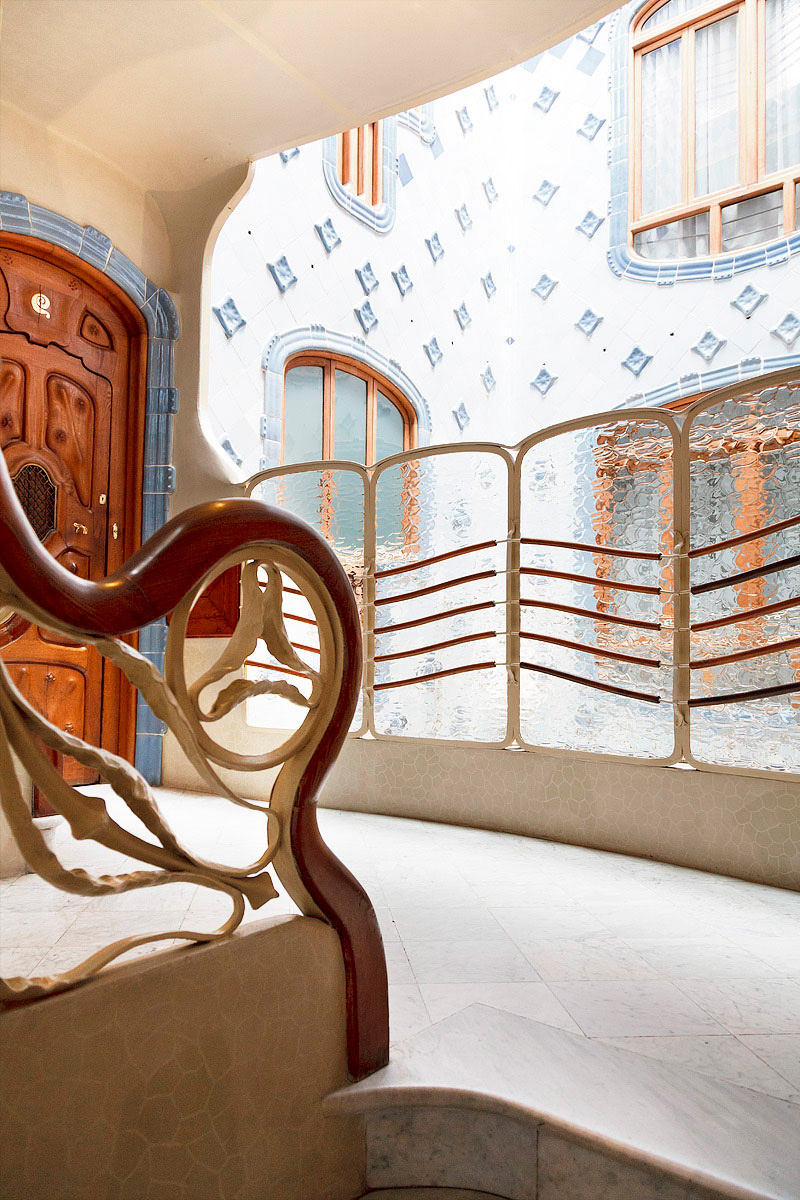
 Inside, everything is in curved shapes. The hall with stairs between floors is decorated with fine white and blue tiles, warm wooden doors and a sculptural wrought iron banister.
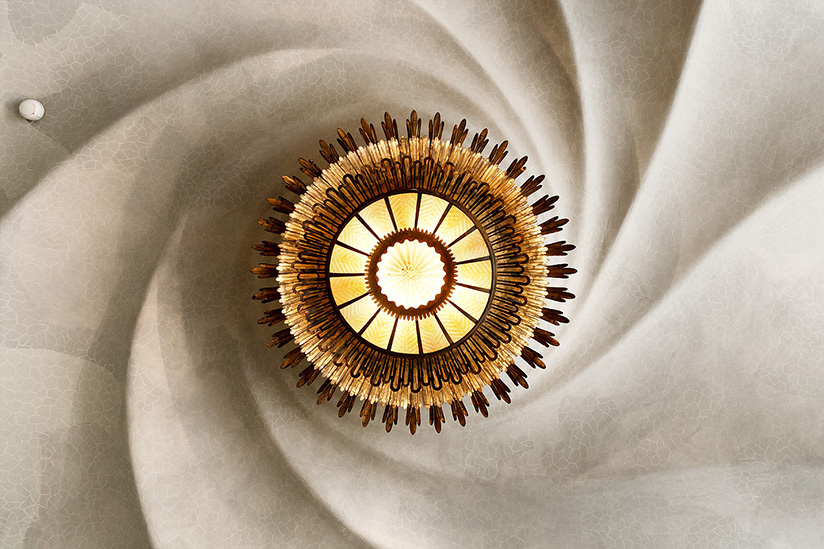
On the first floor, which is the main floor, you’ll find the salon with a beautiful white turtle mosaic ceiling swirling around a lamp shaped like a sun, undulating wooden doors, skylights and large stained glass windows overlooking Passeig de Gràcia.
The furniture in Casa Batlló was also designed by Gaudí. The style continues on the other floors. In the centre of the building there is access to a patio.
There is always a long queue at the ticket office in Casa Battló. That’s why I bought the ticket online, so I didn’t have to queue. If you want to skip the queue, you can buy a ticket to Casa Battló here (advertising link)
Casa Battló, Passeig de Gràcia 43

La Pedrera (Casa Milà)
La Pedrera, like Casa Batlló, is located on Passeig de Gràcia and is actually called Casa Milà, but in Gaudí’s time the locals nicknamed the building La Pedrera (the quarry) because they thought it was horrible. Today, the building is a UNESCO World Heritage Site.
Gaudí built La Pedrera for the wealthy Milà family in 1906-12, partly to serve as the family home and partly as rental apartments. However, it became difficult to rent the apartments because people feared that the rooms with the curved lines were difficult to furnish. Today, part of La Pedrera is a cultural centre and the rest is private housing and offices.
La Pedrera is an experiment in which Gaudí uses mortar, bricks, ceramics and broken cava bottles to recreate the forms of nature.
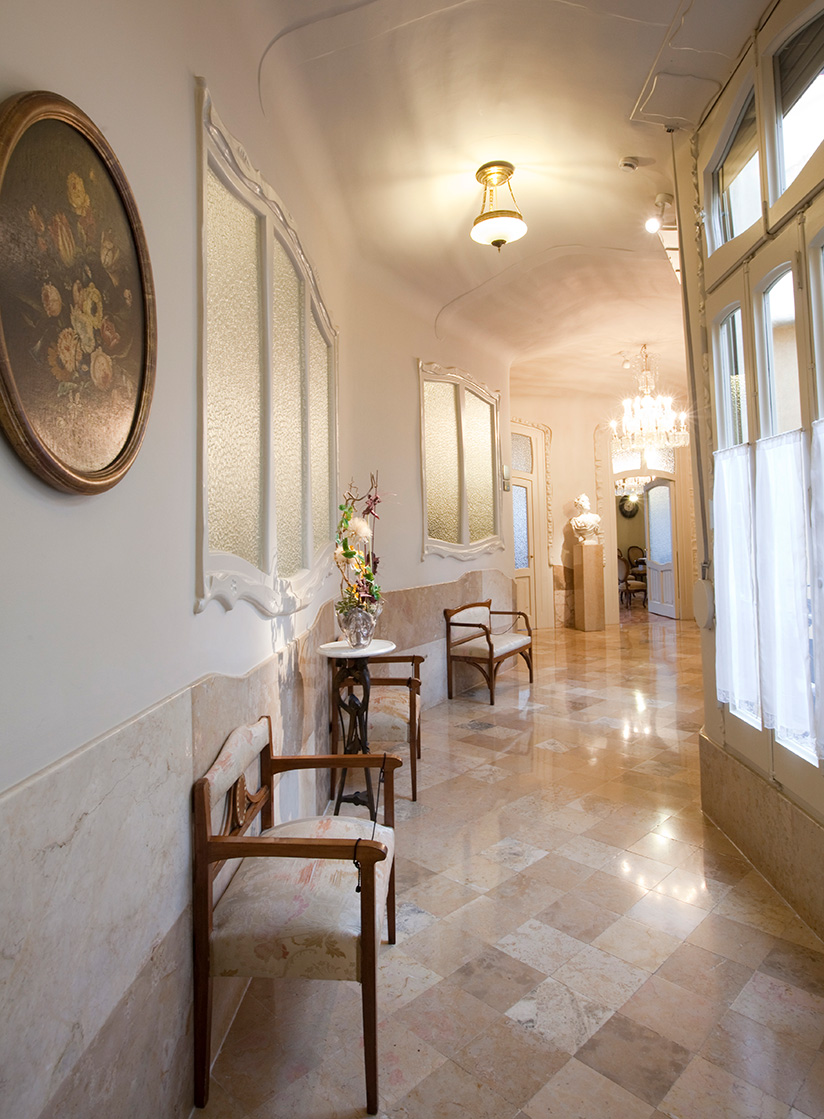
On the 4th floor you can see a reconstructed mansion, which also has furniture by Gaudí. The style of the high arches, the detail of the decorations and the inspiration from nature are typical of Gaudí and the Modernista period. Notice the light, which Gaudí worked on intensively.
You can also explore a collection of original drawings, models and photographs of Gaudí’s buildings.

La Pedrera is most famous for its rooftop ventilation ducts that look like knights from a science fiction movie. From the rooftop terrace, you’ll also get great views of the fashionable Passeig de Gràcia, which is filled with designer shops, cafés and restaurants.
La Pedrera hosts a number of art exhibitions and concerts. The art exhibitions are displayed in the former home of the Milà family. Check the calendar on the website for current events.
Gaudí’s houses are popular attractions, so I bought a ticket in advance. You can also skip the queue and buy your ticket to La Pedrera here. (advertising link)
La Pedrera (Casa Milá), Passeig de Grácia 92
 Güell Park
Whimsical entrance buildings with colorful mosaics and spires inspired by the fairy tale Hansel and Gretel, a salamander, a bench shaped like a dragon and a forest of pillars. Parc Güell is like something out of a fairytale film and will delight children and adults alike.
Industrialist and Gaudí’s patron, Eusebi Güell, bought a 17-hectare park and hired Gaudí to create a small town, inspired by English garden cities, for the city’s wealthy. Gaudí worked on the project from 1900 to 1914, but commercially it was a flop, so apart from roads, paths and the large square, only two of the 60 planned houses and the two porters’ houses at the entrance were built.
The most popular sculptures in the park are the salamander, which – in addition to having an aesthetic purpose – was designed to channel water from an underground reservoir, and the dragon-shaped bench where many couples are photographed on their big day. The huge, curved bench is filled with fine mosaics in all sorts of colours and patterns and is claimed to be the world’s longest.
Gaudí’s house is also in the park, although it was not designed by him. Gaudí lived here for the last 20 years of his life before eventually moving into his workshop at La Sagrada Família. Today, the house is a museum where you can see some of Gaudí’s personal belongings as well as furniture from the Palau Güell.
The park has been open to the public since 1922, but there is an entrance fee for the part of the park with the monuments, and only a limited number of visitors are admitted at any one time. Buy tickets in advance to avoid queues and waiting for space to let a team in. You can buy tickets for Parc Güell here. (advertising link)
Parc Güell, main entrance: Carrer de Larrard
 Casa Vicens
Casa Vicens is located in Barcelona’s Gràcia neighborhood and is the first house designed by Gaudí. He created the house as a summer house for Manuel Vicens between 1883 and 1885.
Gaudí built Casa Vicens with inspiration from several styles, especially the extensive tile work inspired by oriental architecture and the Mudejar style. The house stands today as the first great symbol of the emerging modernista architecture that would become Gaudí’s trademark.
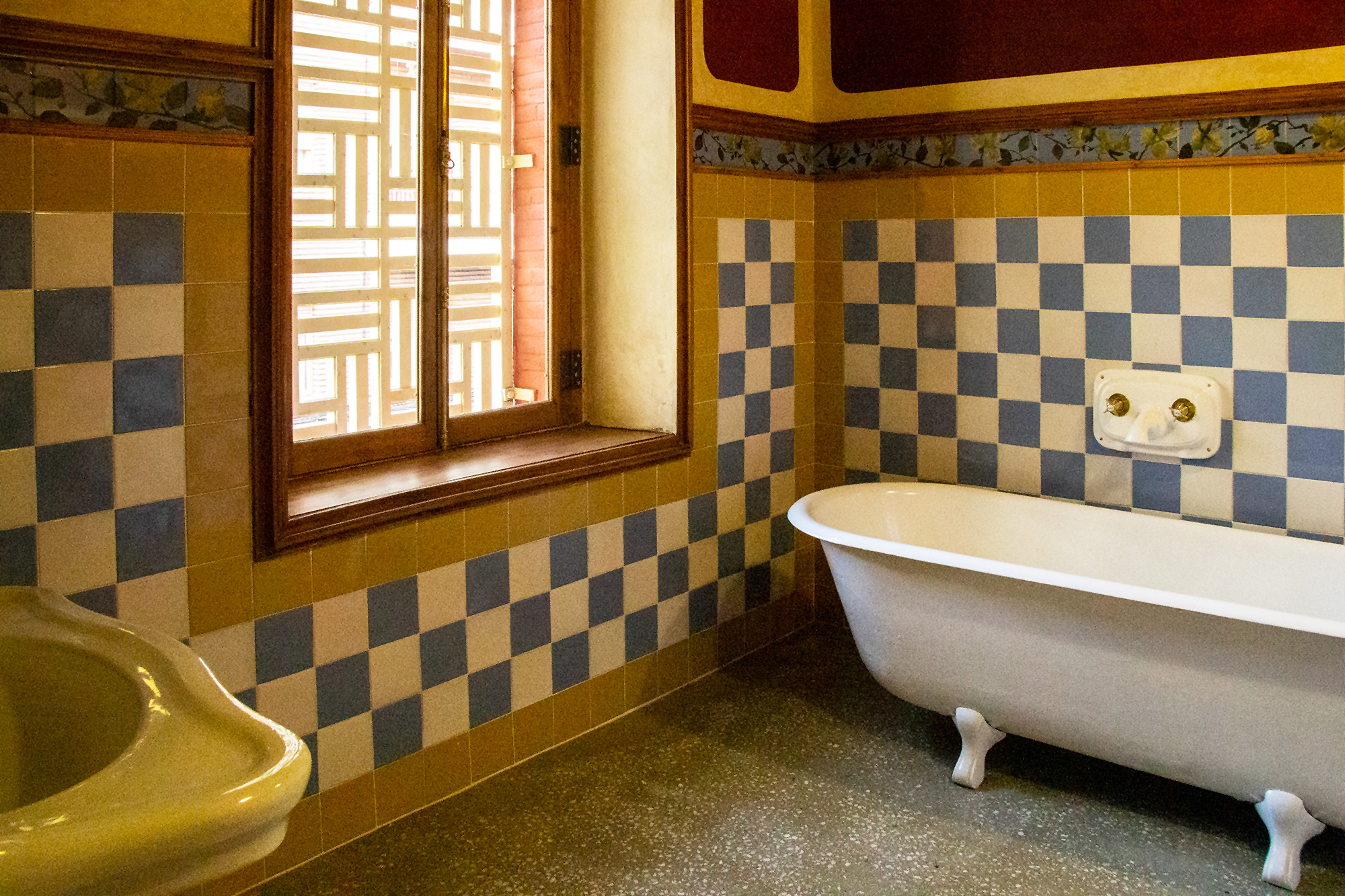 Casa Vicens was a private residence until 2014, when it was bought by MoraBanc and turned into a museum. After an extensive restoration, the house opened to the public for the first time in November 2017. Until then, you could only admire the red brick façade and the characteristic green and white ceramic tiles from the outside.
In 1925, the house was extended by architect Joan Baptista Serra de Martínez. Although not Gaudí’s own work, he approved the plans and today you can see the original building, the extension and the beautiful garden. Casa Vicens was inscribed on the UNESCO World Heritage List in 2005.
Skip the line and buy tickets to Casa Vicens
Casa Vicens, Carrer de les Carolines 20
 Palau Güell
You’ll find Palau Güell in a side street off the Rambla. From the Rambla, you can glimpse the mosaic-clad, sculptural vents on the roof.
The palace is one of Gaudí’s earliest works, commissioned in 1886 by his patron, industrial giant Eusebi Güell, who wanted to expand the family home and had seen the then relatively unknown architect’s talent. The Palau Güell is more somber and heavy than Gaudí’s later works, but the style is his typical mix of Gothic and Arabic inspiration.
The six-story mansion is accessed through two striking wrought iron gates. Inside, you can visit the basement stables with exposed brick columns, the lobby with carved ceilings – and not least – the three-storey central entrance hall worthy of a cathedral.
The hall is crowned by an impressive dome with small holes for light, giving the feeling of looking up at a starry sky. From here you can access the office, dining room, musician’s gallery, guest rooms, billiard room and terrace.
Palau Güell, Carrer Nou de la Rambla 3-5
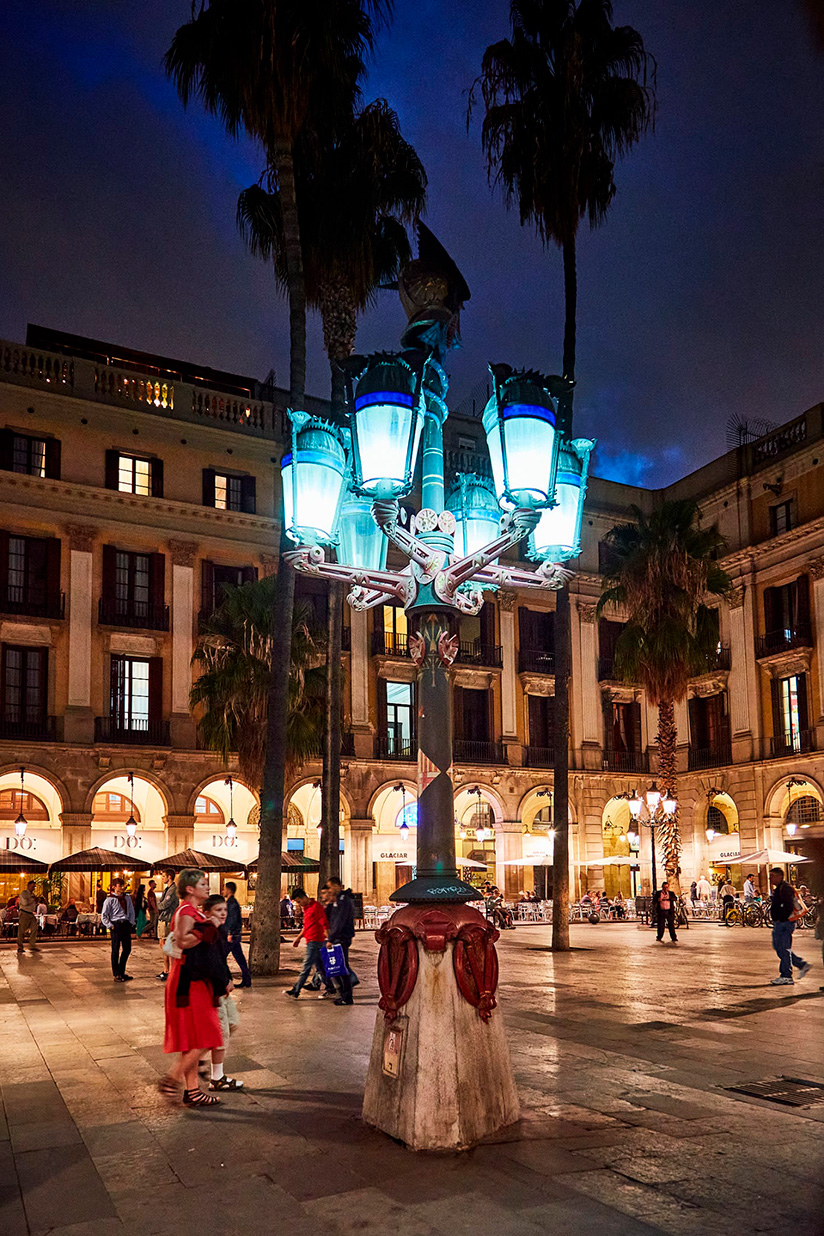
Gaudí’s lampposts
As a newly qualified architect, Gaudí was commissioned by the Barcelona City Council to design streetlights that would light the city streets with gas. Gaudí designed two models – one with three branches and one with six. The original idea was to place Gaudí’s streetlights around the city, but in 1879 the first two six-branch lampposts were inaugurated in Plaça Reial.
Later, Pla de Palau and Passeig d’Isabel II (then Passeig Nacional) were each adorned with two lampposts with three branches. The two lampposts on Pla de Palau are still standing, while those on Passeig d’Isabel II have been lost over time.
The lamp posts are created from a marble and cast iron column adorned with red, blue and golden colors. Note the top, which is crowned with a heraldic helmet with wings and two snakes coiled around the pole – a symbol of the god Mercury and trade in Barcelona.

Casa Calvet
Built between 1898 and 1900, Casa Calvet is one of Gaudí’s early works. It was commissioned by textile manufacturer Pere Màrtir Calvet, who had a shop in the basement and ground floor, while the upper floors were used for private accommodation.
Casa Calvet is built from stone quarried from Montjuïc hill, among other things. Despite the obvious modernista elements such as the curved roof and ornate wrought iron balconies, the building is often called Gaudí’s most conservative. This is due to the straight lines and symmetry that are not the norm in his organic universe.
Ironically, it was this house – and not his more famous works – that won him the Building of the Year award in Barcelona in 1900.
Today, the ground floor houses an exclusive restaurant where you can still admire Gaudí’s original woodwork and details while dining.
Casa Calvet, Carrer de Casp 48
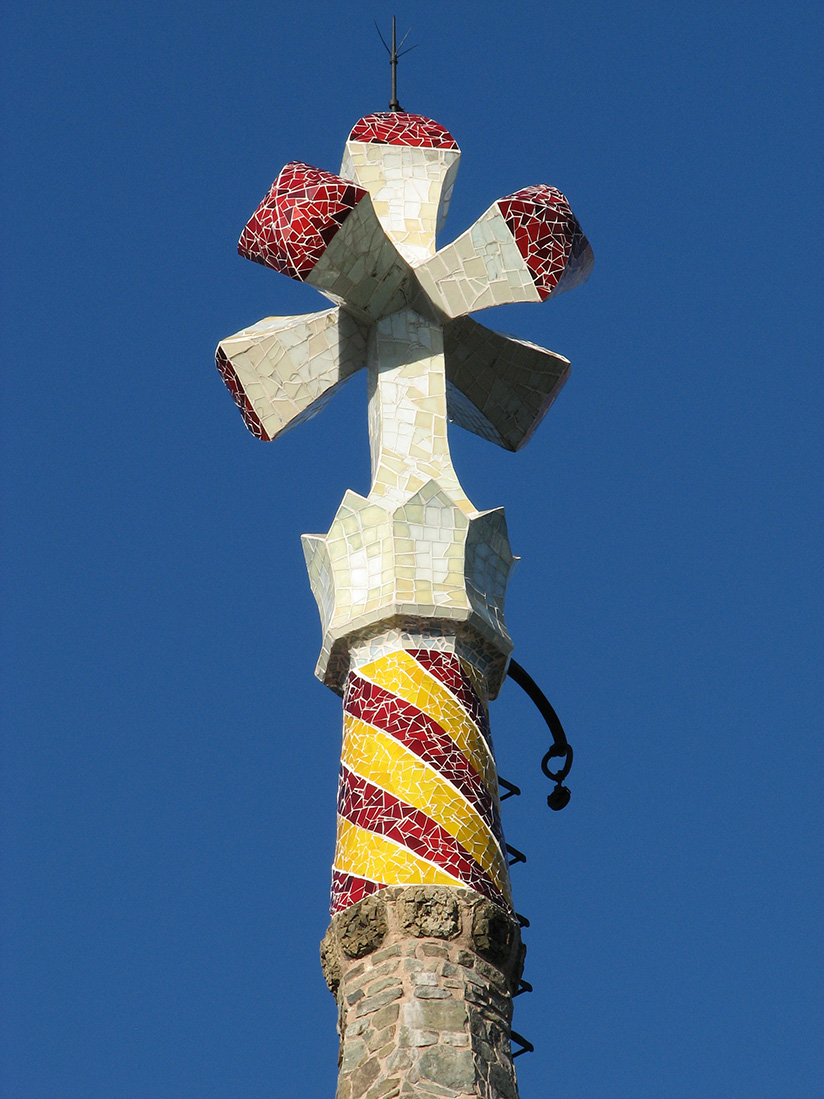
Torre Bellesguard
Bellesguard, also known as Casa Figueras, is one of Gaudí’s more overlooked gems. Located in the Collserola Natural Park, at the foot of Mount Tibidabo, it boasts stunning views.
Gaudí built Bellesguard in the Sarrià-Sant Gervasi neighborhood between 1900-1909 on the ruins of a castle that once belonged to a Catalan king.
Gaudí was greatly inspired by the medieval past, so he built a medieval-style house with towers, fortress walls and roofs.
The house is more angular and gothic than Gaudí’s other works. If you look closely at the roof, you’ll see that the windows and slate slabs form the shape of a dragon’s head. The conical tower of the house is adorned with a four-armed cross, which is typical Gaudí.
Bellesguard was a private residence for over 100 years, but today you can come inside and see the amazing mosaics and enjoy the view. The name – bell esguard – refers to the beautiful view.
Skip the line and buy tickets to Torre Bellesguard (promotional link)
Torre Bellesguard, Carrer de Bellesguard 20
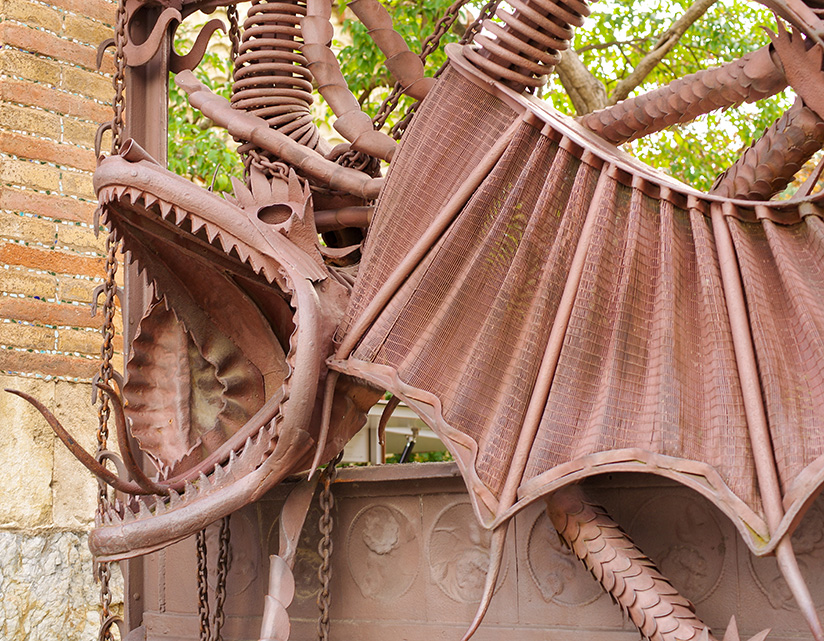
Pavellons de la Finca Güell
On Avinguda de Pedralbes, in Barcelona’s Pedralbes neighborhood, you’ll find Gaudí’s impressive dragon gate. It’s a stunning combination of engineering and innovation.
Finca Güell was then the country house of Eusebi Güell. From 1884 to 1887, Gaudí built two gatehouses and redesigned the garden. At the gate, a giant, fearsome metal dragon guards the gate with an impressive attention to detail.
The dragon has movable, bat-like wings and a two-part tongue. When the gate was in use, the dragon’s mouth opened when you opened it. It’s raw, industrial and innovative at the same time.
The gatehouses are built in stone with arches and geometric decorations in ceramic. You can only admire the gate and buildings from the outside.
Pavellons de la Finca Güell, Avinguda de Pedralbes 7

Colonia Güell
Hop on the local train and head to the town of Santa Coloma de Cervelló, a 20-minute train ride outside Barcelona. Here you’ll find Gaudí’s impressive factory town Colònia Güell, which was built for textile workers.
The factory was owned by industrialist and art patron Eusebi Güell, who built the industrial village with facilities such as townhouses, school, shops, gardens, gardens, theater, an athenaeum and a church to improve the quality of life of textile workers.
Several modernist architects of the time were involved in the construction. Gaudí was hired to design the church and was given a free hand. The church was to have consisted of an upper and lower nave, side towers and a bell tower, but when money ran out, only the crypt was completed.
Despite this, you can admire Gaudí’s engineering genius here. The crooked, tree trunk-like columns and walls bend imaginatively and unnaturally. It was here in the crypt that Gaudí tested the techniques he later used for La Sagrada Família. There are also plenty of decorative mosaic tiles (trencadís), and the whole organic work integrates beautifully with the natural surroundings.
The textile factory closed in 1973, so the working life of the past is gone. Nevertheless, make sure to walk around the entire village with its beautiful houses. The houses are still inhabited and have undergone renovation since the early 2000s. There are also few tourists, so it’s a great place to take a breather.
Buy tickets to the crypt in Colonia Güell (promotional link)
Colonia Güell, Carrer de Claudi Güell 6, Santa Coloma de Cervelló
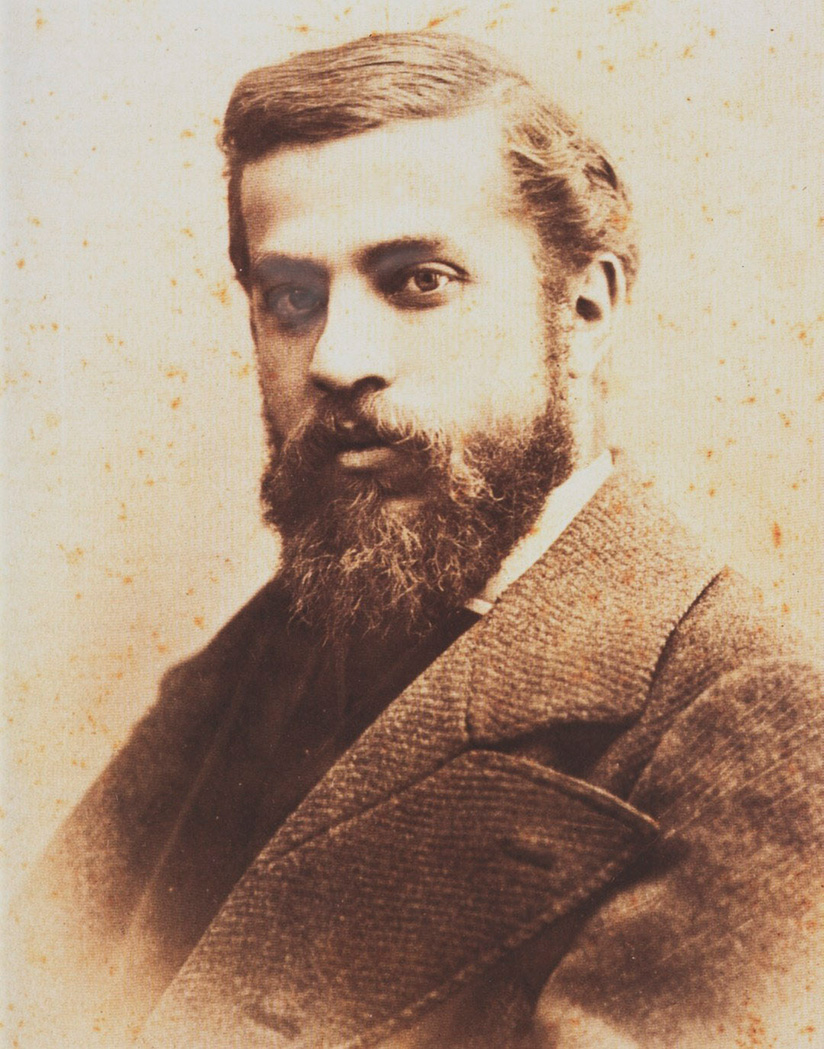
Antoni Gaudí in Cornet
- Born: June 25, 1852 in Reus (south of Barcelona)
- Education: Architect from the Escuela Técnica Superior de Arquitectura de Barcelona (1878). When he received his diploma, the principal said: “We have either graduated a madman or a genius. Time will tell”
- Leading figure in Catalan modernism. He blended Gothic, Arabic architecture and natural forms. He saw God in nature and his works are steeped in religious symbolism – most are crowned by his characteristic four-armed cross
- His famous mosaic technique, created from beaten ceramic and glass, is called trencadís. The technique was inspired by Arabic tradition and became a trademark of Catalan modernism
- Died on June 10, 1926 in Barcelona. He was run over by a tram on his way to church and died three days later. He is buried in the crypt of his life’s work, La Sagrada Família
More travel tips for Barcelona
If you’re visiting Barcelona for the first time, read the guide to Barcelona for beginners. Also check out the guide to different experiences in Barcelona.
If you’re looking for a stylish hotel, check out my guide to Barcelona’s best boutique hotels.
If you like to breathe in the local life, read the guide to Barcelona’s hip Poblenou neighborhood and Danish Maja’s insider tips for the Sarrià neighborhood.
Find dining inspiration in the guide to vegetarian restaurants in Barcelona, Barcelona’s best tapas bars and great restaurants in Barcelona.
Fancy an excursion? Then read the guide to day trips out of Barcelona.