Stunning mountain and ocean views, lush orange and lemon groves, an artistic atmosphere, unspoiled fishermen’s cottages, Mallorcan stone houses, and modernist buildings. You’ll find it all in these picturesque Mallorcan towns. At the same time, you’ll have plenty of opportunities to soak up the local island atmosphere.
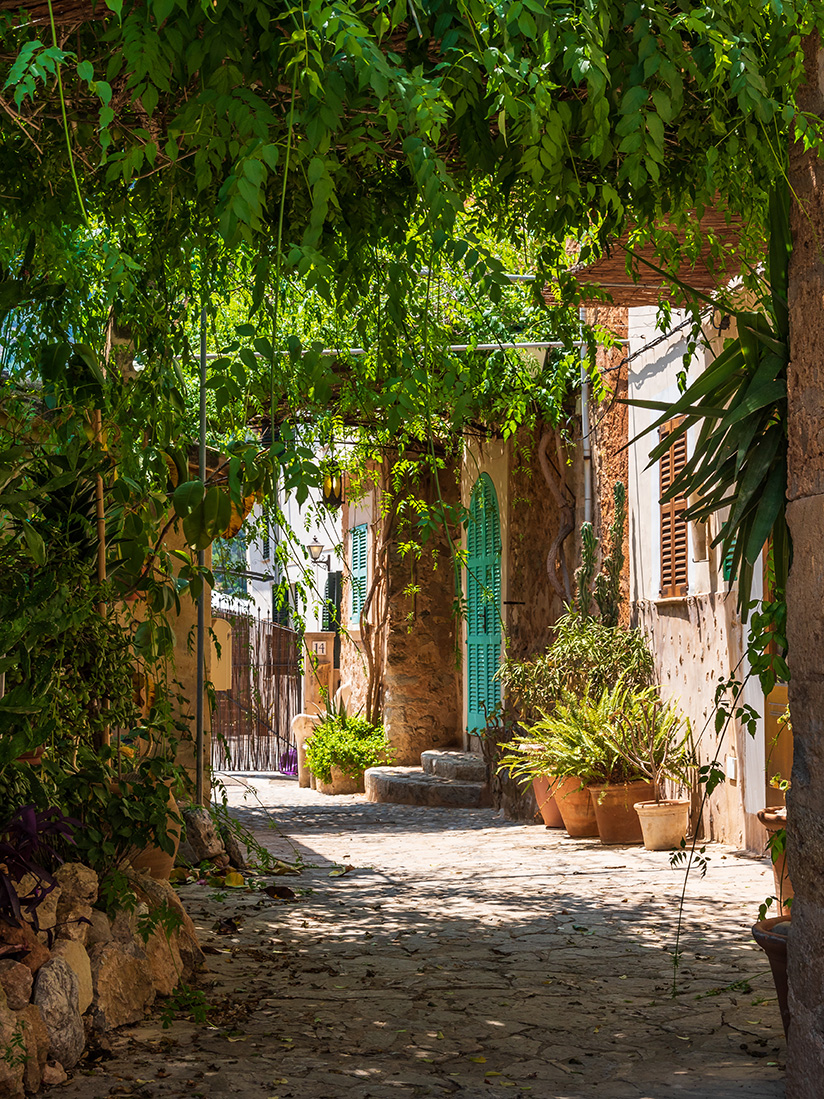
1 Deià, the Bohemian Town
In the winding, narrow streets and alleys, small galleries, artisan shops, and delicatessens are nestled behind the facades of the golden stone houses. Deià, which has historically been a gathering place for artists, exudes a bohemian atmosphere and the charm of a picturesque village.
This beautiful town is situated in a gorge, on a mountainside near Mount Teix, close to the coast, in northwestern Mallorca.
In 1929, the British author and poet Robert Graves (1895–1985) moved to Deià with his partner, the author Laura Riding. Graves is known, among other works, for the novel *I, Claudius * and the autobiography *Goodbye to All That*.
Visit Robert Graves’ home, La Casa de Robert Graves, on the outskirts of town. Here you can soak up the tranquility that drew the artist to the area and get a glimpse inside his living rooms, library, and gardens. Graves is buried in the town’s cemetery, at the top of the village.
Mick Jagger, Sting, and Annie Lennox are among the many other artists who have been drawn to Deià.
About a half-hour walk from the village lies Deià Beach (Cala Deià), a small pebble beach in a cove surrounded by cliffs. Here you can take a dip in the clear, azure-blue water amid picturesque surroundings. If you enjoy hiking, there are plenty of great opportunities in the area.
If you’d like to stay overnight in Deià, check into La Residencia (advertisement link), a unique gem and a peaceful oasis. This 5-star hotel is situated on a mountainside overlooking Deià. Alternatively, you can simply book a table at their restaurant, El Olivo, which offers romantic views.
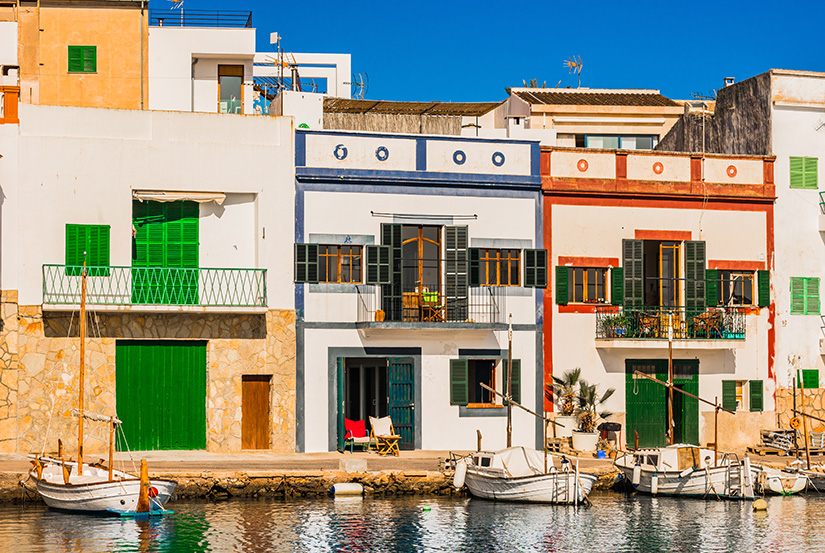
2 The Fishing Village of Porto Colom
Porto Colom—also known as Portocolom—is located in a sheltered bay on Mallorca’s east coast, around the island’s largest natural harbor, near the town of Felantix. The town has largely retained its charm as a traditional fishing village.
Porto Colom is named after Christopher Columbus, who, according to legend, was born in the town. However, there is no evidence to support this.
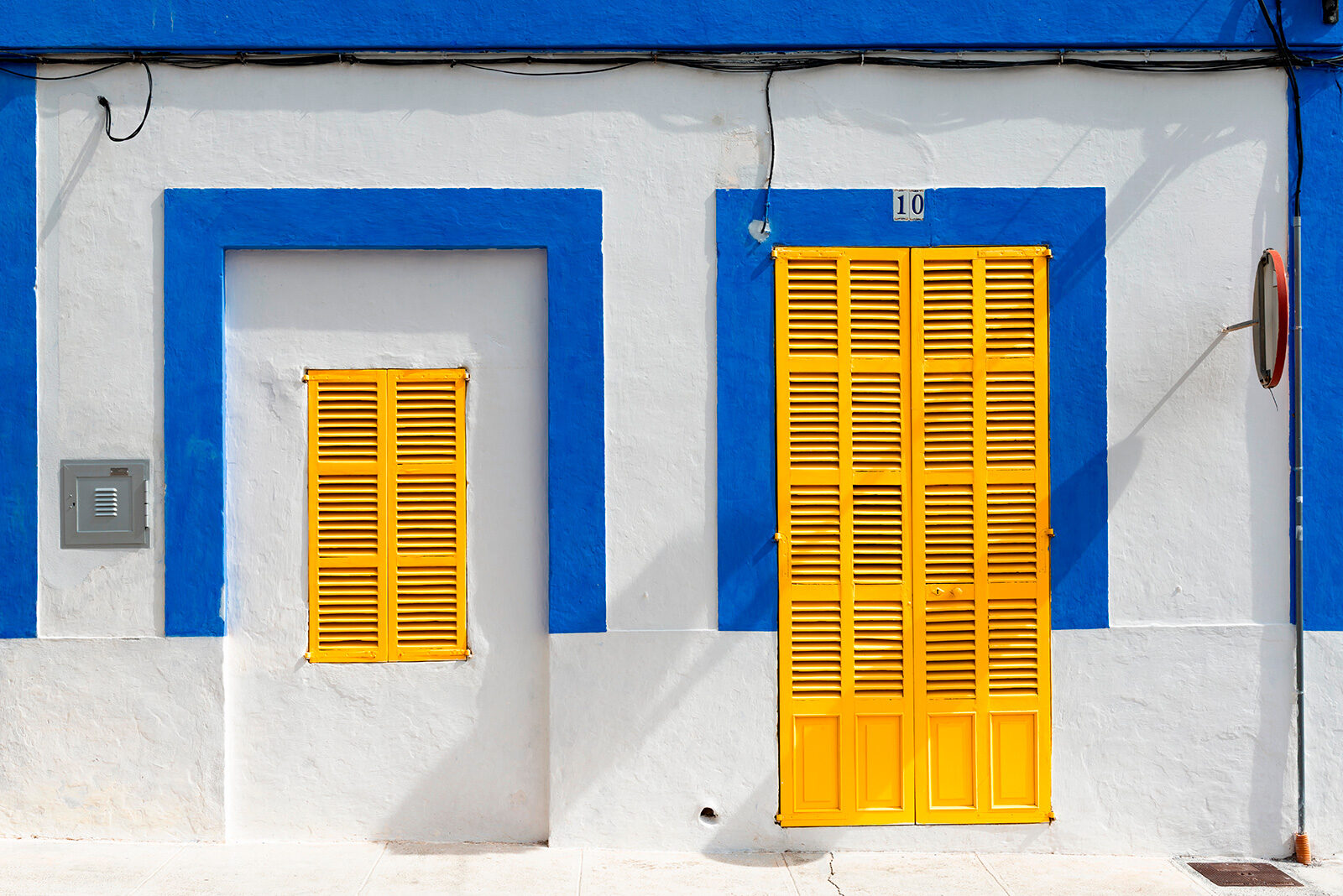
Traditional white and pastel-colored fishermen’s cottages with brightly colored window frames and doors, boathouses, and a boatbuilding yard surround the old natural harbor. It’s one of the town’s most beautiful spots, where you can take home plenty of postcard-perfect photos from your vacation.
Until the 20th century, the port of Porto Colom was a bustling trade route. In addition to serving as a fishing port, it has also been an export port for wine from Felanitx.
Along the harbor pier, you’ll find some truly excellent restaurants that, of course, serve plenty of seafood in idyllic surroundings.
At the entrance to the harbor stands a lighthouse offering a fantastic view of the Mediterranean Sea and the natural harbor. This is also where you’ll find the best sunset in town.
In the modern part of the harbor, sailboats mingle with large yachts. From here, you can take boat tours.
The town’s church, Mare de Déu del Carme dates from the 19th century and is built in the traditional Mallorcan style. The church is dedicated to Our Lady of Carmen, the patron saint of sailors, and serves as a place of worship for local fishermen.
A walk down the charming main street, Carrer de Cristòfol Colom, feels like strolling through a time capsule. The street is lined with historic fishermen’s houses, and there are also several restaurants here.
If you’d like to take a dip, the peaceful Cala Brafi beach is about a 2.5-km walk along the coast from Porto Colom. The beach is surrounded by nature.
Powered by GetYourGuide
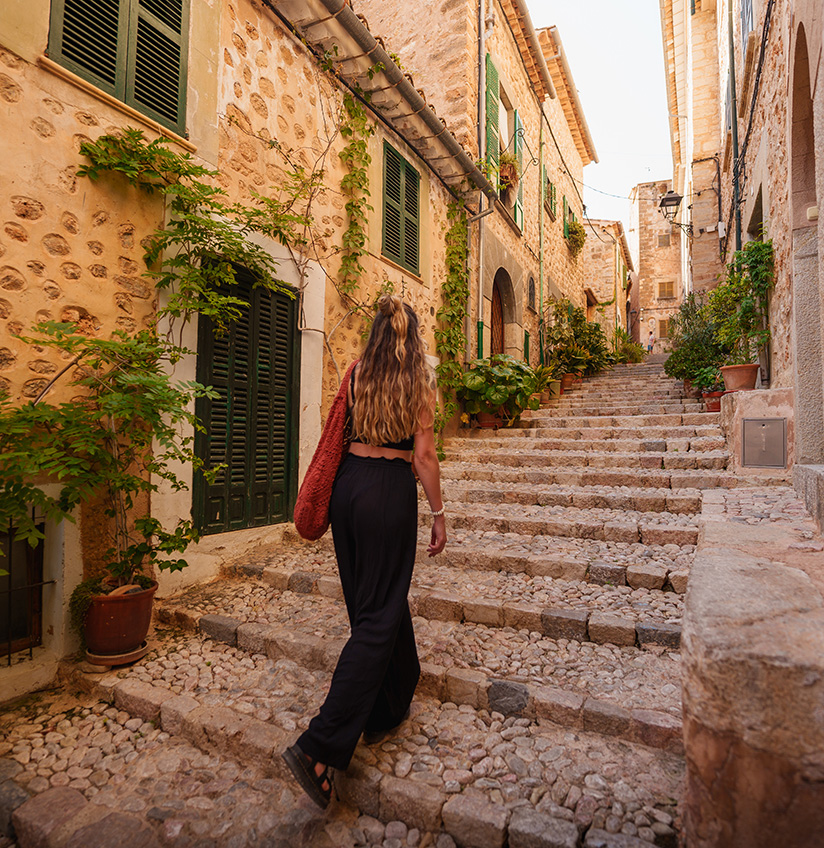
3 The Mountain Village of Fornalutx
High above the Sóller Valley, just a 10-minute drive (or 20-minute bike ride) from Sóller, the rustic mountain village of Fornalutx nestles in the Tramuntana Mountains. The village is surrounded by terraced olive groves and orchards of lemon and orange trees, which offer a particularly fragrant experience when they bloom in the spring.
Fornalutx began as a small Moorish settlement over 1,000 years ago. Today, the town has only a few hundred residents and is known for its authentic charm, which the locals work hard to preserve. The town has won numerous awards for its preservation efforts and is considered one of Spain’s most beautiful villages.
Lose yourself in the cobblestone streets lined with stone houses. Take a break at the charming central square, Plaça d’Espanya, where you can soak up the local atmosphere from one of the cafés’ or bars’ outdoor patios. At the same time, you can sip a glass of wine or a beer and enjoy some delicious local tapas.
Be sure to stop by and visit City Hall, which features a 17th-century defense tower, and the town’s church.
Fornalutx is a great base if you enjoy hiking. The town is located near the GR-221 trail, the Ruta de la Pedra en Sec.
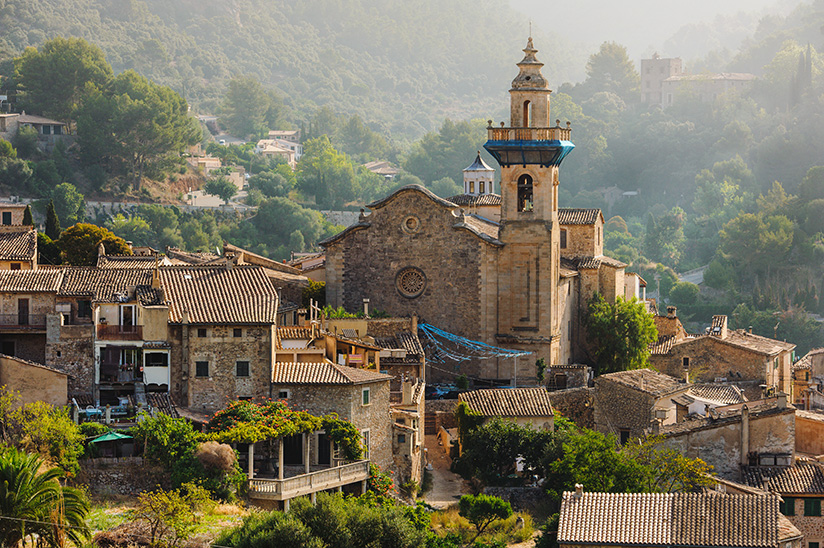
4 Chopin’s Picturesque Valldemossa
Nestled among high mountains, one of Mallorca’s most beautiful villages, Valldemossa, lies in a lush valley. Valldemossa is Mallorca’s highest-altitude town (425 meters above sea level).
The town’s well-preserved, picturesque center with cobbled streets is generously decorated with flowerpots and fine tiled pictures on the houses, and here the quiet life is lived.
The world-famous composer Chopin stayed in Valldemossa in 1938 with his girlfriend, writer George Sand, and he remains symbolic of the town to this day.
Every year, an international Chopin festival is held, attracting many visitors. The former Real Cartuja monastery now houses the Chopin Museum. Here you can see, among other things, Cell No. 4, where the couple lived; the piano on which Chopin played and composed during his stay; and a collection of sheet music and photographs.
The monastery’s old pharmacy and church are also worth a visit. Actor Michael Douglas, who lives outside the town, has set up the Costa Nord cultural center in town, where you can learn about the town and the island’s history.
Valldemossa has plenty of shopping and dining options. It’s worth stopping by the organic producer, Son Moragues, located on a farm that’s over 700 years old on the outskirts of town. Here, you can take part in olive tastings and go on a picnic in the olive groves. In the small shop, you can buy olive oil, ceramics, and textiles.
5 Soller, the City of Oranges
The town of Sóller is also known as the “Orange Town.” It is located in the Golden Valley—also called the Orange Valley—in the northwestern part of Mallorca, in one of the most lush areas of the Tramuntana Mountains. Since ancient times, the town has been known for its lush orange and lemon groves.
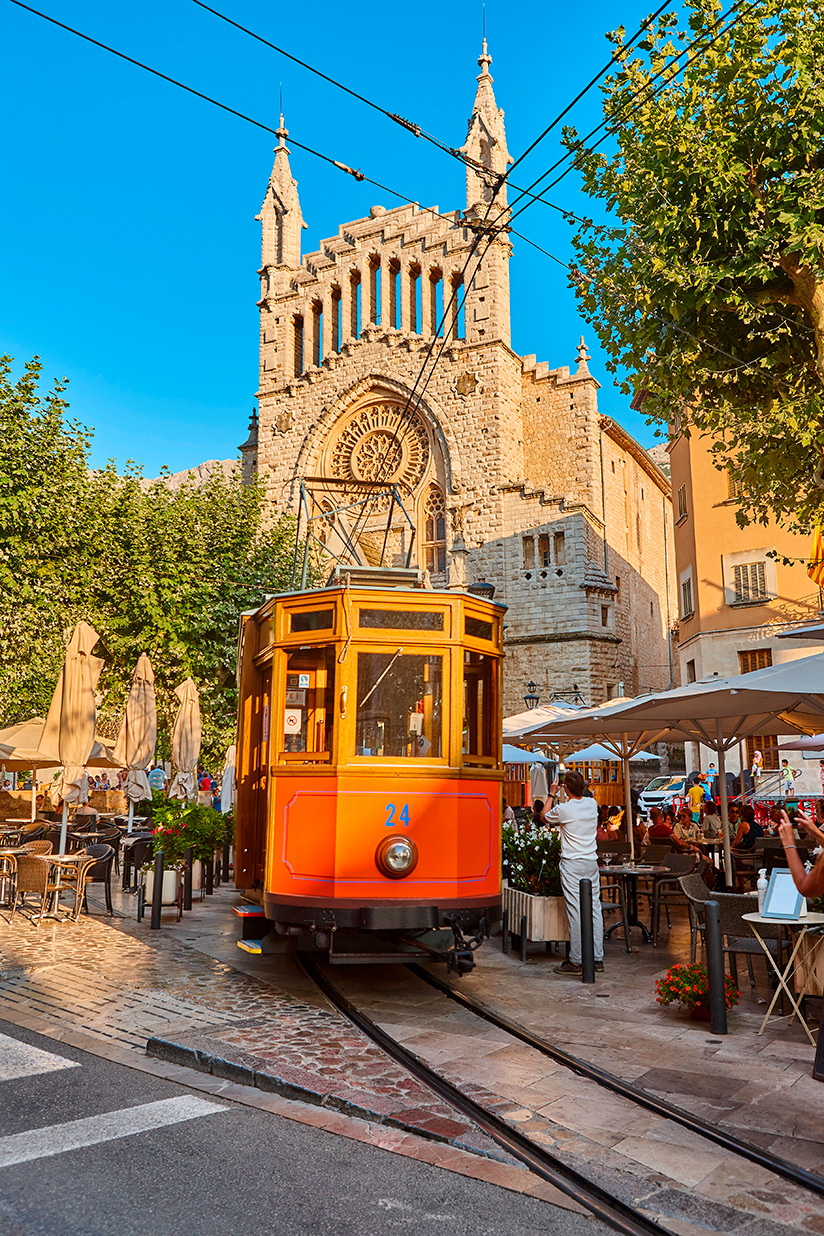
Take the vintage train, El tren de Sóller, from Palma de Mallorca, where you’ll cross mountains, travel through tunnels, and enjoy the most beautiful views of the orange and lemon groves on the trip to Sóller. The trip takes one hour.
At Sóller Station, it’s worth checking out the free exhibition, which features, among other things, ceramics by Picasso and prints by Miró.
Sóller bears the hallmarks of having been a prosperous town for many years. Traditional Mallorcan houses stand alongside grand mansions and modernist buildings. You can admire them as you stroll through the town’s pedestrian streets, which are also lined with shops selling local delicacies and handicrafts.
Of course, you should also try a glass of freshly squeezed orange juice while you’re in town. You can do that at one of the many cafés, including those on the central square, Plaça de la Constitució, where you’ll have a view of the spectacular Sant Bartomeu Church—which features a variety of architectural styles—and several Modernist buildings.
From Sóller, you can hop on the tram, which goes to Port de Sóller and runs along the beach promenade and the harbor. You can also easily walk the route. Take a dip in the waves or relax on the golden sandy beach.
Sóller is also a paradise for foodies. Don’t miss out on tasting the famous Sóller shrimp (gamba de Sóller or gamba roja), which are truly one-of-a-kind. The shrimp are large, juicy, and slightly sweet, and are caught in the Mediterranean Sea around the port of Sóller. Try them at one of the seafood restaurants in Port de Sóller.
Sóller’s location also makes the town a perfect starting point for biking and hiking trips.
Powered by GetYourGuide
More travel tips for island vacations, nature, and villages in Spain
Tenerife is much more than just beaches. Find inspiration in the guide to cultural experiences in Tenerife.
If you’re going on vacation to Granada or elsewhere in Andalusia, don’t miss out on a visit to the white mountain villages of the Alpujarras.
If you love riding trains, hop on the Lakes Train in Catalonia for the most beautiful train ride.
In Asturias, unique nature experiences await in the Picos de Europa, where you can visit a famous sanctuary, explore picturesque lakes, and sample award-winning cheese.