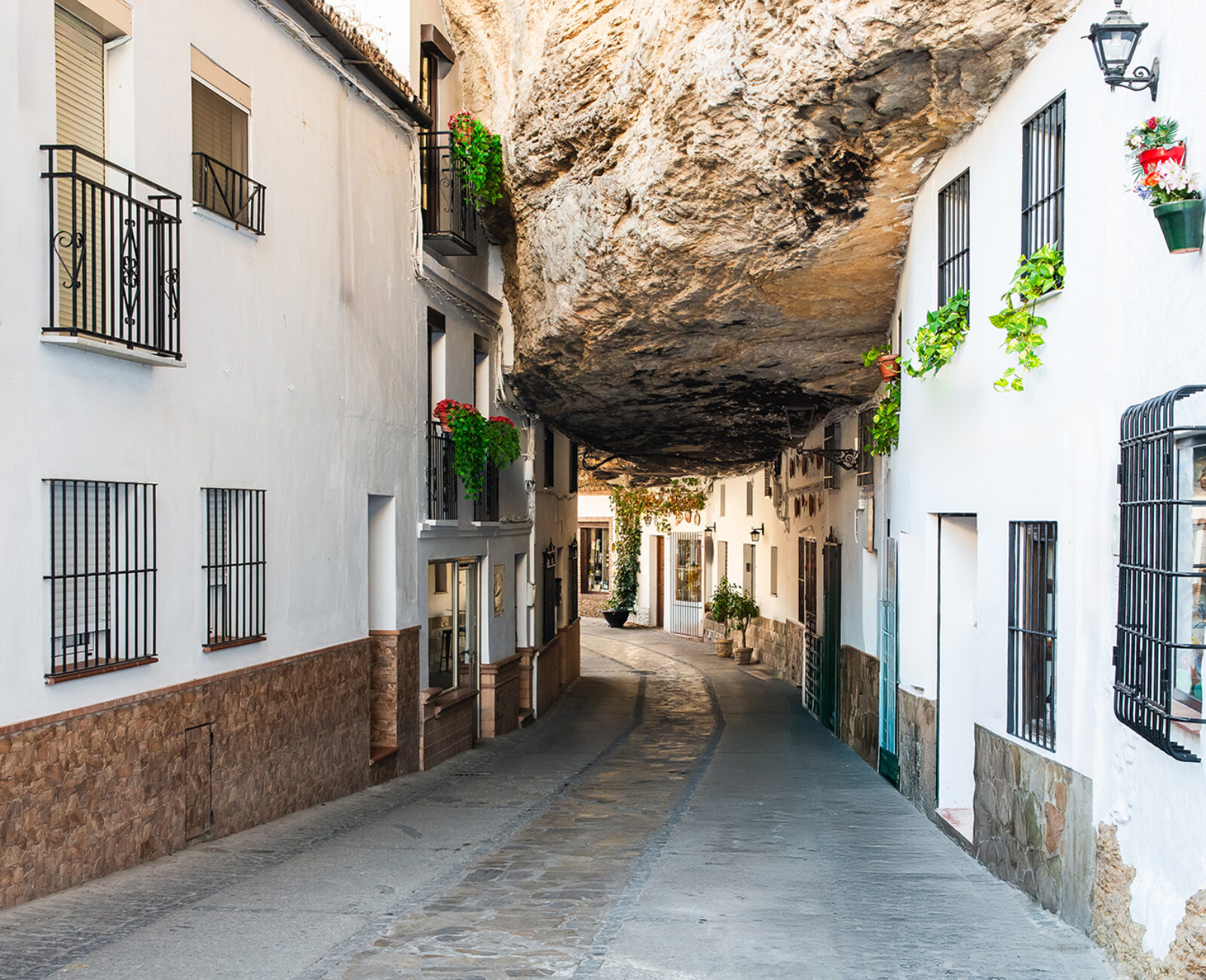
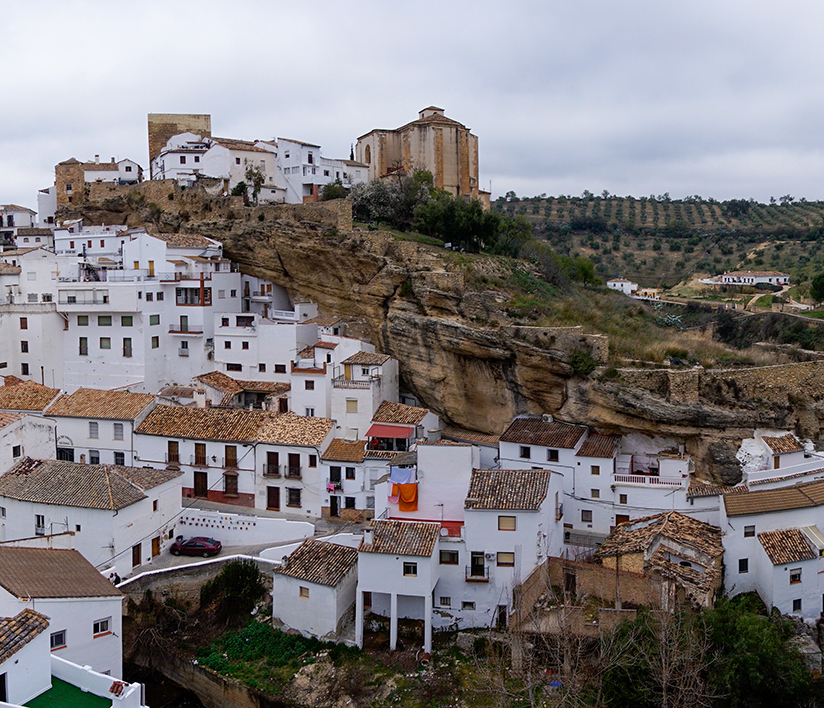
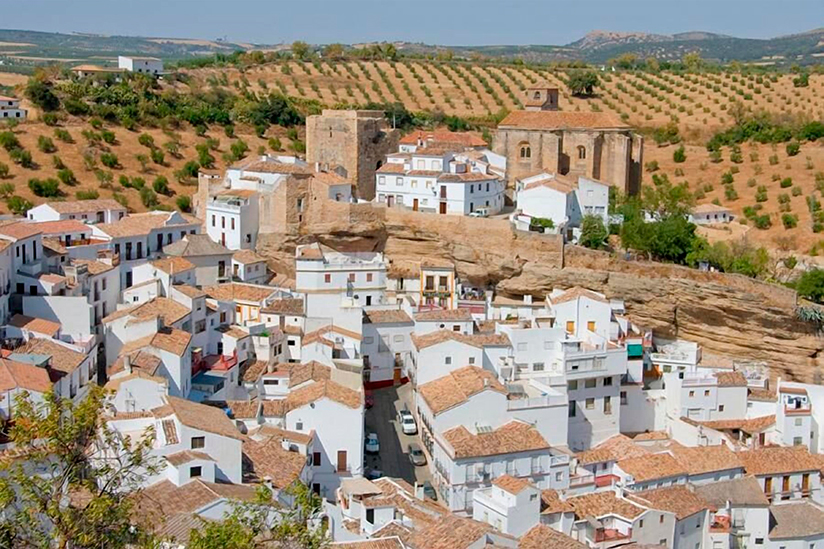
In the province of Cádiz you will find the spectacular little village of Setenil de las Bodegas. The town stands out from the string of white Andalusian villages as many of the houses are built into the rock caves.
After negotiating several steep roads and hairpin bends, the small town of whitewashed houses, Setenil de las Bodegas, reveals itself beautifully and surprisingly. The town’s houses cling to steep, lush cliff sides down to the Guadalporcun River, which runs through the town.
The unusual white Andalusian town(pueblo blanco) is home to around 3,000 people, most of whom literally live under a rock.
Setenil is just 18 kilometres from Ronda and 95 kilometres from Málaga, so it’s a great place to visit if you’re on vacation in one of the popular cities.
Powered by GetYourGuide
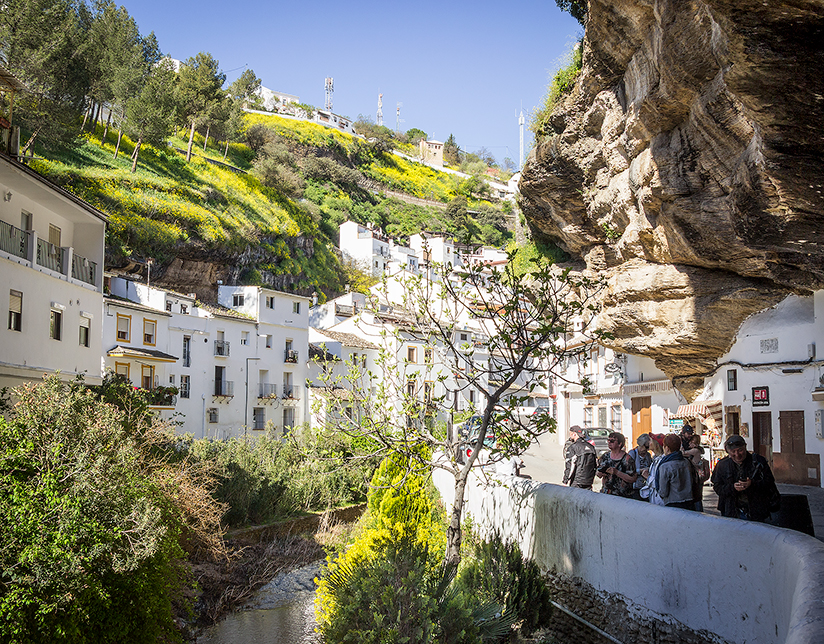 Quiet village life under the rocks
We park on the outskirts of the village and on the way to the center of the village in the valley, I cross small cozy bridges.
The city is quiet. I only meet a few cats and people before I reach the main street, Cuevas del Sol, which is considered one of the most beautiful in Andalusia. The street is half-covered by a cliff edge, giving you a fairytale cave feeling. And here you don’t need an umbrella to shelter from the sun or rain.
As I move further under the cliff edge that hangs over the bars, there are more people. They include both locals and tourists.
Although Setenil de las Bodegas stands out from the crowd of beautiful white Andalusian villages, there are fewer tourists than I expected.
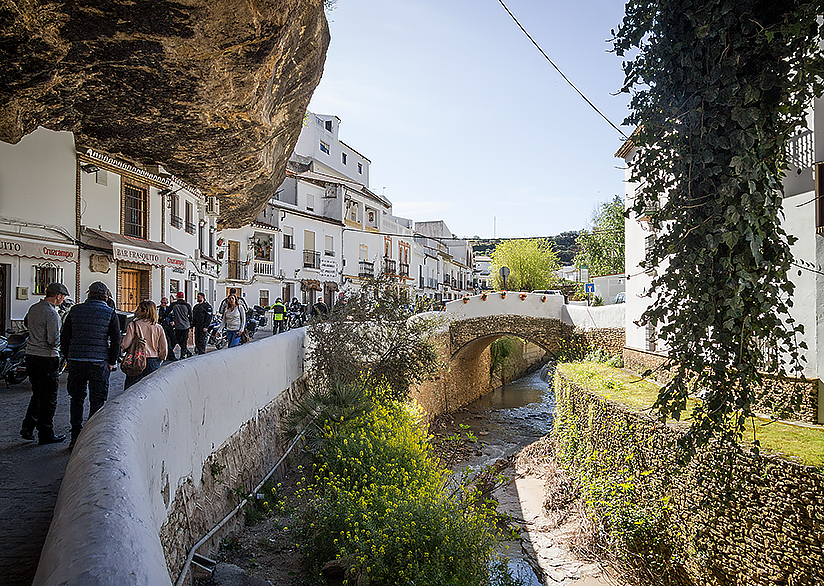
Caves for storing food
Setenil was founded by the Romans and later occupied by the Moors. The name Setenil is thought to derive from the Roman Latin phrase septem nihil (seven times no), which refers to the failure of the Catholics to retake the city from the walls six times. Only in the seventh attempt was it successful. It was in 1484 that modern Setenil came into being.
People settled in the city for practical reasons. The natural caves of Setenil were perfect homes because they could keep the heat out in summer and the cold in winter.
Just as importantly, the cool caves were ideal for storing agricultural products such as olives, almonds and wine – hence the town’s nickname Bodegas (warehouses) – which were grown in the town.
You can still see olive and almond trees blooming on the hills and rooftops of Setenil.
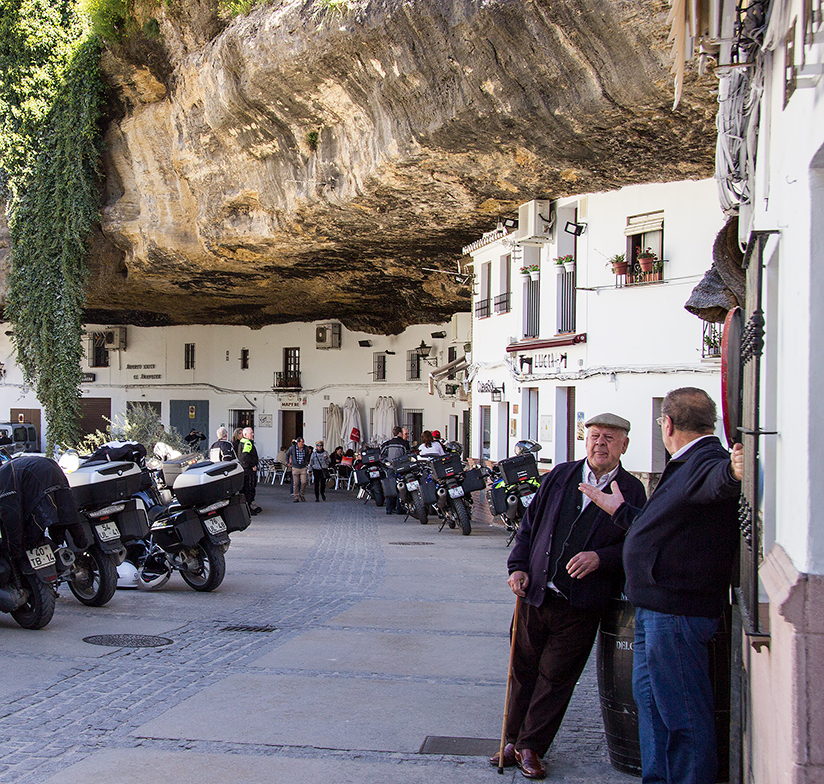
Enjoy a tapa and a drink under the rock
On Cuevas del Sol, bars and small shops sit side by side in the shelter of the cliff. The street is a great place to take a break and enjoy a beer and a tapa. You can also take a peek into the ancient caves. For great sausage, ham and cheese, asparagus and sweet potatoes with honey, head to the bars in town.
There are also plenty of opportunities to study local life. Especially in the mornings, many older men meet over a glass of sherry and exchange the news of the day. If you can speak a bit of Spanish, they’re very open to telling you about the city.
Setenil is known in the region for its delicious cuisine, and especially chorizo, pork and cakes, and the town’s bars are among the best in the region. The town’s farms also supply fruits and vegetables to nearby towns such as Ronda.
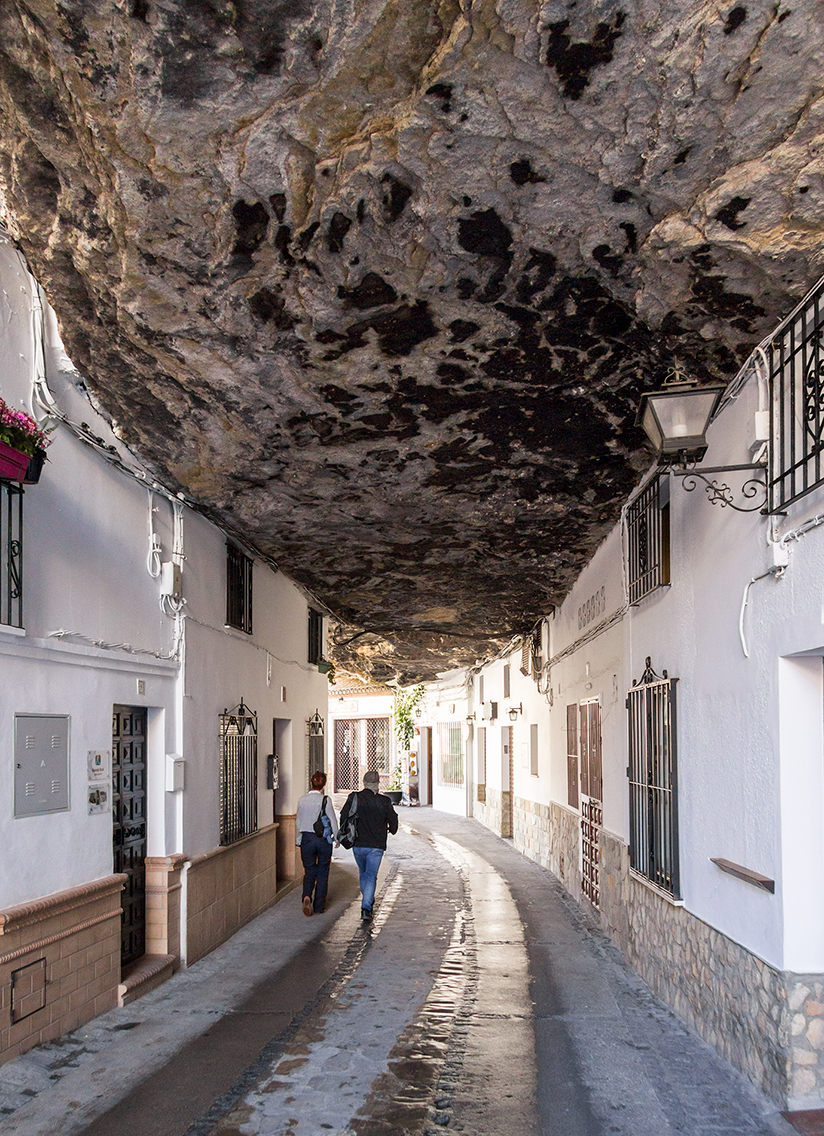
The street with the roof out of rock.
Further into the village is the peculiar little winding street, Calle Cuevas de la Sombra , which is completely covered by a rock wall.
The moisture from the rock drips down my neck as I walk under the rock bridge through the street. To some, the street looks ominous, but the rock doesn’t move and walking under it is an amazing experience. I feel like I’ve been transported to an adventure, despite passing a brand new police car. Through the street’s shop fronts I get a glimpse into the cave houses.
Small castle and charming churches
Despite being a small village, Setenil has several places worth visiting.
Nazari Castle is located at the highest point in town. You have to go through the tourist office to get there. At the tourist office you can also get a map of the village.
The castle was built as a defense in the 12th century, when the city was under Moorish occupation, and at that time it had 40 towers. Today, the castle only has one tower left, which is three storeys high. If you climb it, you’ll get great views.
Next to it is the Moorish and Gothic church, Nuestra Señora de la Encarnación. It was built as a symbol of victory over the Muslims by the Catholic royal couple Isabel and Ferdinand. The couple donated a silk and gold chasuble to the church.
 Where should you sleep in Setenil de las Bodegas?
If you want to stay overnight in Setenil de las Bodegas, there are several options. The town doesn’t have many hotels, but there are several vacation apartments.
If you want to stay in a hotel in a typical Andalusian house under the cliffs, check into TUGASA El Almendral. It has bright, modern double rooms, a pool and restaurant. You can enjoy your meal on the terrace with breathtaking views of Setenil de las Bodegas.
Check availability and prices and book TUGASA El Almendral (advertising link)
The trip to Setenil de las Bodegas
Setenil de las Bodegas is located between Málaga and Seville. If you’re driving, it’s about 1.5 hours from Málaga and 1 hour and 45 minutes from Seville.
I participated in a day trip from Málaga with a guide. The trip was a combined visit to Ronda and Setenil de las Bodegas. It worked really well with an early morning departure from Málaga. There was a great guide on the tour and I had plenty of time to see the cities.
Read more and book the day trip to Ronda and Setenil de las Bodegas (promotional link)
More travel tips for Andalusia
If you want to experience more beautiful villages in Andalusia, I recommend you visit Nerja and Frigiliana. Both are suitable for a day trip from Málaga.
The city of Jerez is also not far away, where I recommend you take a sherry tour of Jerez de las Frontera’s many bodegas. In Jerez de la Frontera you can also watch the Andalusian horses dance in an impressive show. Visit the nearby beautiful and culturally rich city of Seville.
Also visit the cultural city of Córdoba, with its spectacular mosque-cathedral and taste local gastronomy in Córdoba’s restaurants.
In Granada, the Alhambra Palace is a must for history and architecture lovers. Read also the guide to the best things to do in Granada.