The Mosque Cathedral in Córdoba is the largest Arab building outside the Arab world. It’s also a beautiful fusion of styles and religions, and an experience you won’t forget.
Photo: Christian Grønne
Travel declaration:
Spain by Hannes was invited by Córdoba Turismo, Turismo Andalucia and the Spanish State Tourist Office. The organizations had no influence on the content of the article.
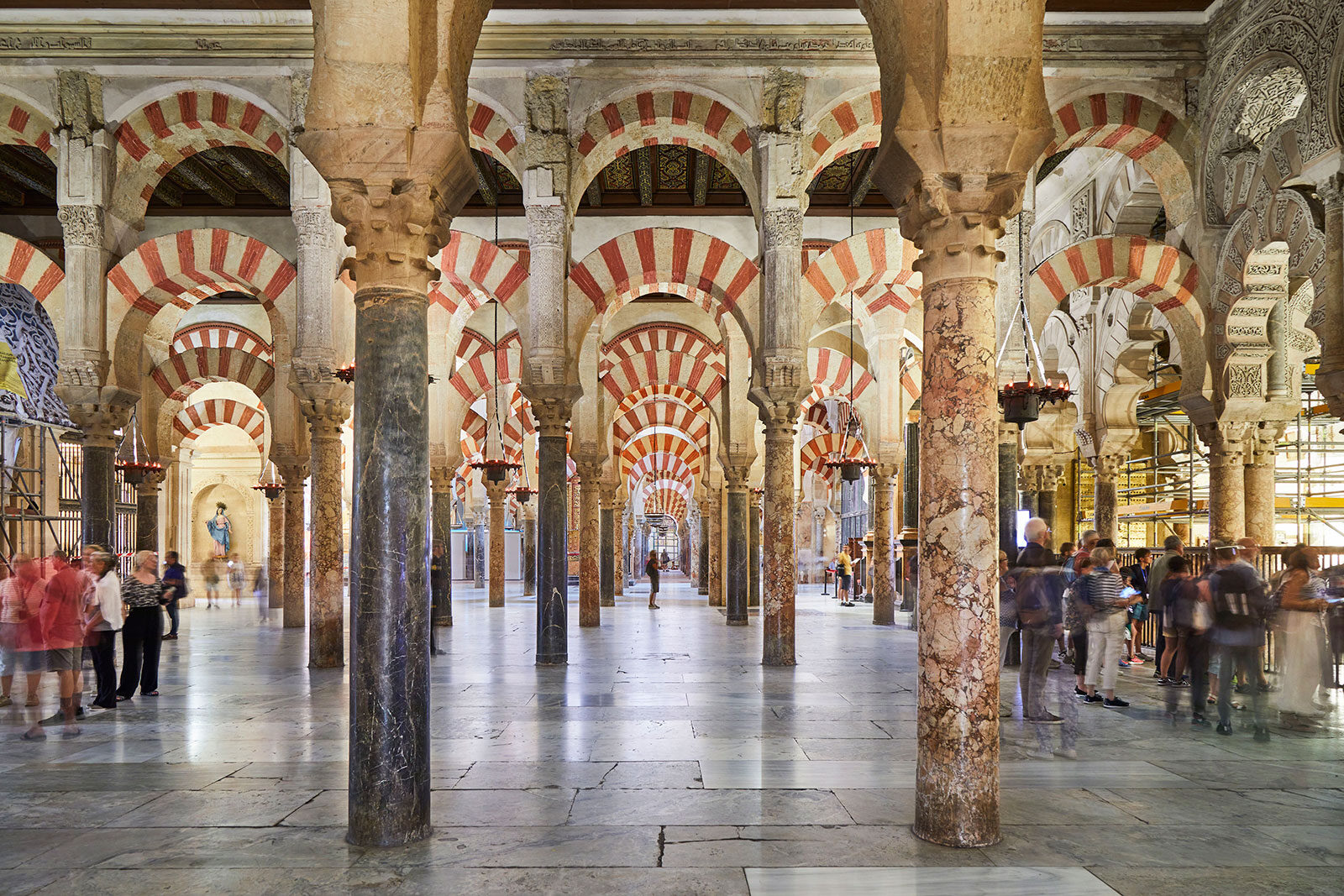
“The columns are made of marble, granite, jasper and porphyry. They recycled what was available. The arches are shaped like an aqueduct and made of red brick and sandstone,” says local guide Rafael Soldevilla.
Meeting under the arches in the forest of 834 columns of the mosque-cathedral, La Mezquita, in the Andalusian city of Córdoba, it’s a particularly compelling experience to stand in the finest example in the world of a mosque converted into a Catholic cathedral. Everywhere I look, Moorish architecture merges with Gothic, Renaissance and Spanish Baroque.
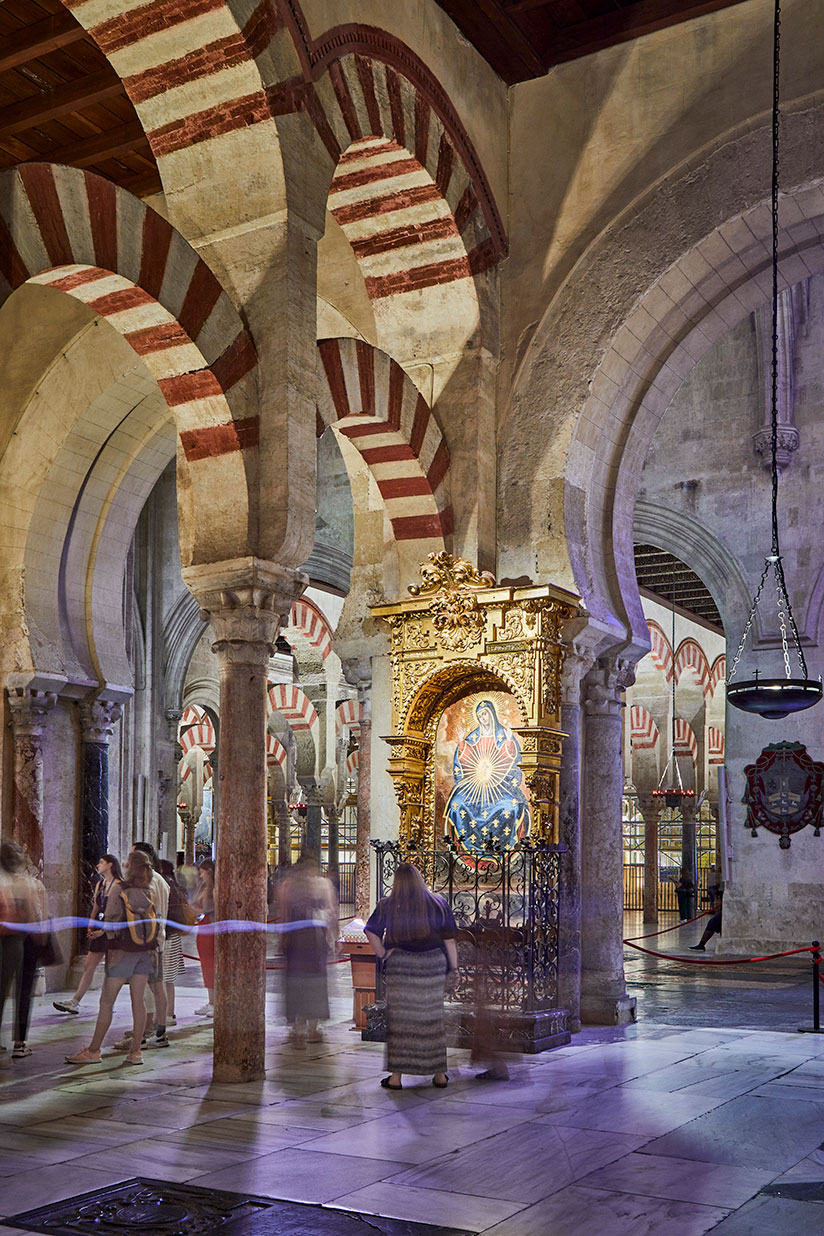 Symbol of the city’s heyday
La Mezquita was built in 785 by order of Caliph Abd-al-Rahman during Córdoba’s heyday. From 711-1236, the city was the capital of al-Andalus under Moorish occupation.
“The mosque had room for 5000 people at the time. Throughout the 9th and 10th centuries it was expanded to its current 23,000 square meters,” says Rafael.
After the Christian reconquest, King Carlos commissioned the cathedral in 1523. It was built in the middle of the mosque and 450 pillars and the minaret had to be sacrificed, among other things, and the mosque was reduced to hold 4000 people.
Today it is one of the most important architectural gems in Spain and a UNESCO World Heritage Site.
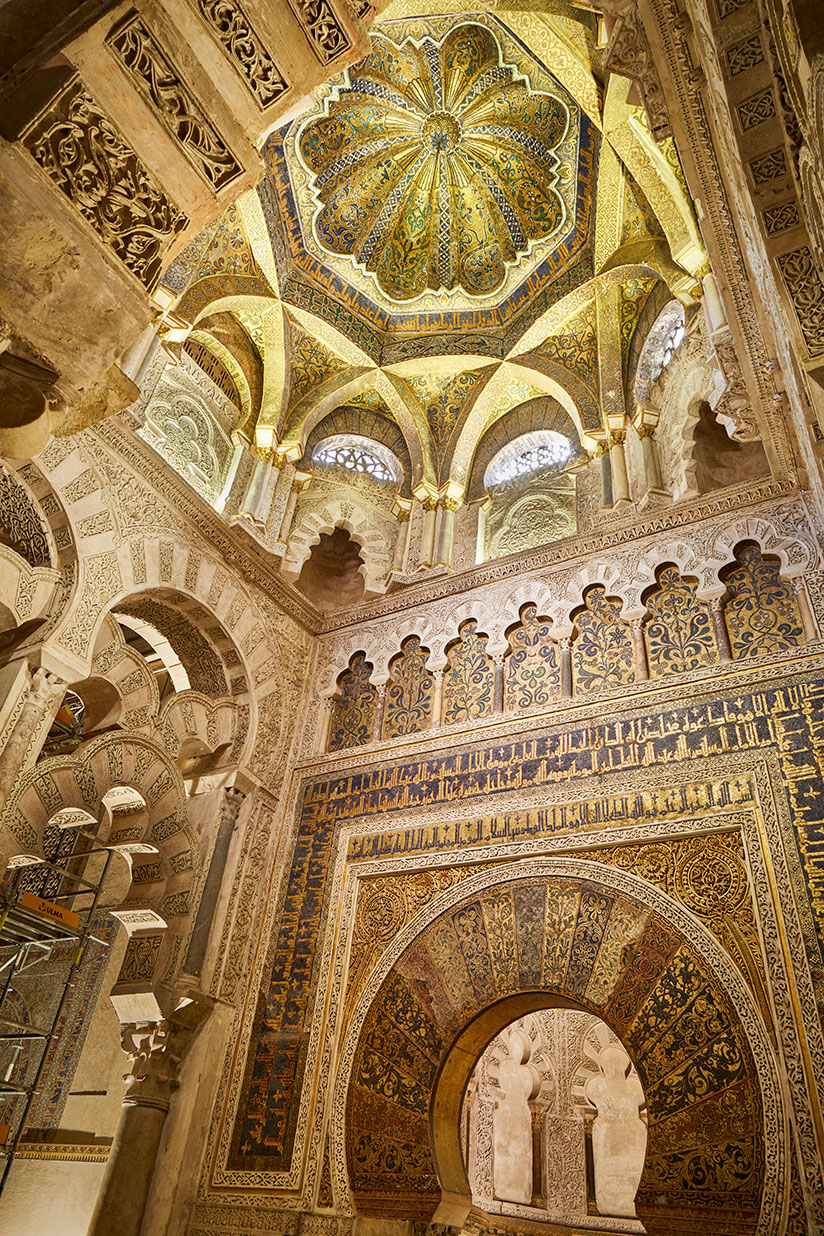 Octagonal ornate prayer niche
“This is the original Mihrab from the 10th century,” says Rafael as we stand before the mosaic and inscription-adorned mihrab (prayer niche) with an impressive shell-shaped dome. Natural light streams in through the windows, indicating that the niche is the most significant area of the mosque. It is absolutely the jewel of the building.
“It has never faced Mecca, but no one knows if that was a mistake. It was supposed to face southeast, but it mostly faces south,” says Rafael.
The prayer niche is decorated with inscriptions, including the name of Allah. The Catholics covered the inscriptions with an altarpiece in the 19th century and they were found during a later renovation.
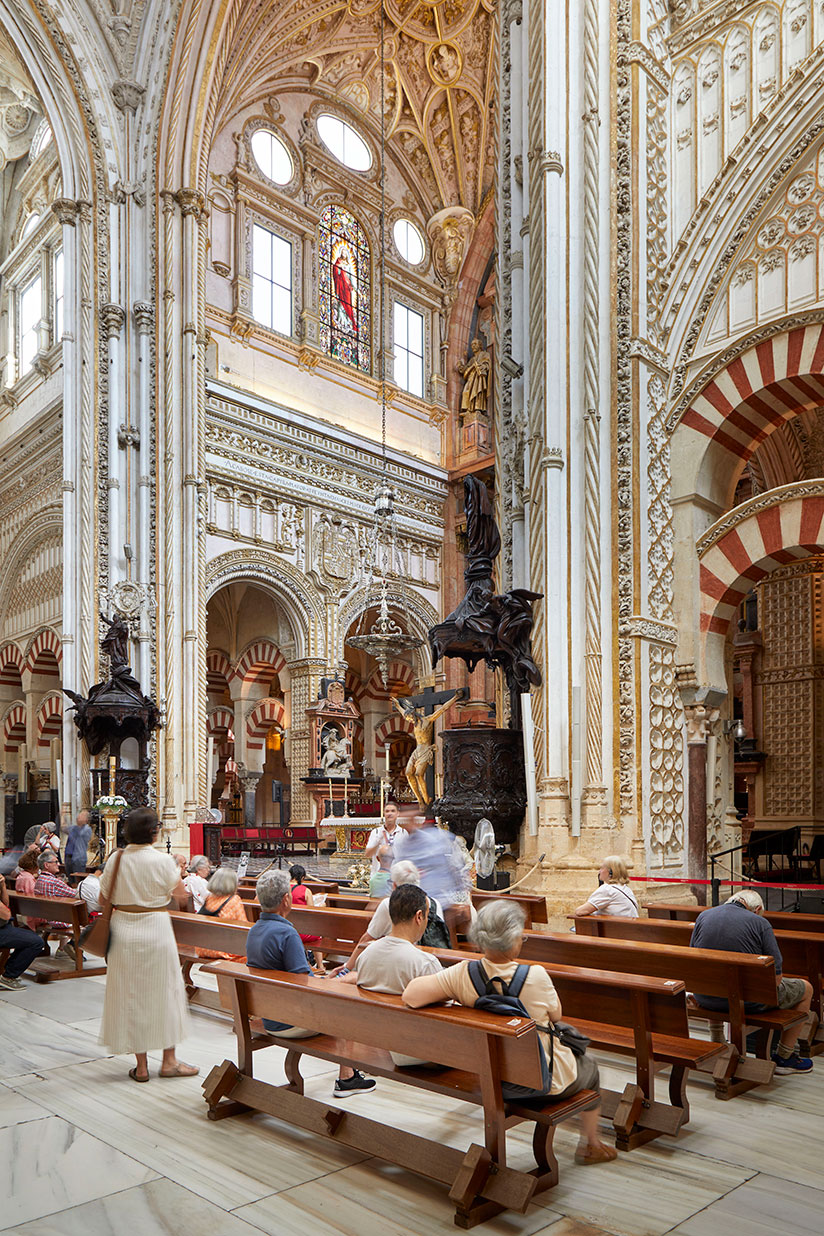 Bright cathedral in Italian Renaissance style
The mosque is surrounded by several chapels and Catholic symbols, altarpieces and paintings can be seen everywhere.
In the center is the main nave of the cathedral, which is brighter and more ornate than most Spanish cathedrals. The cathedral makes up 30% of the entire building.
“Many cathedrals have stained glass windows. Here they are clear and give lots of light in interaction with the white color. The style is Italian Renaissance. The fact that the style is also mixed with Renaissance and Spanish Baroque is because it took over 250 years to build,” says Rafael.
There are many paintings, gold-plated curlicues that contrast strongly with the simplicity of the mosque. Noteworthy is the ornate choir, which is made of Cuban mahogany. It dates from the 18th century and has 109 chairs, all of which are different.
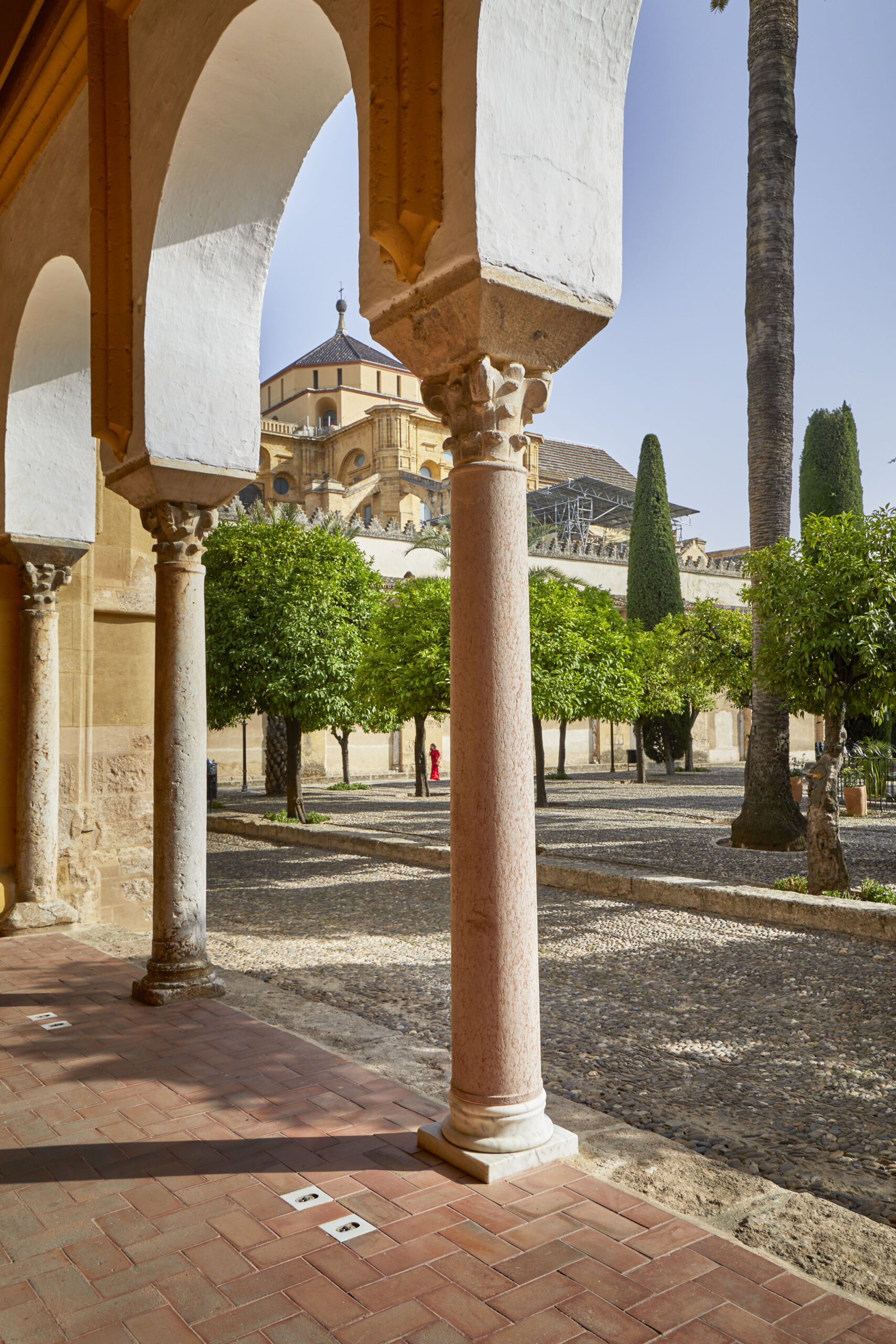 Shady patio with orange trees
Both the entrance and exit to the mosque-cathedral are through the large courtyard, Patios de los Naranjas (Orange Courtyard).
As the name suggests, the courtyard is adorned with fragrant orange trees, palms and cypresses and is a great place to seek shelter from the Andalusian sun.
The courtyard is surrounded by archways, under which there are four gates to the streets of the city center in four different directions. The most impressive exit is the 14th-century Puerta del Perdón.
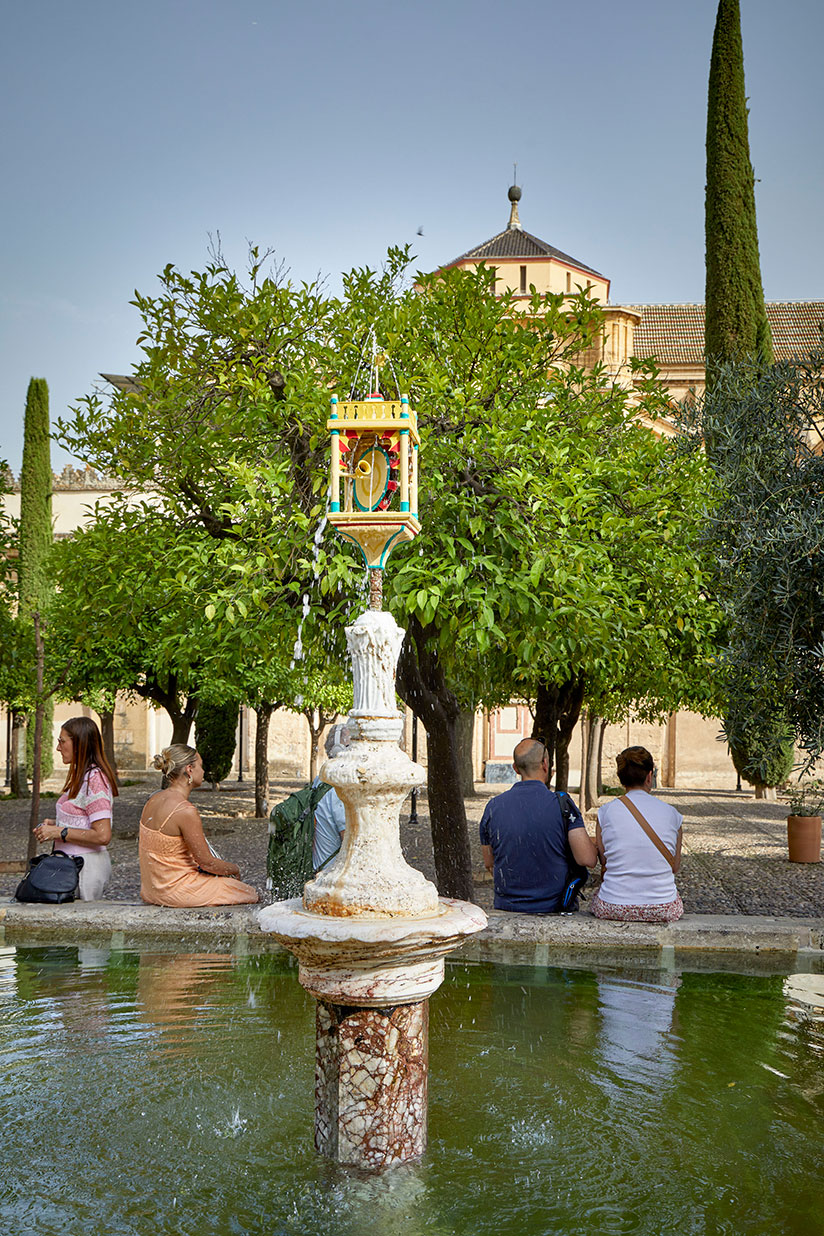
In the courtyard there are also fountains with several surrounding taps, where the ritual washing before prayer was once performed. Today, children in particular enjoy cooling off under the running taps and in the pools. The water helps give the courtyard a cool and refreshing air, making it an important oasis in the city when the sun heats up the streets of Córdoba.
 Climb the clock tower
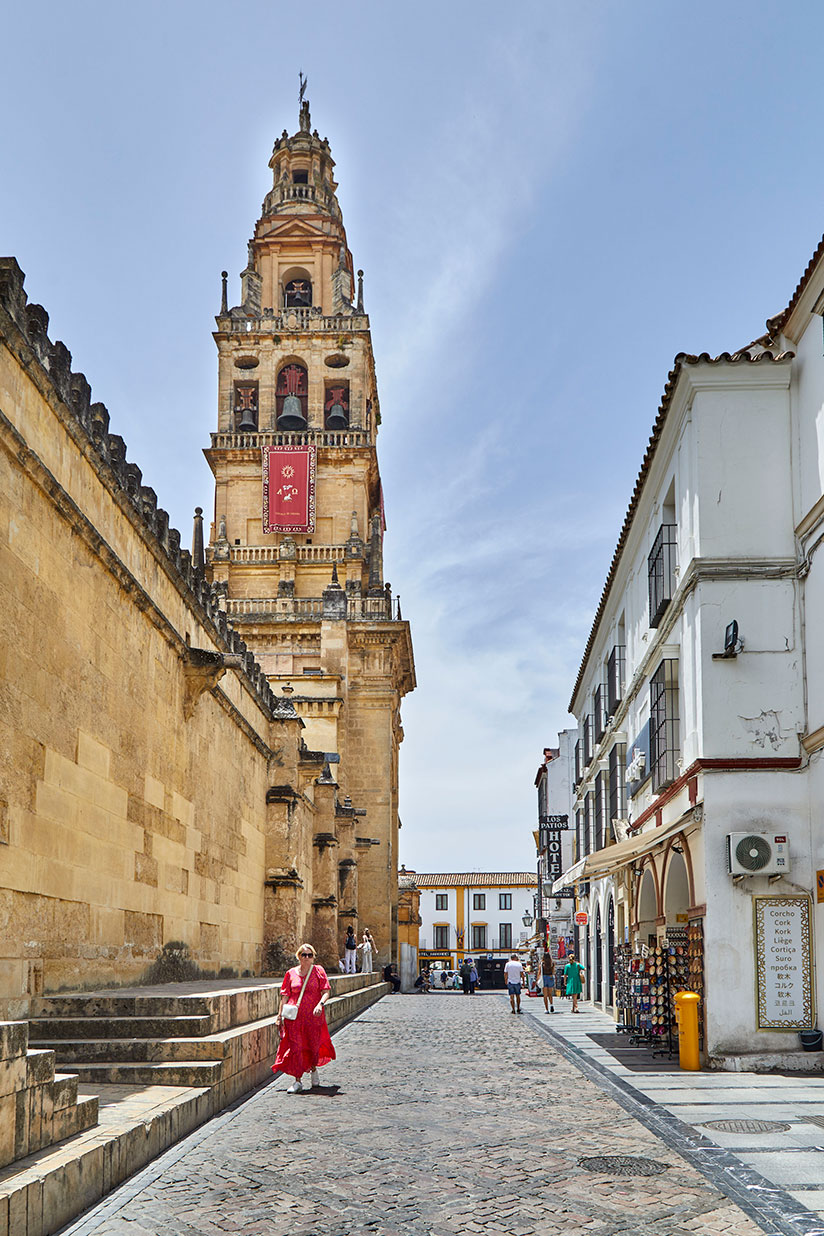
The courtyard is also home to the 54 meter high bell tower, which has separate access. The tower was built between the 16th and 17th century, replacing the previous minaret from the 10th century, which once called to prayer. Inside the tower there are still remains of the minaret.
Today the bells are ringing for mass. Climb the stairs and you will be rewarded with amazing views. Tickets are available at the entrance.
The spire of the bell tower can be seen from most of the city center. For the best view, head out onto the street, through Puerta del Perdón.
Mezquita-Catedral de Córdoba, C/ Cardenal Herrero 1
Buy tickets to the Mosque Cathedral in Córdoba
The Móske Cathedral in Córdoba has many visitors. That’s why I recommend arriving at 10am when it opens to avoid the hordes that arrive on the tourist buses in the morning.
Skip the line buy a ticket online so you can go straight into the mosque-cathedral. You can either buy an e-ticket with an audio guide that you control via an app on your mobile.
Powered by GetYourGuide
More travel tips for Andalusia
Read also the guide to Córdoba. If you want to experience more of Andalusia, the Alhambra Palace also offers impressive architecture. Find more experiences in the guide to Granada.
If you like spaghetti westerns, discover the desert of Almería, which has been the setting for many movies. If you’re more into culture, discover some of Málaga’s overlooked museums.