Lush courtyards, narrow streets and Roman, Arabic and Christian architecture. Córdoba is brimming with history and cultural treasures.
Photo: Christian Grønne
Travel declaration: Spain by Hanne’s travel and accommodation was paid for by the Spanish State Tourist Board, Turismo Andalucia and Turismo de Córdoba. The organizations had no influence on the content of the article.
Blue flowerpots with brightly colored flowers adorn the white walls of houses in the center of Córdoba. The winding cobblestone streets buzz with life and you don’t have to walk far to find a cultural gem. Most are located side by side in the center of Córdoba, a UNESCO World Heritage Site.
Córdoba was founded by the Romans. The city was the capital and cultural center during the Arab occupation from 711-1236, where Jews, Christians and Muslims lived in peaceful coexistence.
Here’s a guide to Córdoba’s best experiences, a fascinating journey through cultural history.
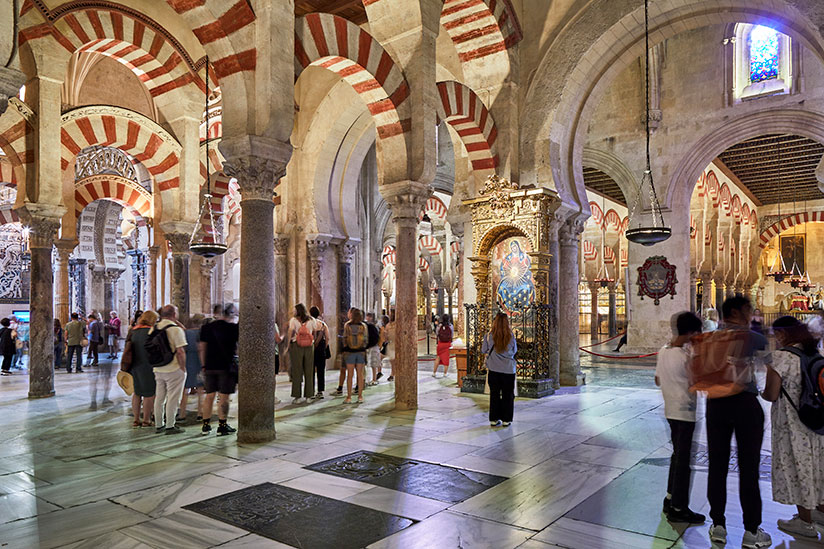 1 Córdoba’s impressive mosque-cathedral
La Mezquita – Córdoba’s mosque-cathedral is one of the most impressive, and visited, monuments in Spain.
In addition to being the largest Arab building outside the Arab world, it is also unique in that the mosque is fused with a Catholic cathedral.
The mosque was built in the 9th and 10th centuries and in 1523 King Carlos commissioned a cathedral, which was built in the center. La Mezquita has 834 red and white striped columns and a beautifully preserved prayer niche. The cathedral is in Renaissance style with Gothic and Baroque features.
The pretty courtyard has shady orange trees and a fountain. From here you can access the bell tower.
Mezquita-Catedral de Córdoba, C. Cardenal Herrero
Tip: I recommend arriving at 10am when the Mosque Cathedral opens to avoid the biggest tourist hordes. Buy tickets to the Mosque Cathedral in advance (promotional link)
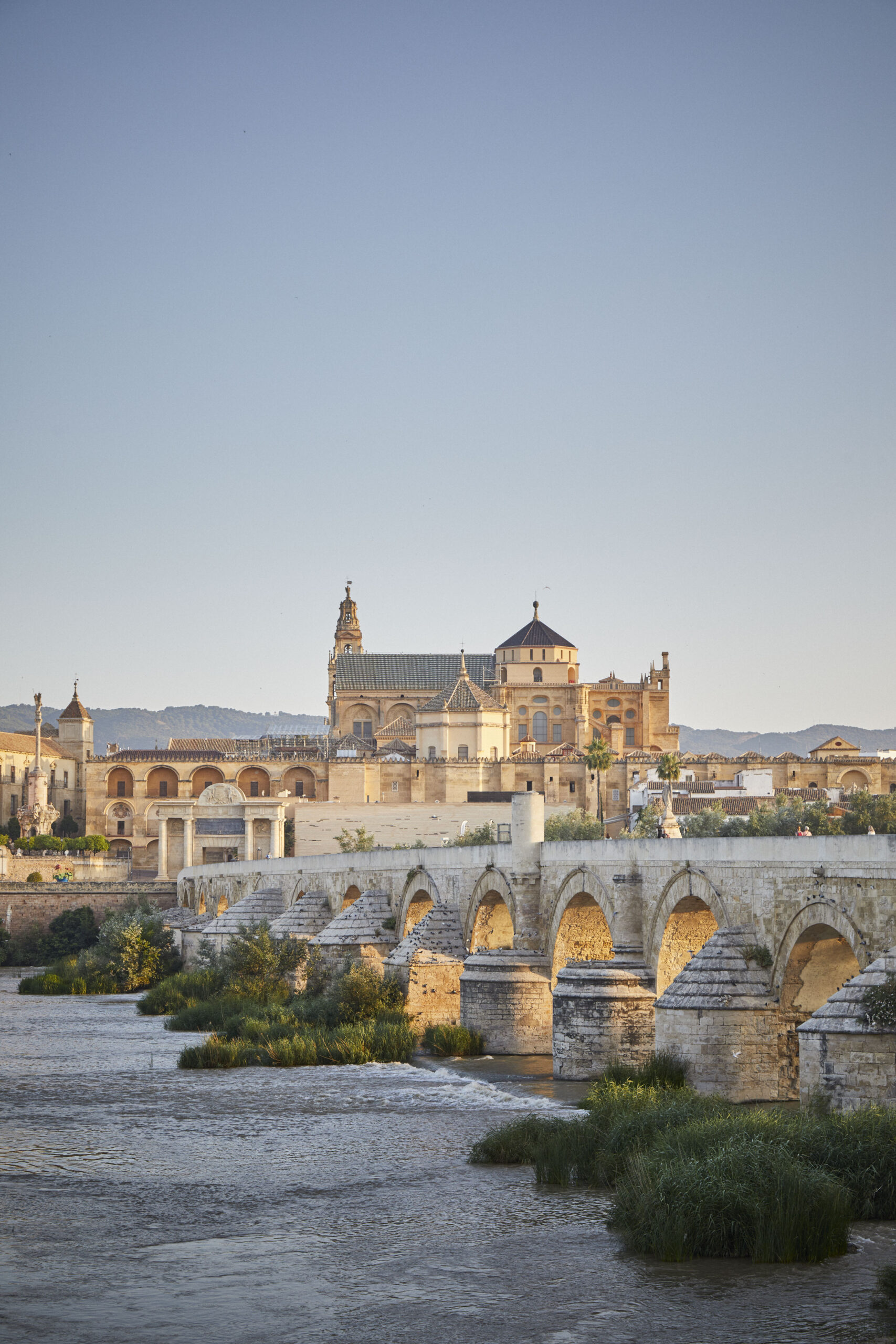 2 The Roman bridge in Córdoba
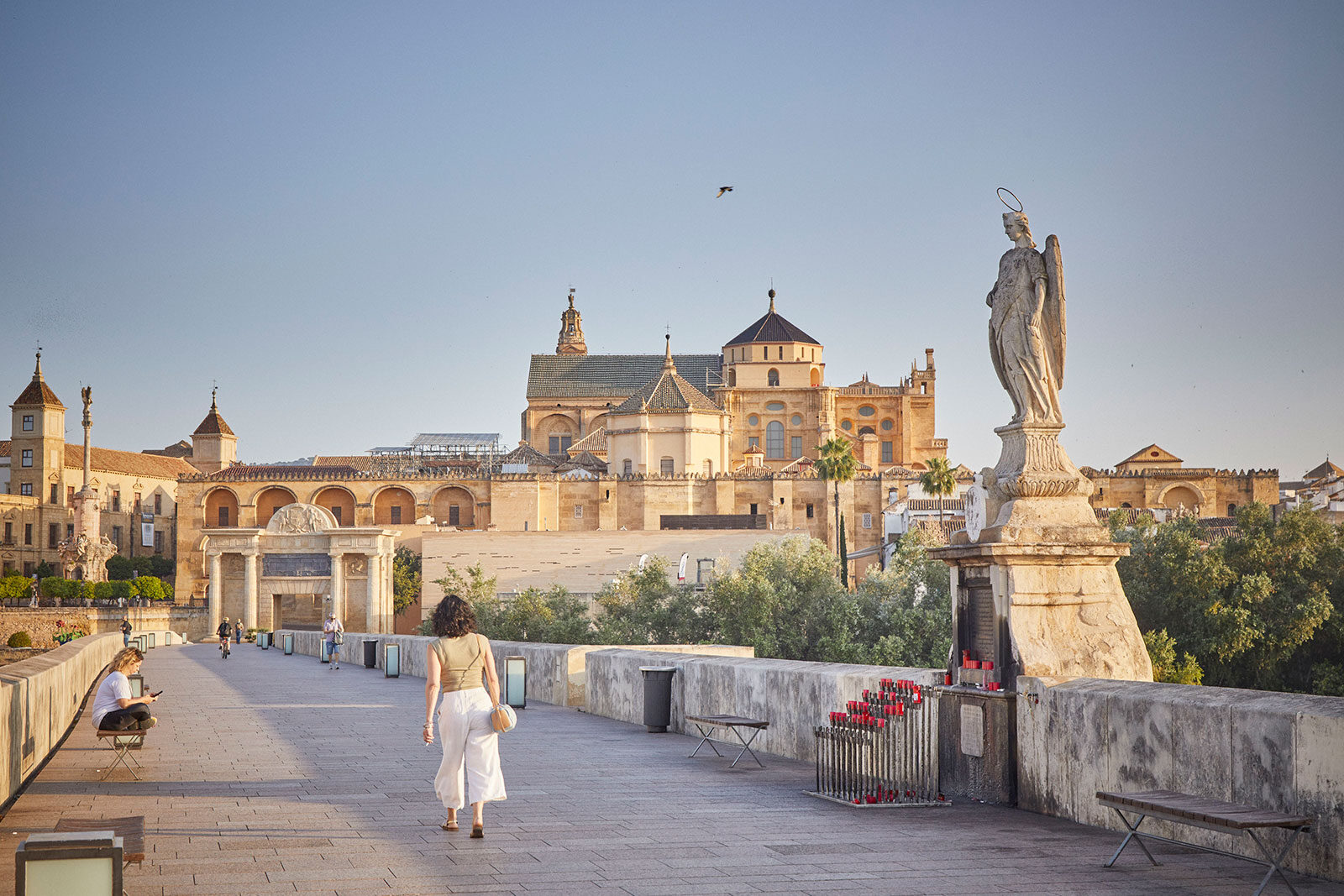
You might recognize it from the HBO series Games of Thrones, where it appears as the Voltanis Bridge in season 5. Córdoba’s Roman bridge, located a stone’s throw from the Móske Cathedral, has connected the city since it was built by the Romans in the 1st century. Locals call it the ‘Old Bridge’ and for many years it was the only one that connected the neighborhoods of Córdoba.
The Instagram-worthy bridge is 247 meters long and has 16 arches and crosses the Guadalquivir River. Crossing it gives you great views of the Móske Cathedral, which is located at one end.
On the other side of the bridge is the former fortress, Torre de Calahorra, which houses the Al-Andalus Museum. In the middle of the bridge is a sculpture of the archangel Rafael, the city’s guardian angel. On the walk you can spot old Moorish watermills in the river.
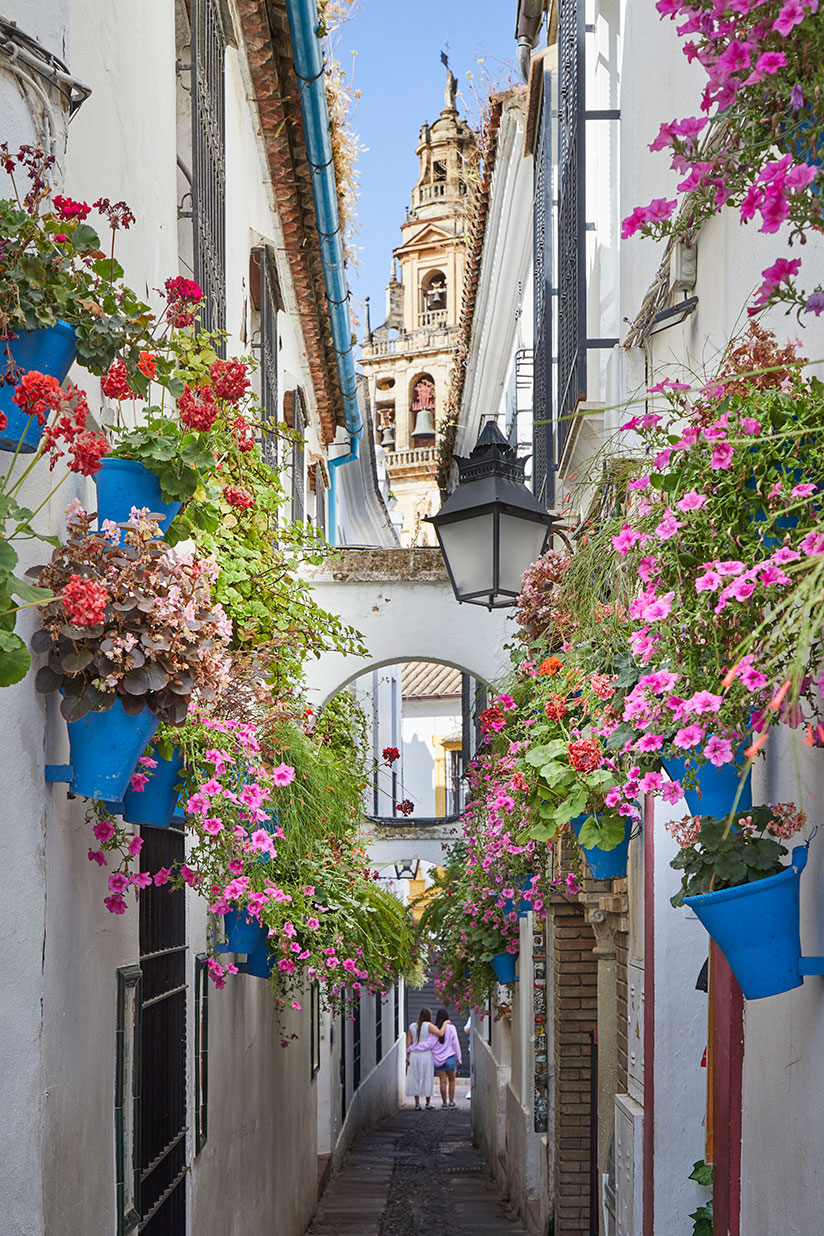 3 The photogenic flower street
Córdoba’s flower street is a long, narrow passage where colorful flowers cascade down the white house facades. The street, Calleja de las Flores, ends in a small square.
It’s not only worth a visit because it’s so picturesque. You’ll also get postcard-perfect views of the mosque-cathedral’s bell tower.
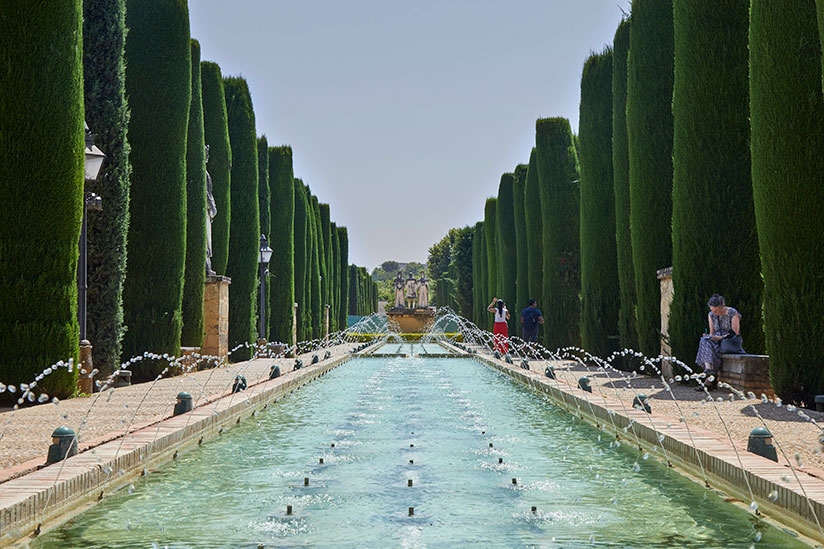 4 The palace of the Catholic monarchs
Close to the mosque-cathedral is the palace of the Catholic monarchs, Alcázar de los Reyes Cristianos. The 4000 square meter palace is surrounded by thick fortress walls and has four towers.
It was built after the Christian reconquest and in the late 1400s and was the headquarters for the troops of the Christian monarchs. It was also here in the palace that Christopher Columbus met with his patrons, the monarchs Isabel and Fernando.
Inside there are a few galleries and the interesting mosaic hall with Roman mosaics that were used as floors in Córdoba. They were found in the Corredera square. Today you can see many copies of the floors in the city’s courtyards.
It’s worth climbing the narrow stairs of the Lion Tower, which is the only one accessible. At the top you’ll get great views of the palace and the city.
Most attractive are the palace gardens, which are Arabian-inspired. Long pools of water surrounded by cypress trees run through the gardens and there are fountains under shady trees. Everywhere, orange trees, hedges and Mediterranean plants stand in neat order.
Alcazar de los Reyes Catolocos, C/Caballerizas Reales
Powered by GetYourGuide
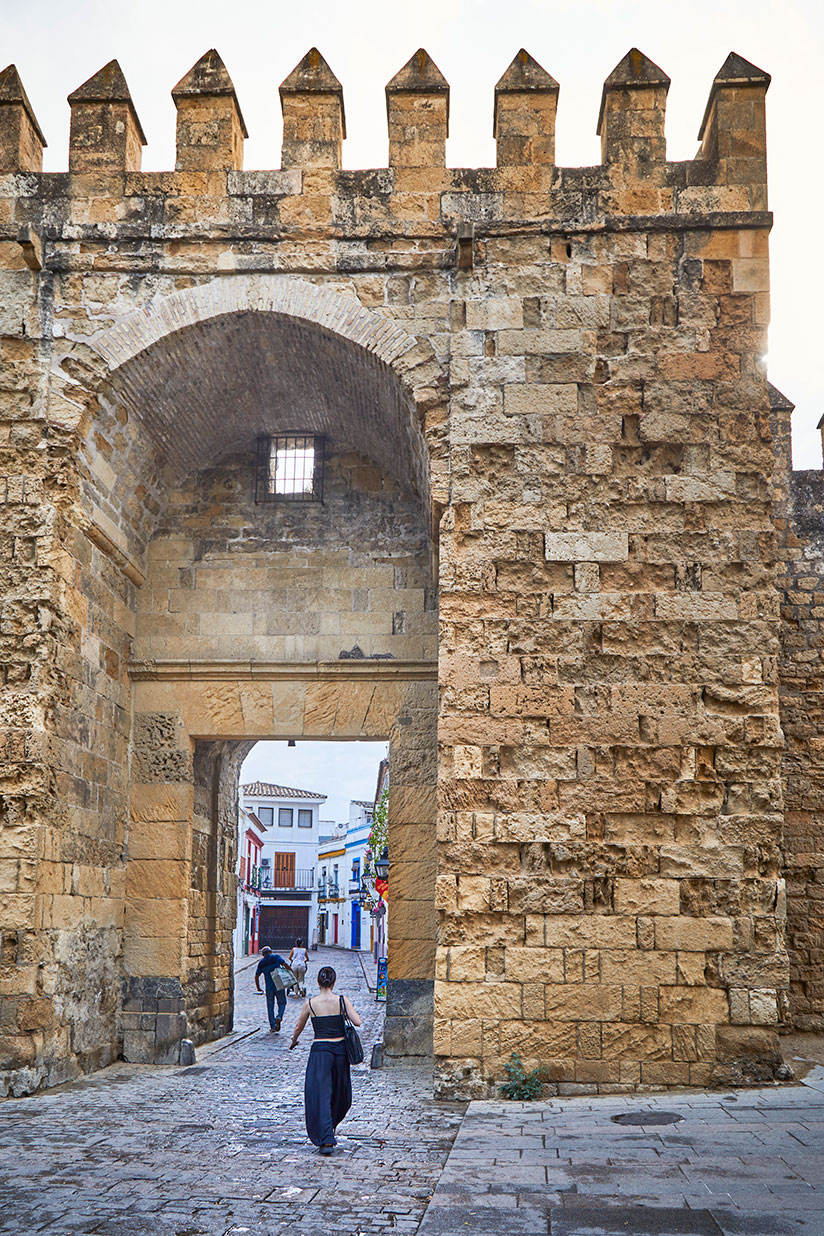 5 Almodóvar Gate
If you follow the street, Cairuán, close to the palace of the Catholic monarchs, you can walk along the remains of Córdoba’s medieval wall to the Almodóvar Gate, which leads into the Jewish quarter.
The Almodóvar Gate dates back to the 14th century and is predominantly of Christian construction. Under Moorish rule, the gate was known as Bad al-Yawz. Today, the gate is one of the three gates preserved in Córdoba’s city wall.
In front of the Almodóvar Gate is a statue of the philosopher Seneca, who was born in Córdoba in Roman times.
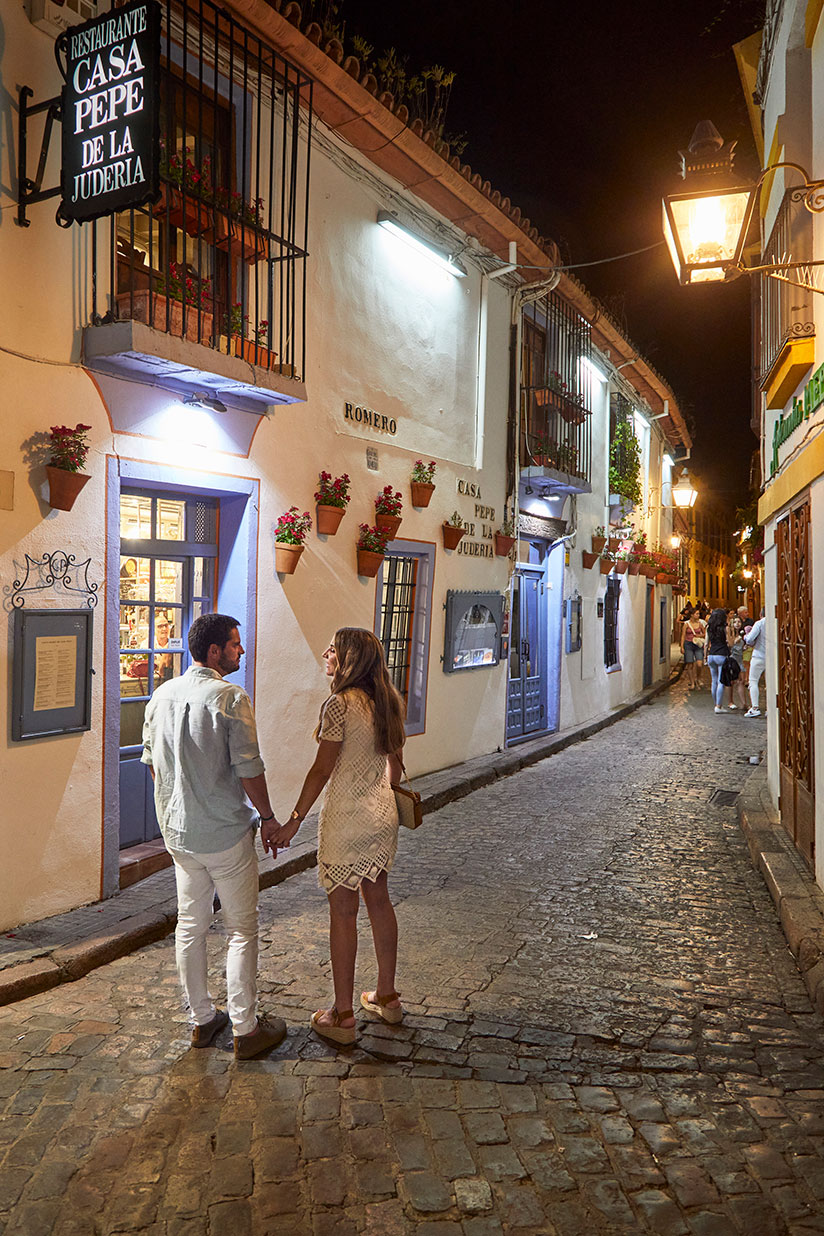 6 The Jewish Quarter
Get lost in a maze of winding streets, many of them ending in narrow alleyways, as you enjoy the many potted plants adorning iron balconies and house facades.
Córdoba’s Jewish quarter is extremely well preserved and all the buildings are listed. It stretches from the Almodóvar Gate to the Mosque-Cathedral to the south and Rey Heredia street to the east, all the way to the city walls in the west.
A colorful Jewish community lived here from the 10th to the 15th century. Back then, the neighborhood was enclosed by a wall to protect the citizens from Christian attacks. Not all of the city’s Jews lived in the neighborhood, however.
The neighborhood is packed with cafes, restaurants, artisan and souvenir shops. Córdoba is known for its handicrafts, including ceramics, silver and gold work and textiles, and the Jewish quarter is a perfect place to shop for crafts to take home.
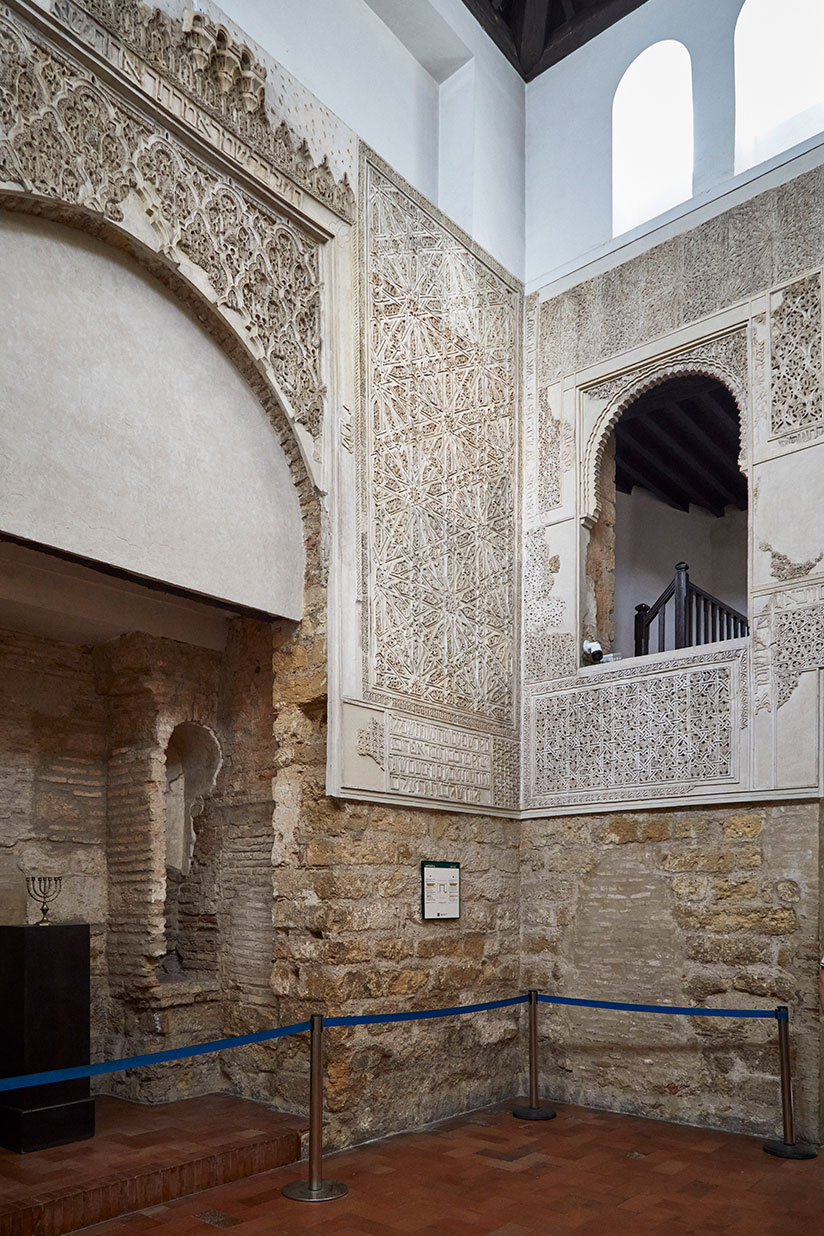 7 Córdobas synagogue
In the heart of Córdoba’s Jewish quarter is the 14th-century synagogue, the third oldest in Spain after the synagogues in Toledo and Barcelona.
The synagogue was built, but there were about 1000 Jews living in the neighborhood. It’s only 40 square meters, and that’s because the Christians decided it couldn’t be bigger than the smallest church in Córdoba.
The synagogue has a small prayer room and a gallery on the first floor, which was reserved for women. The walls have arches and are decorated with stars, Hebrew inscriptions and plant motifs. After the Jews were expelled, the synagogue served as both a Christian chapel and hospital. A painted cross under an arch is believed to date from the time when the synagogue was a hospital.
Sinagoga de Córdoba, C/ Judios 20
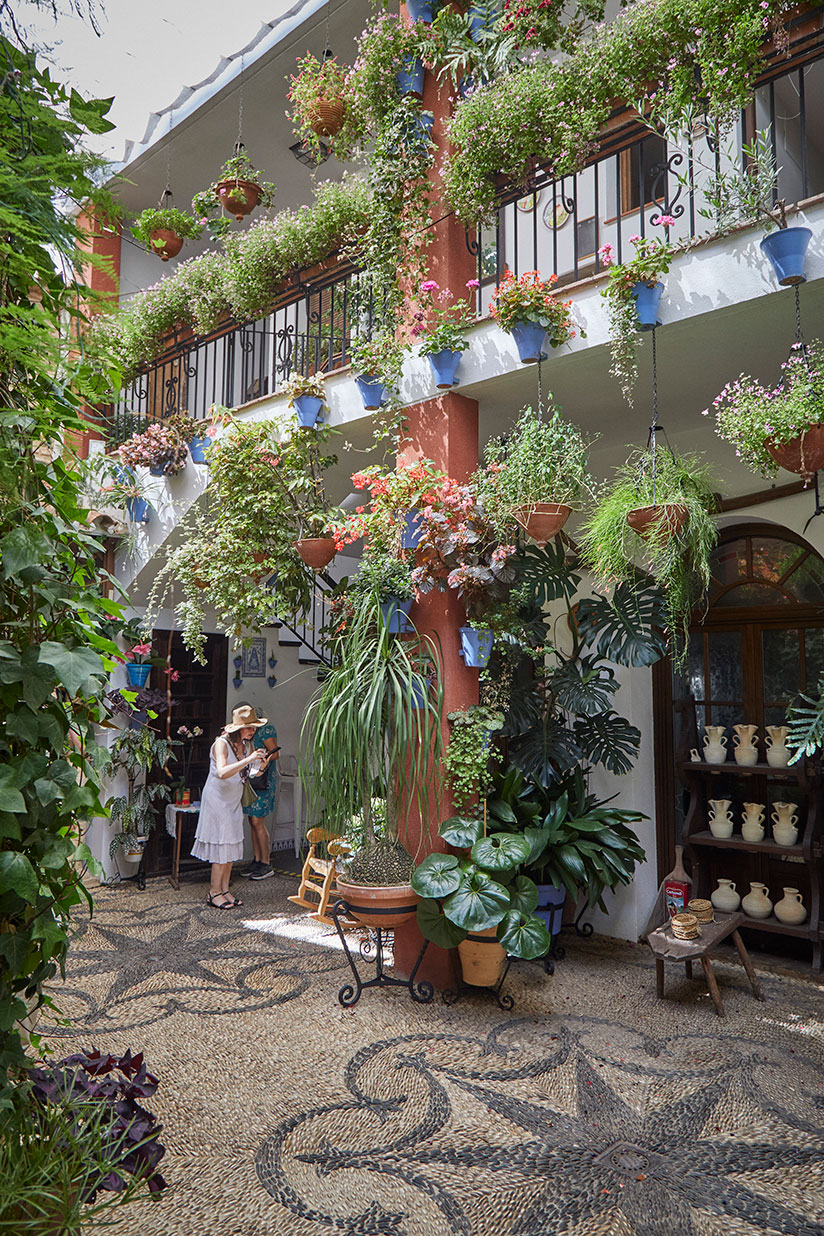 8 Córdoba’s many courtyards
Córdoba is known for its thousands of courtyards, where flowers cascade down white walls and you can take shelter in the shade of a multitude of plants. Many of them are hidden behind gates, and as most are privately owned, you can’t visit them all.
However, it is possible to visit some, so get into at least a few. In the San Basillo neighborhood, also known as Alcazar Viejo, seven courtyards are open all year round. You’ll find more open courtyards in the surrounding streets.
The private courtyards of Córdoba have been the setting for the social life of families for generations. Cooking, homework, sewing, singing, dancing and family celebrations were held here. In many of them you can also see antiques that tell stories of the lives the families lived.
The main function of courtyards is to be a cool oasis in the hot Andalusian sun. All courtyards also have an ancient bread, which has also been important to many families over the years.
If you’re traveling to Córdoba in May for the patio festival, many patios are open to the public. There’s dancing and bars in many courtyards, as well as courtyard competitions.
 9 Viana Palace
Córdoba has several public courtyards that can be visited all year round. The most famous are located in the Palacio de Viana. The palace dates back to 1425 and is the best preserved stately home in Córdoba. Eighteen families lived here until 1980. Today, the palace serves as a museum and you can see furniture, art, tapestries and tiles that belonged to the previous owners of the palace.
The Viana Palace has 12 beautiful courtyards that are a pleasure to walk around. Here you can study the historical development of the palace and courtyards.
The Arabic-inspired courtyards are beautiful oases with a wealth of flowers and plants, neatly arranged around fountains.
There are also many fine, antiquarian local ceramics such as vases, jars and pots.
Palacio Viana, Plaza de Don Gome 2
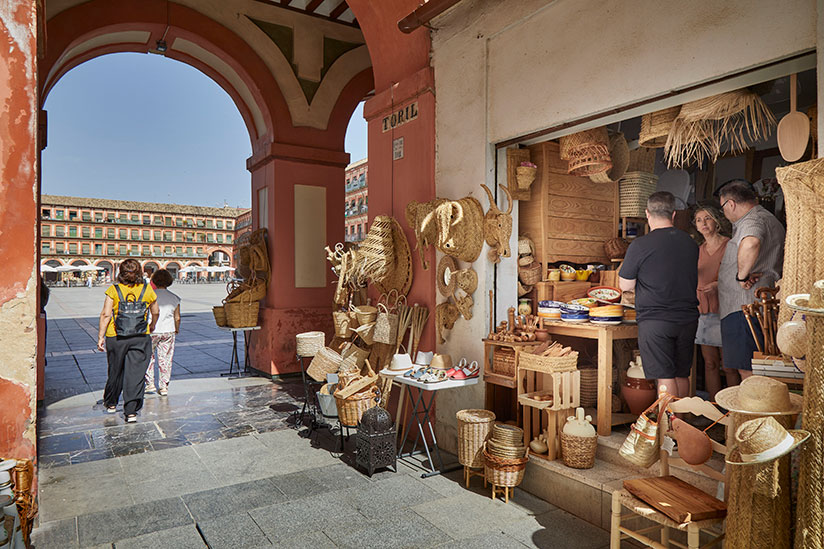 10 The spectacular Plaza de la Corredera
Córdoba’s large Plaza de la Corredera is the only Andalusian square created in the style of the Castillian ones you find in most northern Spanish cities.
The square was built in 1683-87 and has been home to everything from bullfights to executions and the court of the Inquisition. In the square, during a renovation, the fine Roman mosaics that were used as floors in the palace of the Catholic kings were discovered.
Today it is peaceful and charming. Under the arches of the square are several cafés and restaurants, a food market and shops, including a nice basket shop with local woven items.
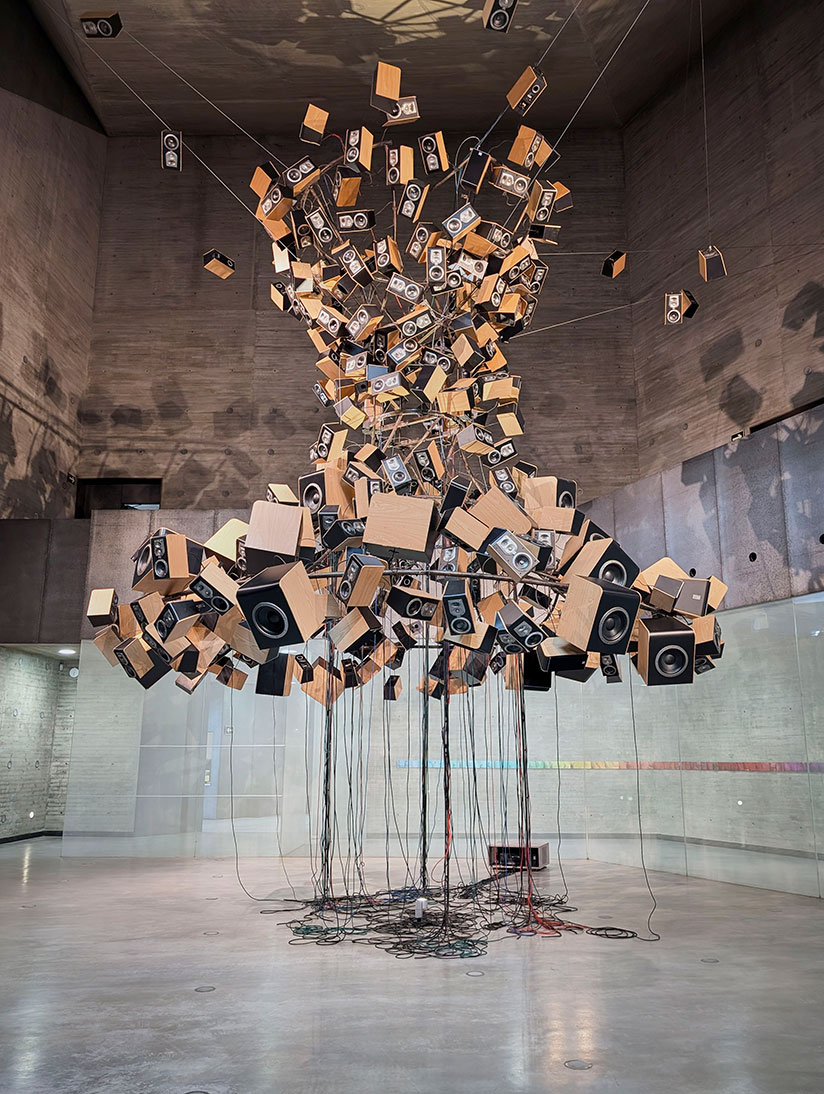 11 Museum of Modern Art
Although it’s Córdoba’s historical monuments that attract the most tourists to the city, it’s also worth discovering how Córdoba is shaping its artistic future. You can do this at the Centro de Creación Contemporánea de Andalucía C3A, a modern art museum located opposite the historic quarter, across the bridge.
The museum is housed in a fascinating brutalist building designed by Nieto Sobejano Arquitectos. From the outside, the white building looks like a giant box with over 1,300 hexagonal holes. Daylight enters through the holes and illuminates the building’s inner atrium. The architects drew inspiration from Córdoba’s Islamic heritage.
Inside, the spaces are created from a hexagonal pattern that gives the building an open, fluid spatial flow.
C3A focuses more on the creative process than the finished work. There are workshops, art activities and exhibitions ranging from paintings, sculptures, and photography to conceptual and visual art.
Check the website for program.
Centro de Creación Contemporánea de Andalucía C3A, Carmen Olmedo Checa
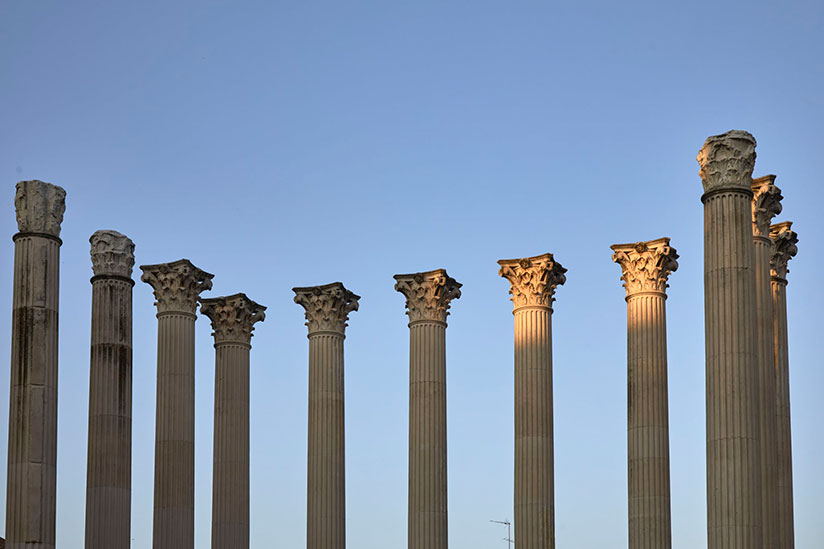 12 The Roman temple
Next to the city hall are the remains of Córdoba’s only Roman temple, from which the city has archaeological finds. The Corinthian columns tower up and point the way from afar. The remains of the temple were excavated in the 1950s when the town hall was expanded.
There aren’t many remains to see of the temple, which was built in the 1st century AD and dedicated to the imperial cult. The current one is a reconstruction created by Félix Hernández, with eleven columns and some marble stones that are worth a visit. Man kan se nogle originale genstande på byens arkæologiske museum.
Templo Romano de Córdoba, C/ Capitulares 1
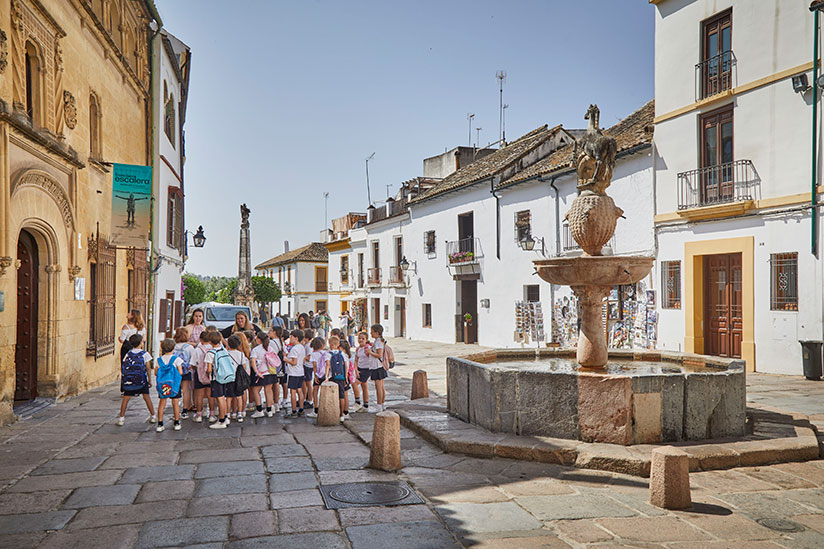 13 The cozy Plaza del Potro
Córdoba has many charming squares, also tucked away from the main attractions. Don’t miss Córdoba’s Plaza del Potro, located in the Axerquia neighborhood, which was built in the Middle Ages.
The square is named after the Renaissance fountain from 1577, which stands in the middle of the square. On the fountain is a sculpture of a foal (potro in Spanish) with the Córdoba coat of arms.
In the square is the Posada del Potro inn, mentioned in Don Quixote by Cervantes. The inn now houses the art museum, Museo de Bellas Artes and a small museum of the painter Julio Romero de Torre.
There’s also a nice little pottery shop on the square that’s well worth a visit.
When is the best time to travel to Córdoba?
Spring and fall are good times to visit Córdoba. The weather is mild without being too hot for cultural experiences. During the summer months from the end of June to the end of August, the city is baking hot. Temperatures can creep above 40 degrees. The winter months are mild with.
More travel tips for Córdoba and Andalusia
Find more Córdoba inspiration in the article about the Mosque-Cathedral, where to eat, take a look inside Córdoba’s courtyards and read which hotel I recommend in Córdoba.
Andalucía has plenty of other great cultural experiences to offer, including the Alhambra in Granada. Visit the museum city of Málaga, which is also the birthplace of Picasso and home to exciting street art. If you like Spanish sherry, visit some of the many bodegas and sample the delights of Jerez de la Frontera.