The Royal Andalusian Riding School in Jerez de la Frontera is considered to be the world’s leading dressage school. Students come from all over the world to be trained at the school, just as tourists flock there to watch the Spanish thoroughbreds dance.
 When the Royal Andalusian Riding School, Fundación Real Escuela Andaluza Del Arte Ecuestre (FREAAE), opens its doors and puts on its world-famous shows twice a week, the expectant audience is as mesmerised by the show as the Andalusian thoroughbreds and their riders are concentrated.
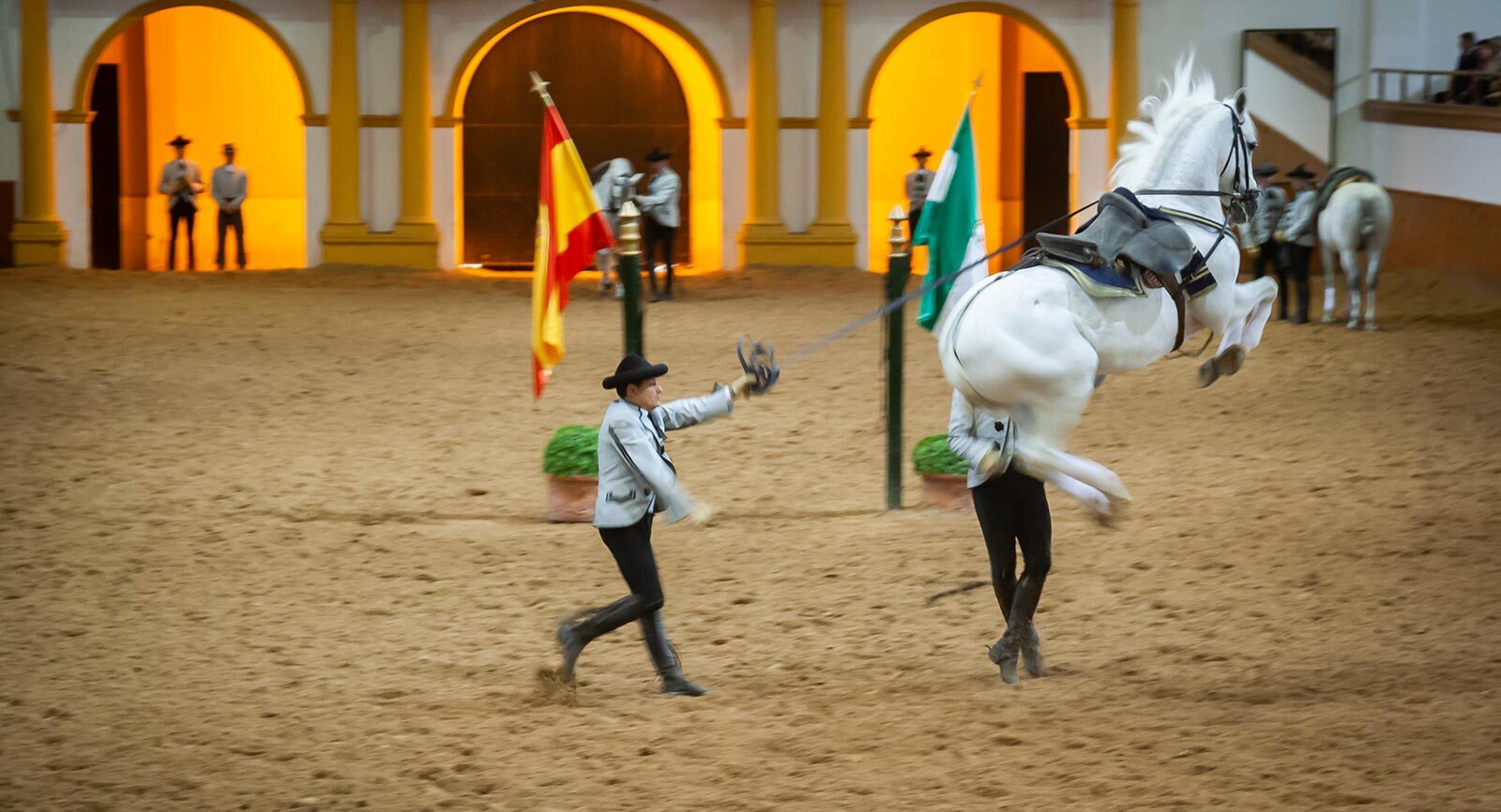
The school focuses on training classical dressage and “doma vaquera” (country riding). The prestigious work with the Andalusian thoroughbreds, who possess a sense of rhythm, agility and ingenuity, has earned the school a reputation for making their horses “dance”.
Down to the smallest detail, the horses and riders enchant the audience with their sharply choreographed show. You can hear a pin drop to the ground during the show. When the silence is interrupted, it’s by the audience’s brief but intense applause of the individual interludes, which fall rhythmically and with pauses, as if the audience were as rehearsed as the horses and riders.
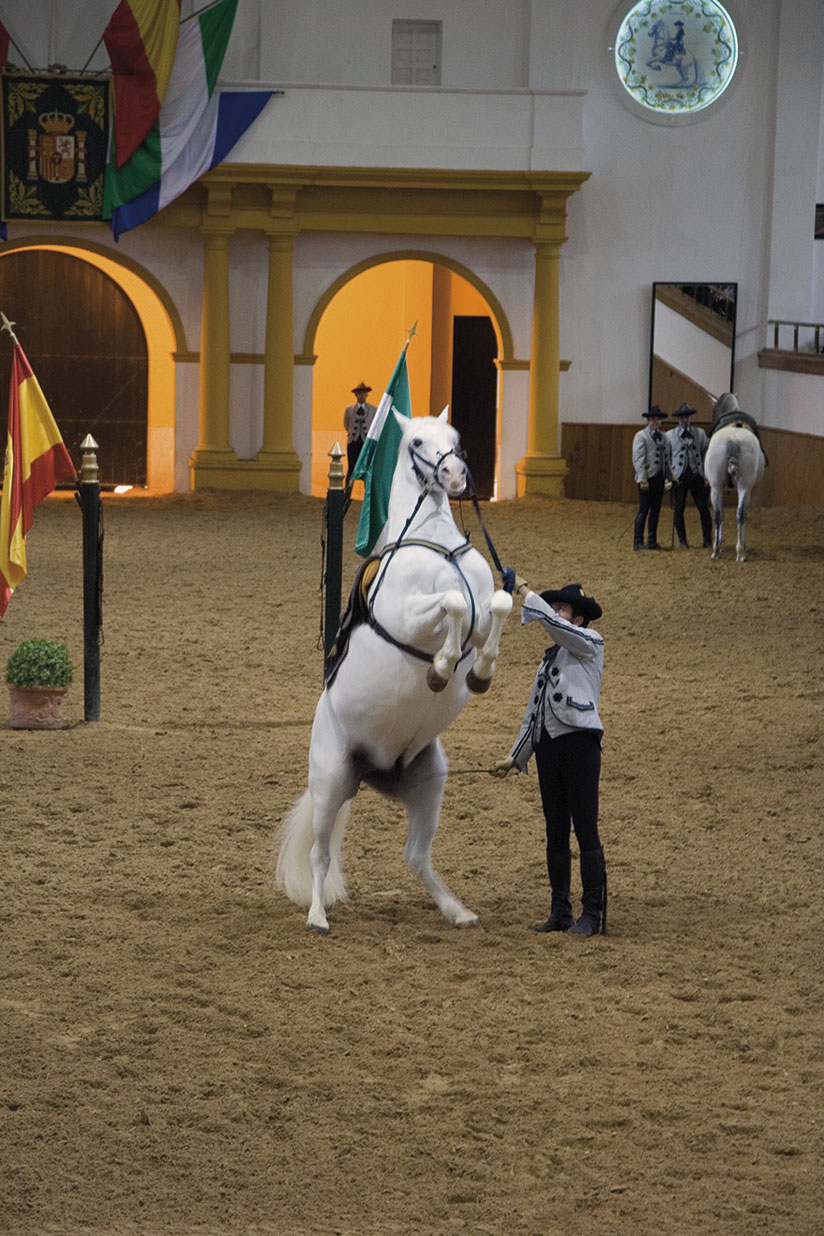 Andalusian horses are quick learners
The Andalusian thoroughbred is said to have a better memory than the average of other horse breeds, therefore they can be trained faster and to greater precision. The school’s 20 professional riders, including one female, each train eight to ten horses a day from 7am to 2pm.

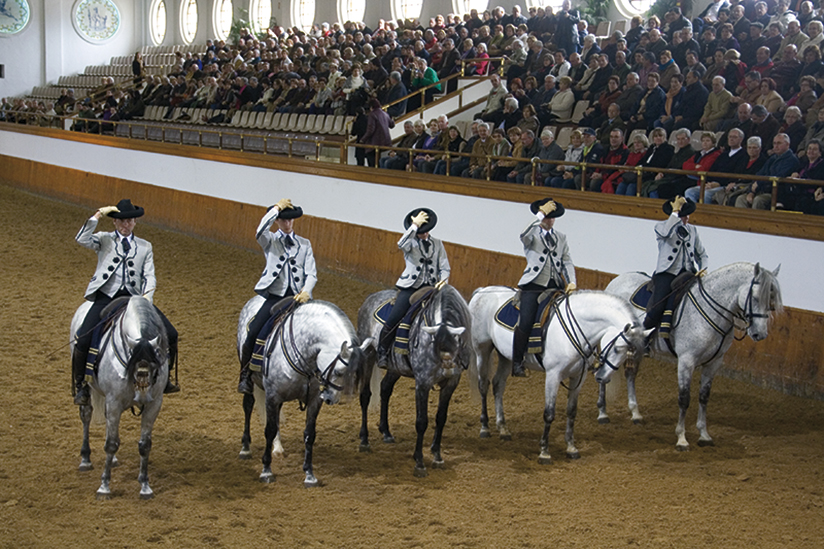
Stylish riders and horses
In addition to ensuring that the horses perform with style and precision in the show, the riders’ own performances are choreographed down to the last detail. The unique uniforms are not only created for shows but also adapted to be practical to work in. The horses’ handmade headdresses are also for both show and work and are designed deliberately to match the uniforms.
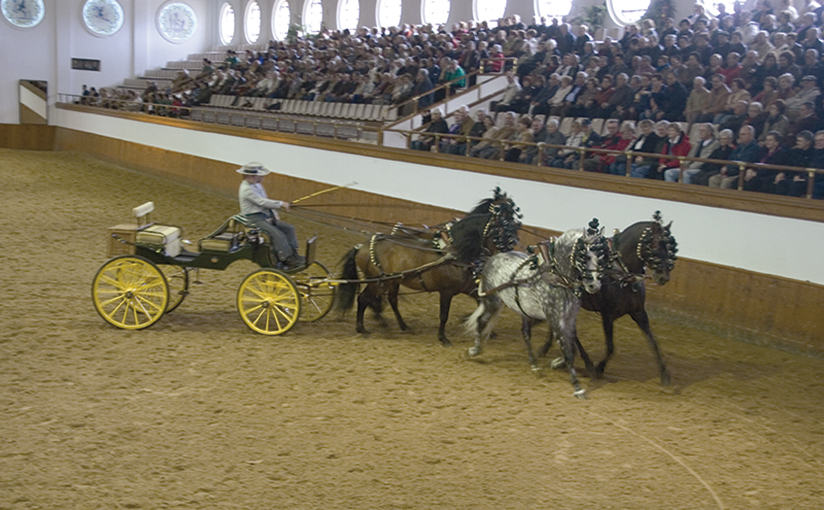
Memories from a bygone era
In the show, FRAAE also depicts driving in wagons. The horses are adorned with bells whose chime, in harmony with the sound of hooves, creates festive music that breaks the solemn atmosphere that otherwise characterises the show. It takes us back to a bygone era when street alarms didn’t exist. Both horses and driver clearly enjoy their performance and it rubs off on the audience.
Horse-drawn carriage rides are part of the Andalusian tradition, and the coloured ribbons and bells of the carriages and horses are in the traditional Andalusian style “Caleseras”.
FRAAE has 23 horse-drawn carriages, many of which are still in use. Not all the school’s pupils become coachmen. A team of students is selected for a two-year training in horse-drawn carriage driving. The teaching is done by two of the school’s trained drivers, who train students and horses daily.

Backstage during the break
Normally the audience can’t go backstage during the show, but I get to meet the riders during the break because I have to write about the school and the show.
The oval-shaped room behind the riding hall exudes the same concentration during the break as the hall does during the show. Horses warm up, riders retreat to focus and prepare, but there’s also time for a quick chat and a few laughs to break the solemn mood.
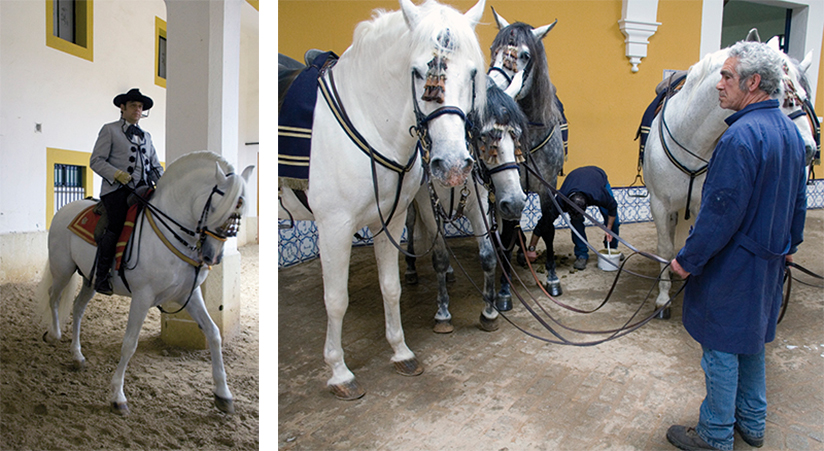 The time is used optimally in the 15 minutes break during the show. The routines seem as choreographed as the show. Hooves are waxed, and when sugar cubes are routinely put in the horses’ mouths, they promptly respond by spitting a dropping or two out the other end. The daily training and the shows are so demanding that the horses are fed five times a day in order to have enough energy for the demanding work.
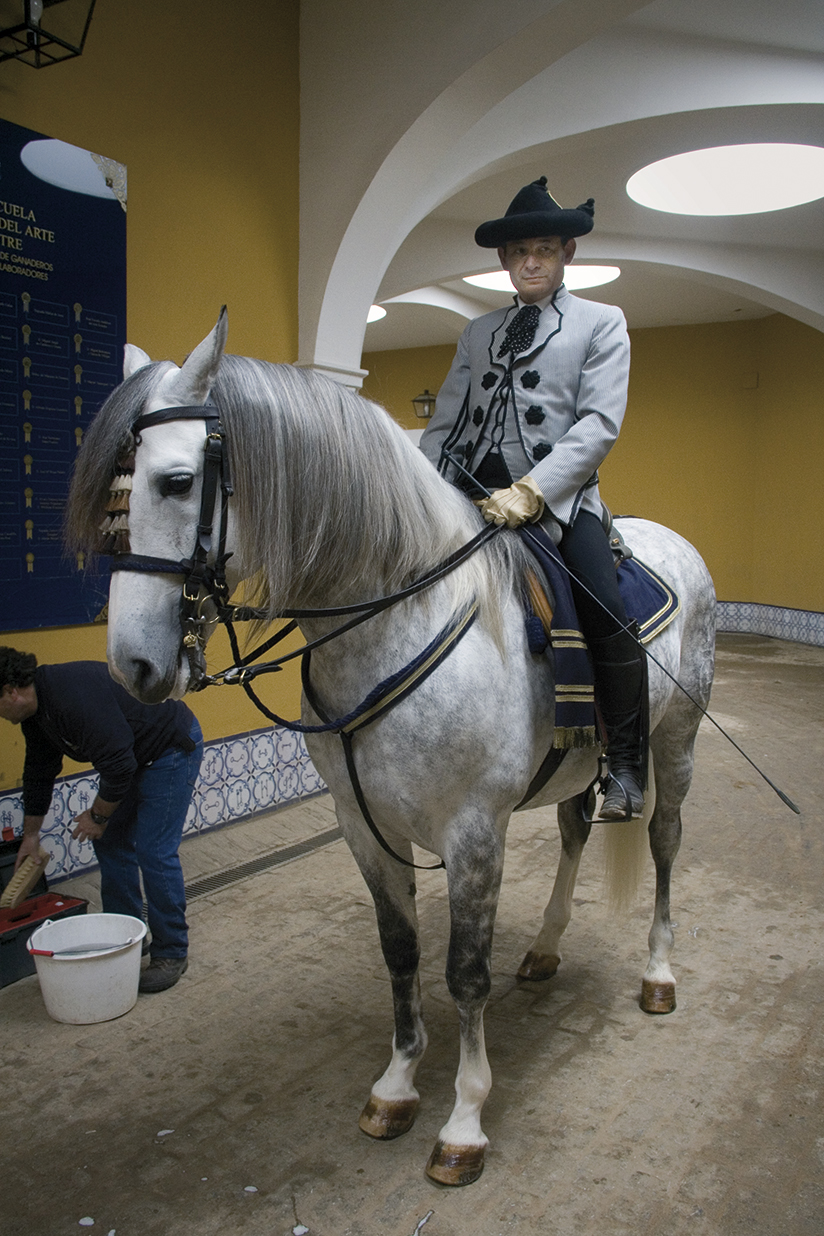
The head coach is the highly dedicated dressage rider Rafael Soto, who is also an Olympic silver medallist. Although he is deeply focused on his work even during the break, he is happy to pose for photographs. His blend of detached professionalism and friendly openness is a hallmark of the whole school. All are open and welcoming to visitors, yet manage to maintain an intimate space where they can work undisturbed.
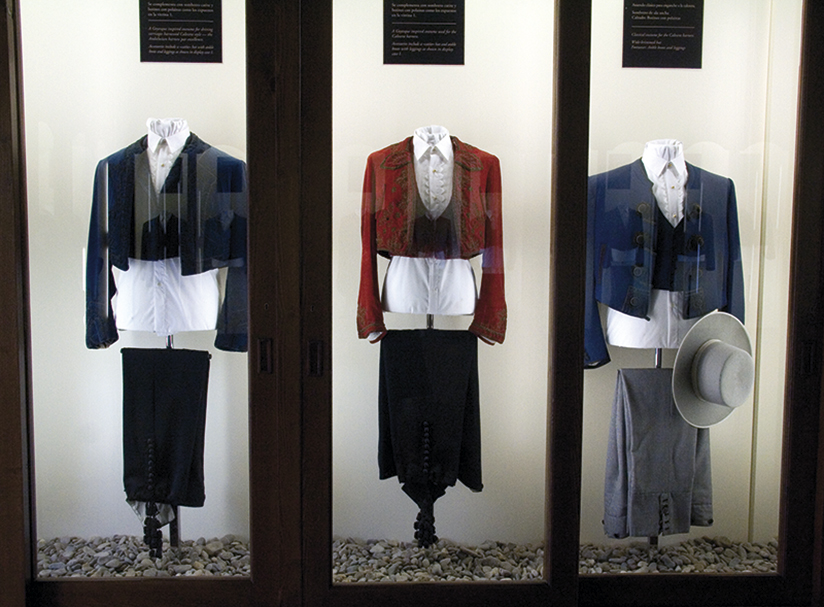
Historical carriages and uniforms at the museum
The Royal Andalusian Riding School has an associated museum, which is located in an old warehouse. Here you can see different versions of the coachmen’s work, gala and show uniforms, as well as harnesses, ribbons and bells, as they have looked through time.
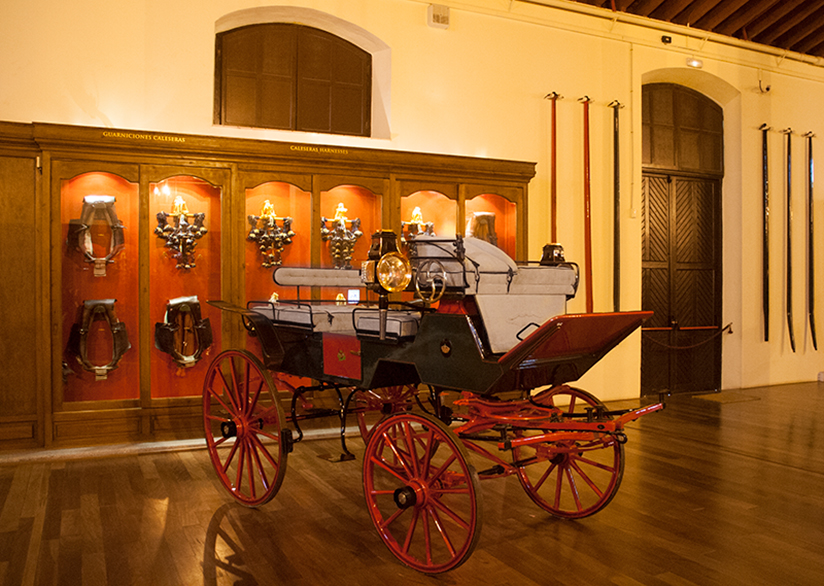
At the museum you can also see the historic carriages that are still in use. Some of the historic carriages date back to 1730. You can also hear the stories associated with each wagon’s traditions, harnesses and decorations.
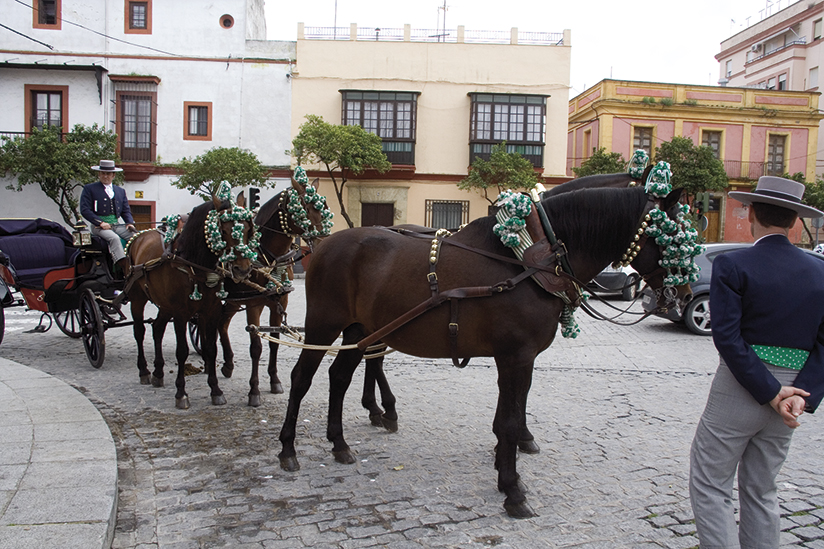
Prominent guests transported by horse-drawn carriage
The beautiful horses, carriages and well-dressed coachmen are a natural part of the cityscape in Jerez, where they are well-known among the locals. As a tourist, however, you can’t get a ride in one of the famous carriages, that’s only for the city’s official guests. Jerez City Council has some of FREAAS’ horse-drawn carriages at its disposal, which takes visitors on tours of the city when the council is hosting. The event is clear proof that FRAAE is one of the city’s most important landmarks, which they are proud to showcase.
Fundación Real Escuela Andaluza del Arte Ecuestre, Av. Duque de Abrantes
Seating is limited, so buy tickets for the show in advance.
Powered by GetYourGuide
 The Royal Andalusian Riding School
- The Real Escuela Andaluza del Arte Ecuestre was recognised by then Prince Juan Carlos with a prestigious award in 1973, shortly after which the public could see the Andalusian horses dance for the first time.
- In 1987, King Juan Carlos became the chairman of the board and the school was given the title of “Royal Riding School”.
- The stables can accommodate 60 horses and the school has its own veterinary clinic.
- It takes 4 years to become a trained RAAE rider. 2 new students are admitted each year.
- The RRAE runs courses for riders, carriage drivers, harness and saddle makers and clinical assistants.
More travel tips for Jerez and Andalusia
Jerez de la Frontera is also known for its sherry production. Read the guide on where to find the best places for sherry tasting in Jerez de la Frontera.
Visit the cultural and historic city of Córdoba, known for its distinctive mosque-cathedral. Explore the beautiful Andalusian city of Seville or Granada with its impressive Alhambra Palace.