The capital of the Basque Country goes under most people’s radar, which is a shame. As well as being a green and very atmospheric city, Vitoria-Gasteiz has plenty to offer history, art and culture lovers.
I fell in love with Vitoria-Gasteiz as soon as I arrived in the city center. Despite being a big city, it has a special calm and relaxed atmosphere. At the same time, Vitoria-Gasteiz is beautiful with its well-preserved almond-shaped medieval quarter, magnificent Renaissance palaces and elegant neoclassical buildings.
Vitoria-Gasteiz was named European Green Capital in 2012 and received the UN Global Green City award in 2019. The city has plenty of pedestrian streets, bike paths and trams, making it easy to get around the city green. It is also surrounded by a green belt (anillo verde) of parks.
If you love jazz, you might already know Vitoria-Gasteiz. The city is known for its annual international jazz festival, also known as Gasteizko Jazzaldia, held in July.
Vitoria-Gasteiz, often simply called Vitoria, has been the capital of the Basque Country since 1980 and is also the capital of the province of Álava.
 1 Vitoria-Gasteiz’s central squares
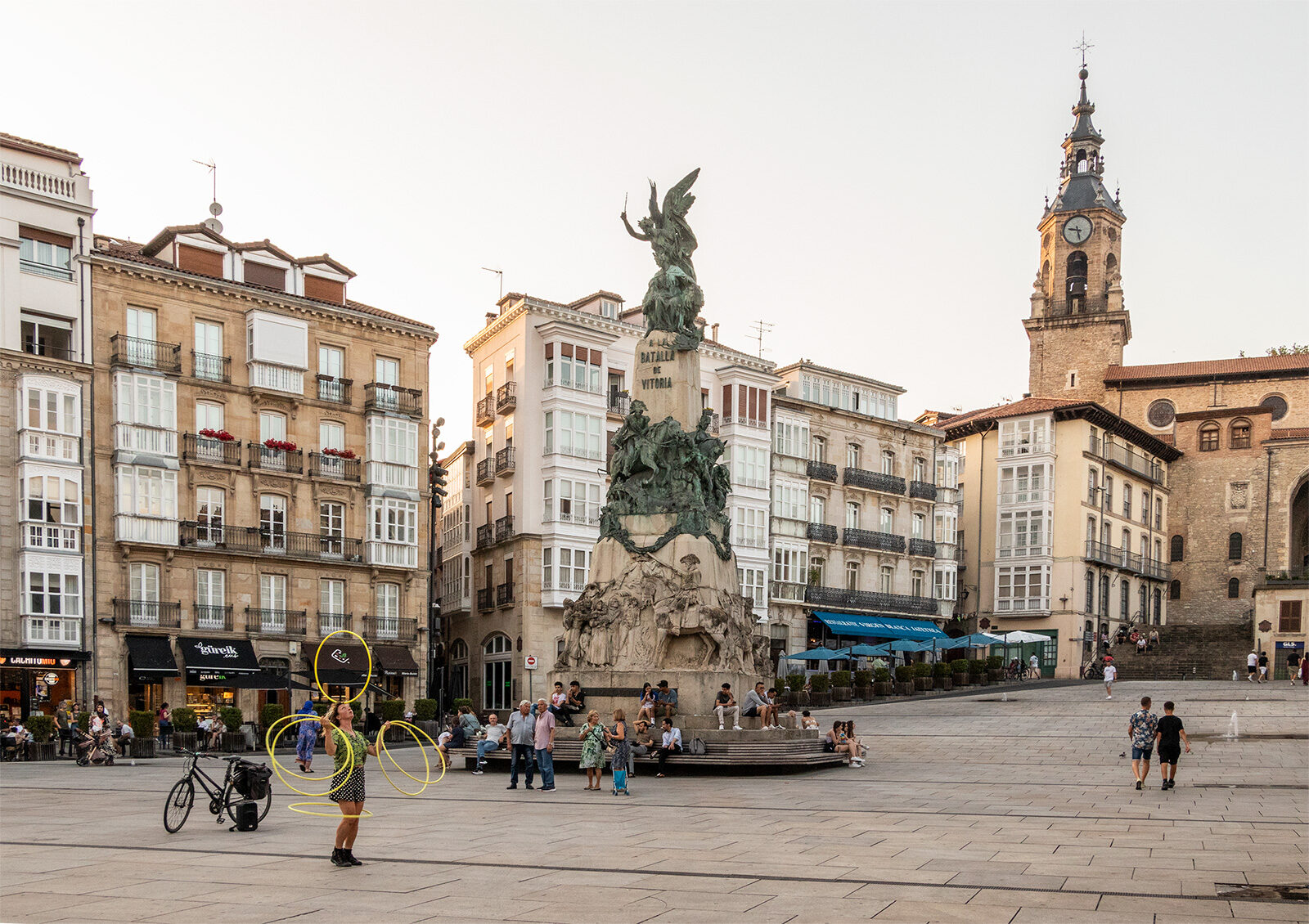
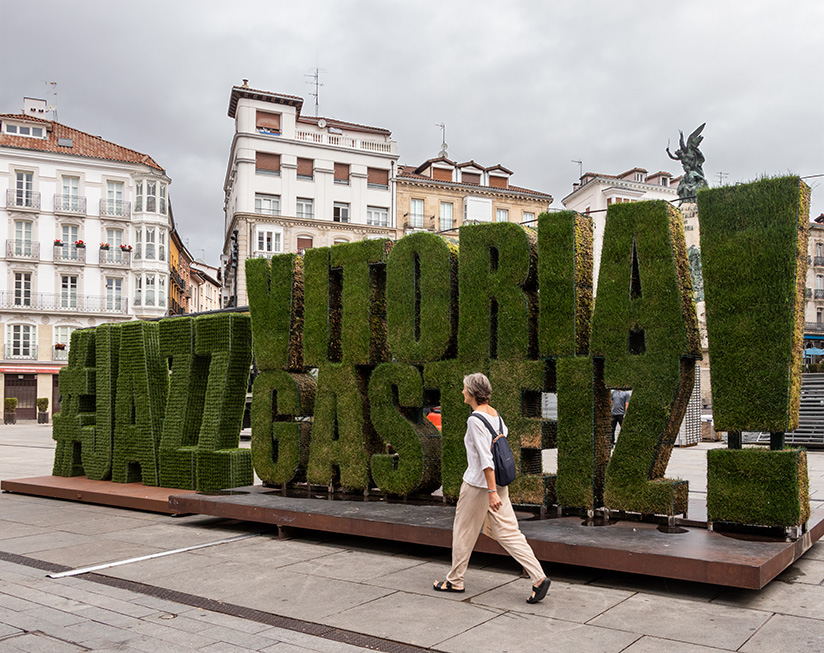
In the city’s central square, Plaza de la Virgin Blanca, the large green city sign, which will have the title “jazz” added to it during the jazz festival, welcomes you. The sign is the city’s most famous selfie spot.
In the background is the church of San Miguel. In the center is the statue of the Battle of Vitoria. A monument commemorating the victory over Napoleon’s army in 1813.
Plaza de la Virgin Blanca, also known as Plaza Vieja (Old Square) has been the center of everything from bullfights to food markets. Today, the square is the meeting place for locals. Sit on the steps of the monument or one of the many bars and cafés that surround the square and soak up the atmosphere. You can also enjoy the view from the arched balcony of the San Miguel Church.
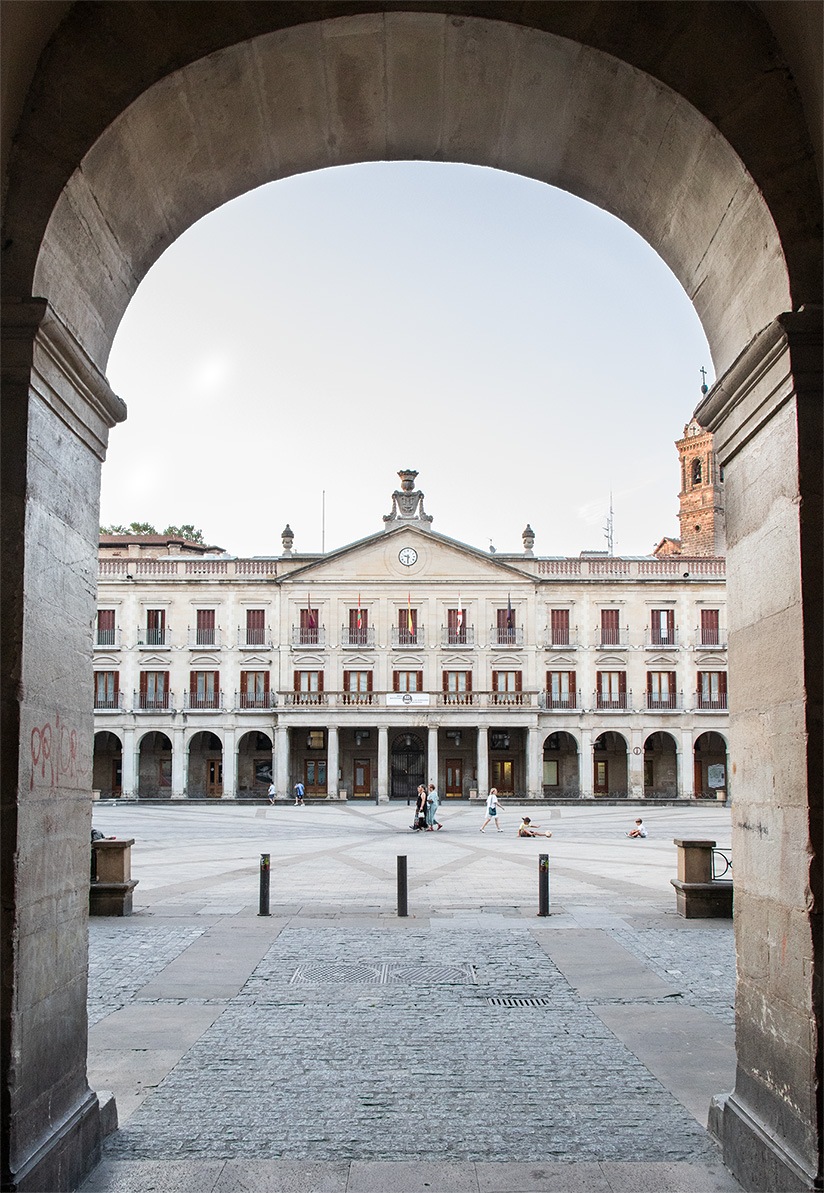 From Plaza de la Virgin Blanca, you just have to go under an archway to end up in Plaza de España, also known as Plaza Nueva (New Square).
The square was built between 1781 and 1790, as part of the city’s neoclassical expansion, and designed by Vitoria architect Justo Antonio de Olaguibe.
The square Plaza de España is surrounded by arcades with vaulted archways and in the center is the city hall with the Vitoria coat of arms. Beneath the arches are small shops and a few bars, but it’s less lively than the Plaza de la Virgin Blanca.
 2 The Santa María Cathedral that inspired Follett
Vitoria’s Santa Maria Cathedral rises majestically in the well-preserved old town, and here you can take a tour with a difference.
The Gothic cathedral was built between the late 13th and throughout the 14th century on top of a former church fortress, which was an integral part of the city’s defenses.
The cathedral rests on gigantic pillars, and after an earthquake in the 1990s it almost collapsed. This has prompted extensive restoration work, which you can learn about on a guided tour. Highlights include the view from the tower and a multimedia production where you can see the impressive history of the western portico.
Welsh author Ken Follett was greatly inspired by the Santa Maria Cathedral when he wrote the novel Infinite World (2007). This has put the cathedral in Vitoria-Gasteiz very much on the world map. The city has erected a statue of the author, which stands by the cathedral as a thank you. Buy tickets in advance via the website.
Catedral de Santa Maria, Plaza Santa María 3
 3 Street art in the medieval neighborhood
Vitoria’s medieval quarter is packed with street art worth exploring. In 2007, three artists founded IMVG with the aim of creating an open space for creativity. Among other things, this meant that large gable murals were created in collaboration between artists and local residents.
By 2019, 13 large-scale gable murals were created in the Medieval Quarter and 6 in two other neighborhoods of the city. In workshops, local artists and residents created works that reflect on nature, being neighbors, volunteering, and the present and future, among other things.
Explore the works and get a good sense of the neighborhood at the same time. You can either use the street art map of Vitoria-Gasteiz and go on your own or join a guided tour. Book a guided tour via the IMVG website.
 4 The beautiful city park
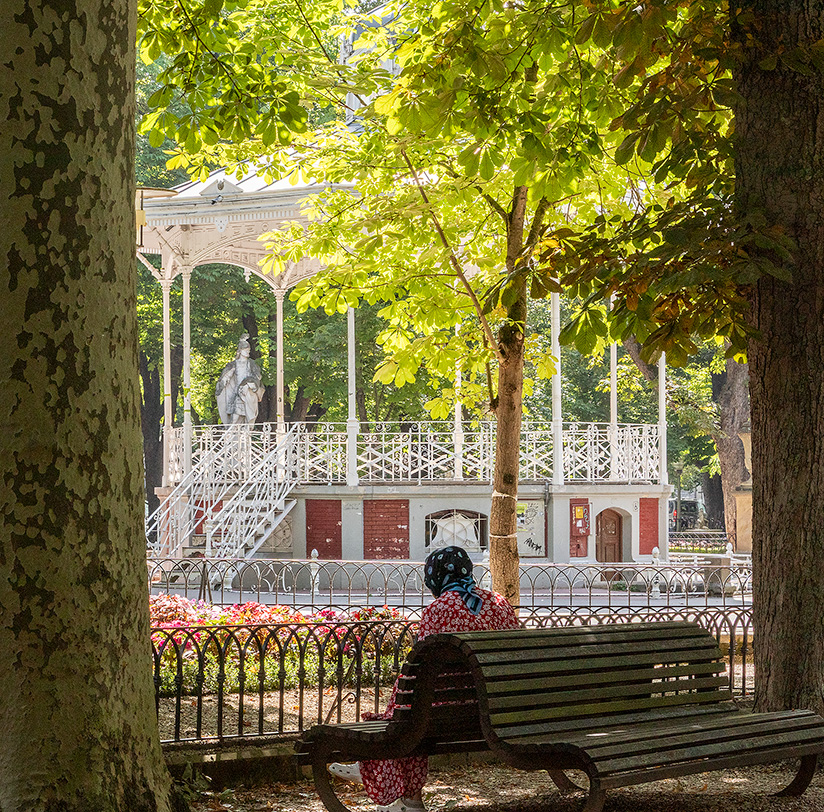
Right in the center of Vitoria is the beautiful Florida City Park, built in neoclassical style in 1820, inspired by the French gardens of the time.
The park has several winding paths that run past a cave, a stream and a waterfall. There are over 250 different species of shrubs and trees, including a gigantic old walnut tree.
In the middle of the park is a music pavilion where concerts are held during the jazz festival. The park also has several sculptures and statues, including one of the famous jazz trumpeter Wynton Marsalis. Next to it is a bench with the names of famous jazz musicians engraved on it.
Close to the bandstand, you can enjoy coffee or a beer and tapas in the cozy café.
La Florida Park, Paseo de la Florida
 5 Contemporary art in the old bus terminal
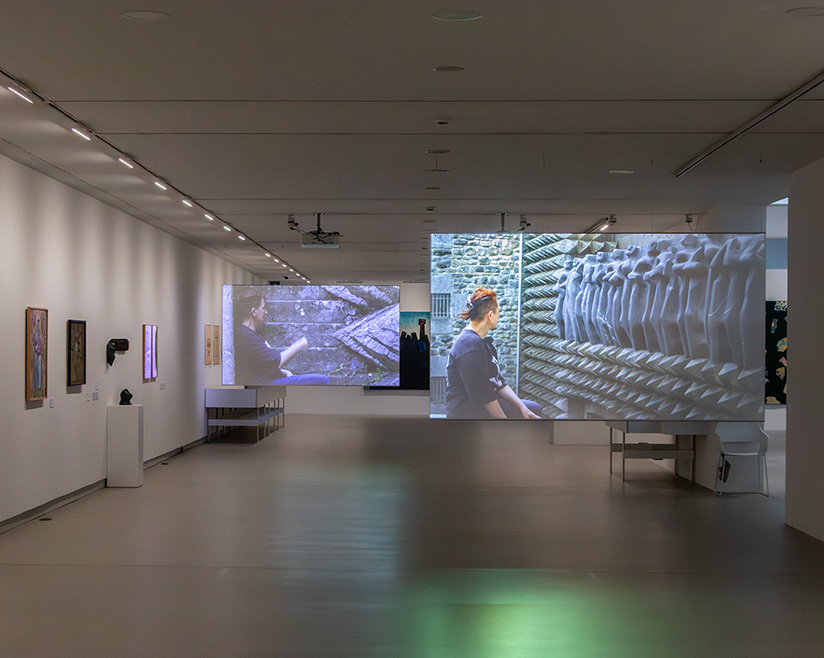
The city’s former bus terminal was transformed into a contemporary art museum. In 2022, the Artium Museum opened, housing over 2800 works focusing on Basque and Spanish art from the 1950s to the present day.
The museum is divided into five chronological sections, with most of the exhibition spaces located underground. The changing exhibitions are a great opportunity to get to know Basque artists, who are the main focus of the museum. However, there are also regular exhibitions of international artists.
The artists include Esther Ferrer, Javier Pérez, Eduardo Chillida, Cristina Iglesias, Néstor Basterretxea, Jorge Oteiza, Mari Puri Herrero, José Antonio Sistiaga, Antoni Tàpies and Susana Solano. The collection also includes great Spanish artists such as Miquel Barceló, Salvador Dalí, Antonio Saura and Antoni Tapies.
Artium Museum, Calle Francia 24
 6 Shopping in the pedestrian streets
In the tree-lined pedestrian streets that are an extension of Plaza de la Virgen Blanca, there are plenty of small shops behind the beautiful house facades. Here you’ll find everything from wine merchants to chocolate shops and fashion clothes and bags.
Pop into the iconic Goya chocolate shop where locals shop for sweet hostess gifts. Located behind beautifully carved wooden doors and windows, the shop has been around since 1886. Here, a family has been making chocolates and cakes for generations. Here you can shop for truffles in fine metal tins and homemade jam to take home as a delicious souvenir from Vitoria.
Confituras Goya, Eduardo Dato Kalea 6
 7 Taste local, award-winning whisky
In an industrial hollow, just a 10-minute drive from the city center, lies the small whisky and vodka distillery Basque Moonshiners. Here you can take a look inside the distillery, which focuses on craft traditions and taste the best whiskey in Spain.
The micro-distillery was founded in 2014 by three childhood friends, Carlos Ortiz Zárate, José Luis Navarro and Eduardo Martinez de Murguia.
You can visit Basque Moonshiners, where José will tell you about their brainchild and how they produce their two award-winning whiskies: Agot, which won Best Single Malt in Spain in the World Whiskies Awards and Bikkun, which won Best Blended Malt in the World Whiskies Awards 2022.
Basque Moonshiners distill their whisky on an old copper still. It is then aged for five years. As it’s dry and warm in Spain, whisky doesn’t need to age for 12 years like in Scotland.
Basque Moonshiners whisky is made in limited quantities and is predominantly available in specialized bars and Michelin-starred restaurants. Both the whiskey and the story of the three friends’ brainchild are worth a visit. Arrange a visit in advance.
Basque Moonshiners, Düsseldorf Kalea 1
 8 Bike ride in the city’s green belt
In 1993, an environmental restoration project transformed the dilapidated outskirts into the city’s most recreational area with high ecological value. There are over 90 km of walking and cycling routes, but you can also cycle the 30 km ring route or just part of it.
 9 Basque art in the mansion
Close to Florida Park, Vitoria’s Museum of Modern Art is housed in a beautiful mansion from 1912, formerly the home of one of the city’s richest men. The building is eclectic with Baroque, Romanesque and Neo-Basque decorative elements.
Inside, the rooms are dedicated to Basque art from the period between 1850 and 1950. There is a special focus on the painters Fernando de Amárica and Ignacio Díaz Olano. The latter worked mainly with portraits, still lifes and landscapes and there is an entire room dedicated to his works. Highlights include the works Amor en el bosque (Love in the Forest) and El restaurante (The Restaurant ).
On the second floor, three rooms are dedicated to the local landscape painter Fernando de América, arranged chronologically to study his development through realism, impressionism and expressionism. The museum also has ongoing exhibitions from its own and other collections, including the Prado Museum.
While walking around the stately rooms you can also enjoy the view of the beautiful garden. You are also welcome to take a walk in the garden.
Museo de Bellas Artes de Álava, Fray Francisco de Vitoria Ibilbidea 8
10 Michelin-starred chefs’ salt valley
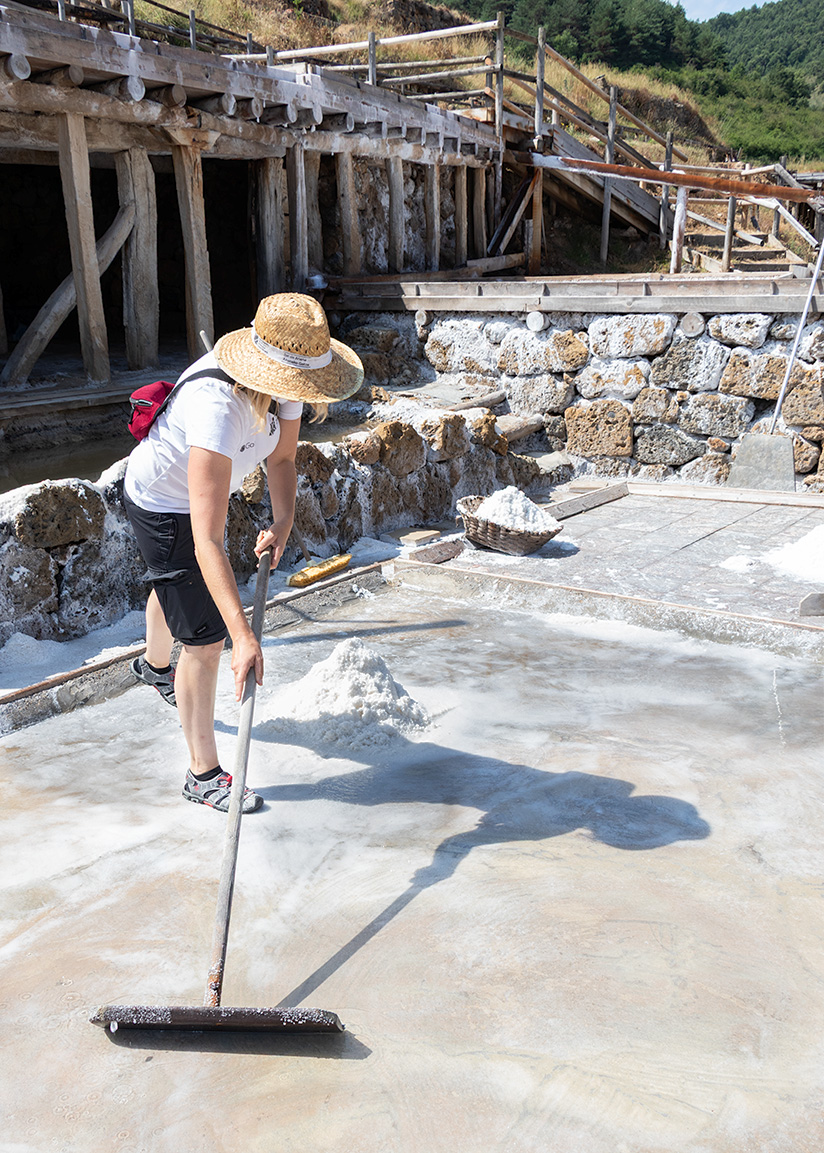
If you fancy an excursion out of the city, I can recommend a visit to the Anaña Salt Valley, located 30 kilometers outside Vitoria-Gasteiz. The over 7000-year-old salt valley is one of the oldest in the world and was declared a national historic monument in 1984. It is beautifully set against the backdrop of the village of Salinas de Añana.
The salt comes from a series of springs that bring the salt up from the earth’s interior, where millions of years ago there was an ocean. The salt water is gravity fed through a system of channels and distributed in over 5000 square platforms. The water here contains 210 grams of salt per liter. Apart from the Dead Sea, this is the highest salt content in the world.
You can end a guided tour with a visit to the foot spa with nourishing salt water and beautiful views of the salt terraces.
And then, of course, you have to taste the salt, which Spanish Michelin stars Martin Berasategui, Joan Roca, Iñaki Murua and Andoni Luis Aduriz call the Rolls Royce of salt. In the small shop you can buy salt to take home.
Valle Salado de Añana, Real Kalea 32, 01426 Salinas de Añana / Gesaltza Añana, Araba
More travel tips for Basque Country
If you want to visit another exciting Basque city, check out the guide to Bilbao and the guide to Bilbao’s hip neighborhood La Vieja. Also read about the famous Guggenheim Museum.
If you’re looking for a good place to stay in Bilbao, I can recommend Ercilla Hotel.