The Prado Museum houses one of the world’s largest art collections and is a must-see when in Madrid. Take your time to explore the famous collection of Spanish and European paintings.
Dazzling works by Spanish masters like Velásquez, Goya and El Greco. Italian and Flemish icons like Raphael, Rubens, Bruegel and Bosch reside in the halls of the Museo Nacional del Prado.
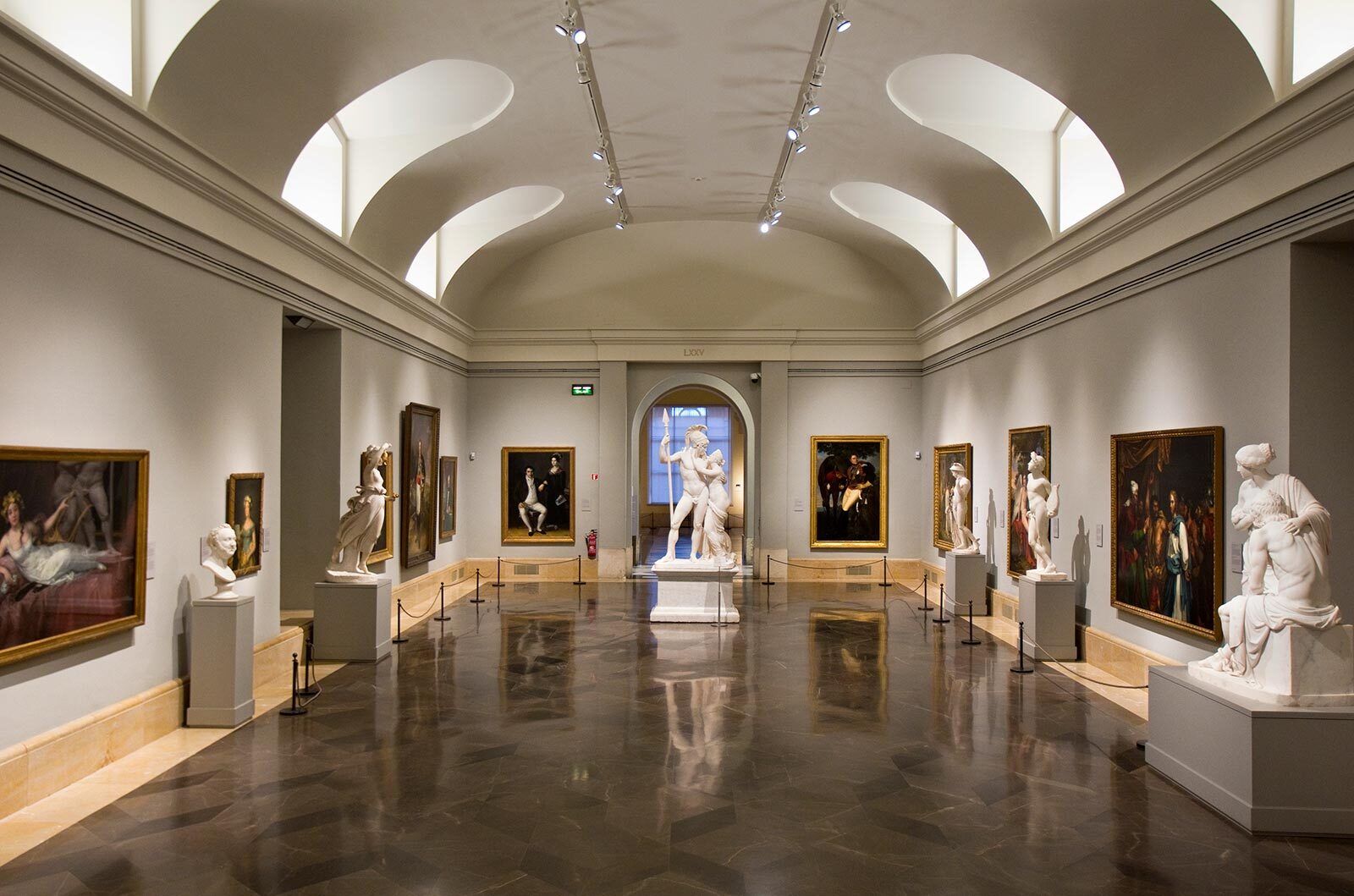
Madrid’s largest – and one of the world’s finest – art museums houses works from the 12th to the early 20th century. Including a fine collection of Spanish Golden Age paintings. The collection also includes antique sculptures, drawings, prints and photography.
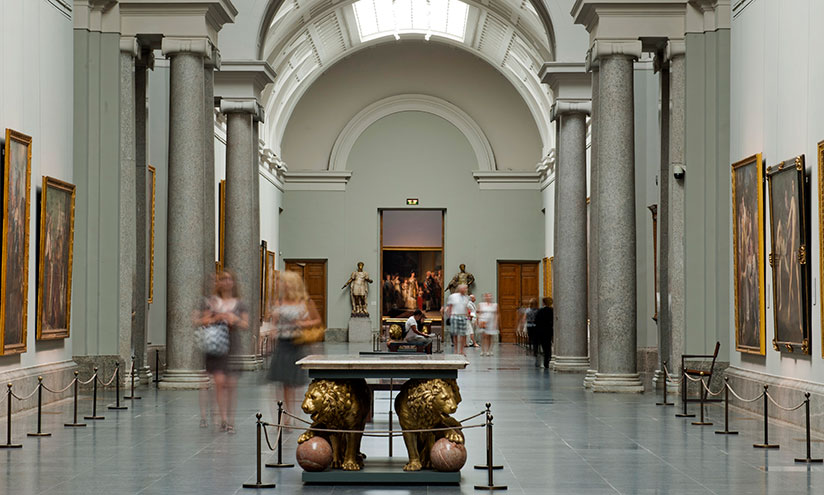
The valuable works are housed in a beautiful neoclassical building from the 18th century. It was designed by architect Juan de Villanueva, with an extension by Rafael Moneo added in 2007.
The museum opened in 1819 and was founded by King Ferdinand VII. His wife, Queen Maria Isabel de Braganza, was so enthusiastic about the Louvre in Paris that she wanted a similar art collection in Spain.
Thousands of international and Spanish artworks
The Prado Museum has a collection of over 7000 works, mainly by Spanish artists. Although only around 1500 are on display at the museum, it can be a daunting amount to survey in one day.
You’ll never be quite finished with Prado, so expect to return again and again. However, the museum is simple and manageable enough for a one-day visit. Allow four to five hours if you want to see all the galleries at a brisk pace. You can also just focus on the main works – especially by the greatest Spanish artists.
The enigmatic Velázquez
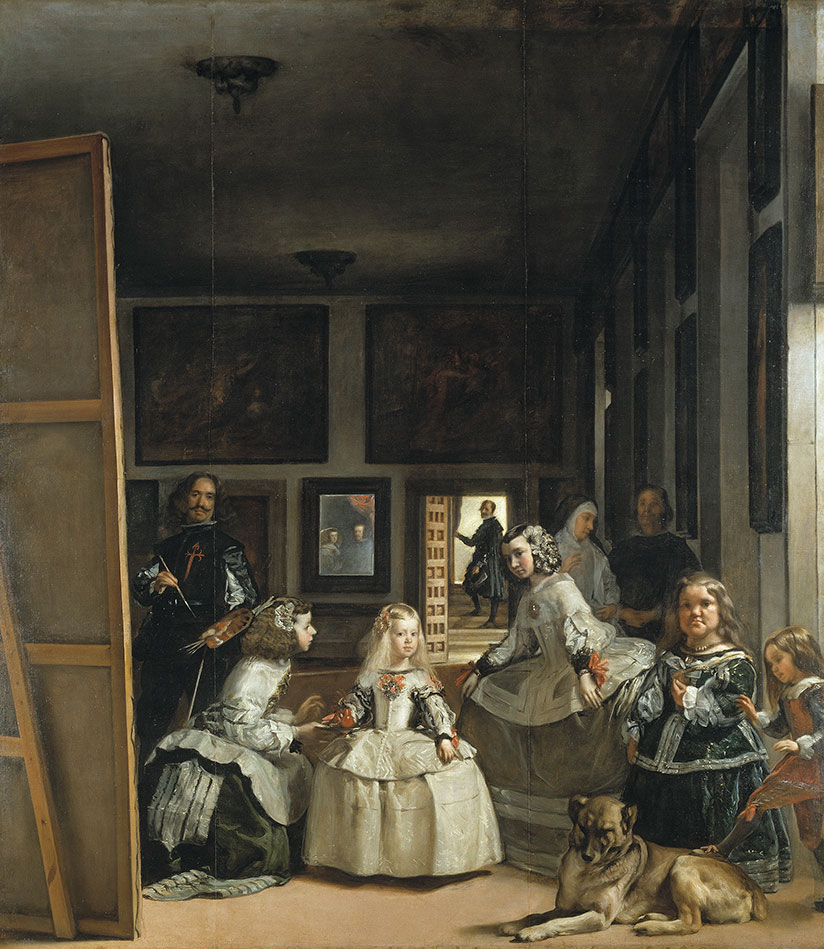
The Prado Museum has the largest collection of works by Diego Velázquez, painter and curator to King Philip IV. Velázquez is considered one of the most important painters of the Spanish Golden Age.
The highlight is Las Meninas. The work depicts Princess Margarita as a child with her ladies-in-waiting (meninas) and other unnamed figures from the 17th century Spanish court. Philip IV and Queen Mariana are seen in the background.
Next to the easel, Velázquez himself is painting. He has placed himself on a par with royalty. As an equal.
The question is, who is the artist painting? And who is looking at whom? Is it a picture of how a painting is created? What is certain, however, is that Velázquez’s mastery of light and colour is eminent in Las Meninas.
See also the masterpiece La Rendición de Breda (The Surrender of Breda) – also known as Las Lanzas (The Lances). The work depicts the surrender of the Dutch city of Breda in 1626 after a long siege.
Other works by Velázquez include the enigmatic Las Hilanderas (The Spinning Core). In addition, there are fine royal portraits of e.g. Felipe II, Felipe IV, Magarita (seen at Las Meninas) and Isabel de Francia.
Goya’s horror paintings
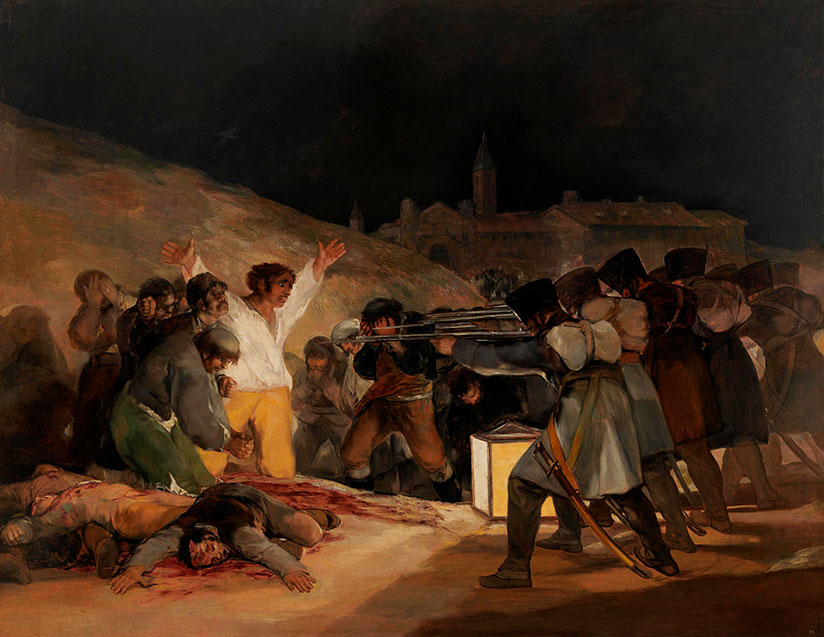
You’ll find over 100 works by Francisco de Goya at the Prado Museum. Goya was court painter to Carlos IV, but it is not the royal paintings for which he is best known. Most notable are El dos de mayo (May 2) and El tres de mayo (May 3), which depict the anti-French uprising of 1808.
El dos de mayo shows a moment of victory for the Spanish civilians. El tres de Mayo is a depiction of how Napoleon’s soldiers slaughtered hundreds of Spaniards in retaliation.
Goya’s Las Pinturas Negras (the black paintings) are also fascinating. They consist of a series of 14 paintings that depict a grim vision of different characters with distorted, animalistic expressions.
Goya created the paintings in his house La Quinta del Sordo (The House of the Deaf) outside Madrid. The paintings were found after his death, and the story behind their creation is unclear.
The nightmarish paintings are unique and make a deep impression. Among the most famous is Saturno devorando a su hijo (Saturn devouring his son). It depicts a naked, wide-eyed giant with a small, bloody body in his mouth.
La Romería de San Isidro (Pilgrimage to Saint Isidro), depicts a group of lost souls, divided by social rank, with severely contorted faces.
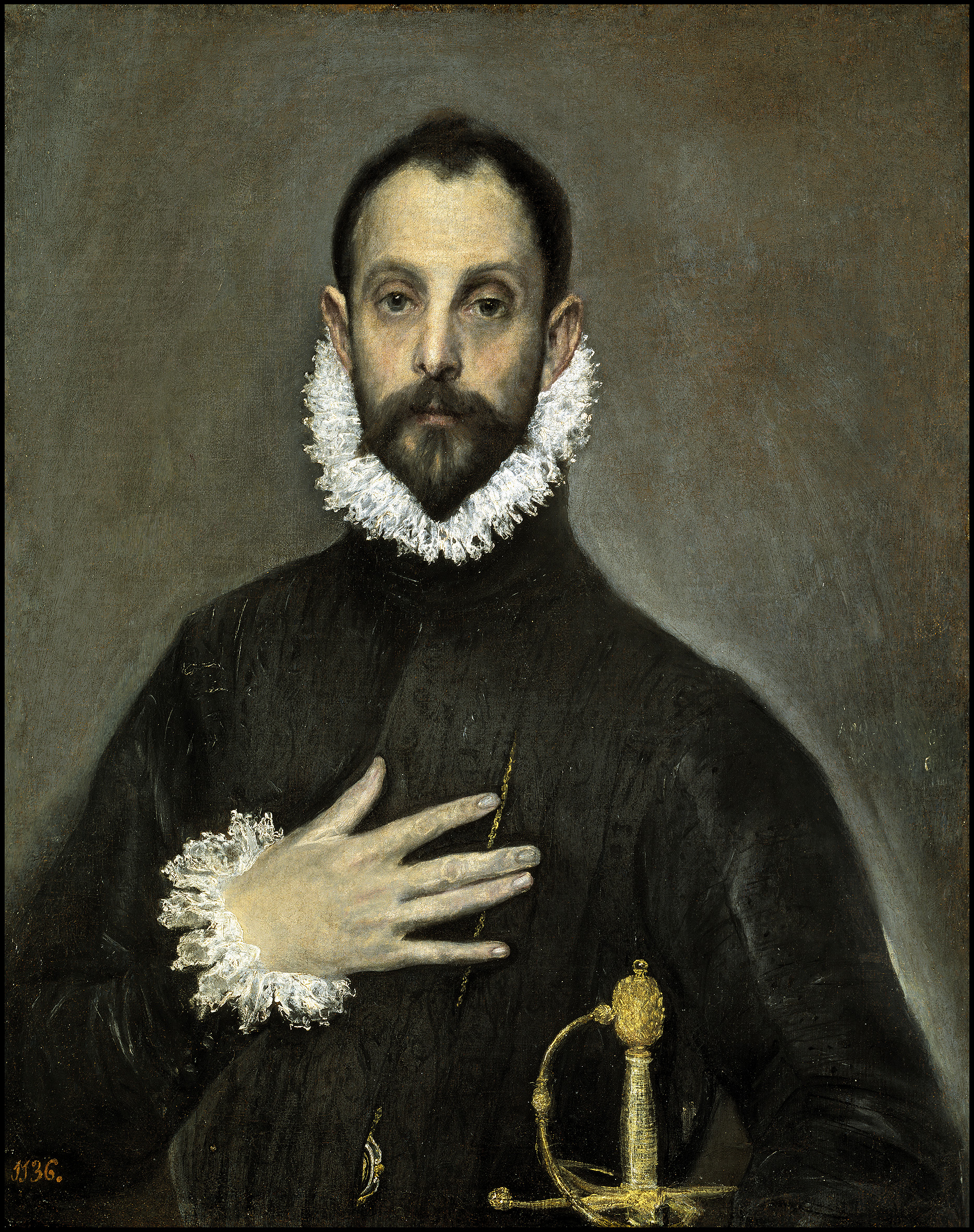
Photo: © Museo Nacional del Prado
El Greco’s noble lord
Greek-born Domenikos Theotokopoulos lived most of his life in Toledo. The nickname – El Greco (The Greek) – refers to his origins.
El Greco is considered the Prado Museum’s best Spanish Renaissance painter. Caballero de la mano en el pecho (Nobleman with his hand on his chest) is one of the world’s most famous portraits.
El Greco portrays an unknown Christian man, whose noble origins are nevertheless evident in his clothes and elegant appearance. The raised hand and sword show signs of honor. At the same time, it is a promise to defend God’s word. His gaze is interpreted by many as an expression that he wants to make a covenant with the viewer.
The Prado Museum has around 40 works by El Greco. They include another major work, La Trinidad (The Trinity ), as well as the famous La Adoración de los pastores (Adoration of the Shepherds).
A few Flemish and Italian highlights
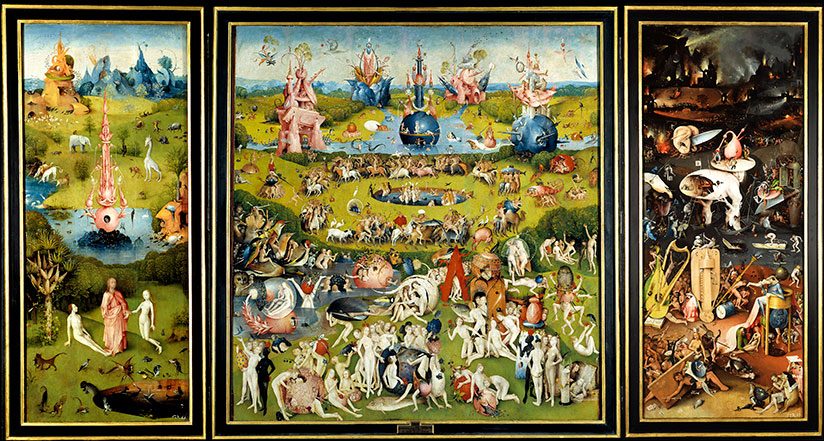
In the Prado Museum’s collection of non-Spanish works, don’t miss the well-known El Jardín de las Delicias (The Garden of Delights) by Dutch Hieronymus Bosch. The image is full of symbolism, for which several people have tried, in vain, to find unambiguous explanations.
The beautiful, complex picture consists of three panels with three scenes – paradise, hell and life with all its pleasures, pleasures and sins. When the picture is closed, the creation story appears.
Also interesting – and eerie – is Pieter Bruegel’s El triunfo de la Muerte (The Triumph of Death). Also visit Peter Paul Rubens’ Las tres Gracias (The Three Graces) and Raphael’s simple and beautiful portrait El Cardenal (The Cardinal).
Rest your feet in the café and shop for art souvenirs
Take a break from the packed halls and visit Café Prado, where you can refuel with coffee and cake or beer, water and a light lunch. In summer, you can drink coffee outside at Terazza Café Prado, located by Puerta de los Jerónimos.
The Prado Museum also has an excellent shop where you can buy art books, reproductions on paper or canvas (with or without frame), music, films, t-shirts, jewellery and designer items for the home.
Arrive early and buy your Prado ticket in advance
The Prado Museum has several entrances, but you must buy a ticket at the Puerta de Goya entrance. There is often a long queue, so I always buy my ticket online. Buy a ticket for the Prado Museum (promotional link).
At the entrance, you can get a nice overview of the museum’s many rooms and the location of the museum’s masterpieces.
The best time to visit is when the museum opens. The museum is free at certain times, but expect huge crowds at both the entrance and around the main works.
In addition to the impressive permanent collection, the Prado Museum has changing exhibitions. Check the website for current exhibitions.
Museo Nacional del Prado
Paseo del Prado
More travel tips for Madrid
Find tips for more experiences in Madrid in the guides to alternative art experiences in Madrid, the guide to Madrid for first-time visitors, the guide to different experiences in Madrid and the guide to Madrid’s best tapas bars.