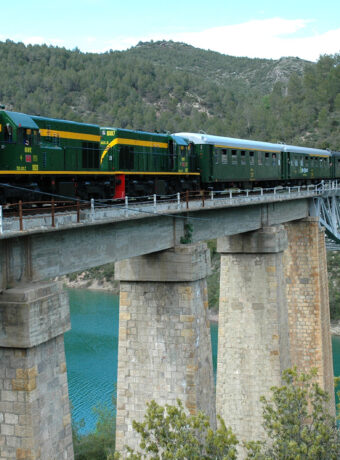
A trip on the Spanish luxury train is a slow-travel experience filled with pampering in 1920s-era train cars, as the Galician and Asturian landscapes glide by. Along the way, there are stops in culturally rich and charming towns.
Travel Disclosure: Hannes’s trip to Spain and his stay were funded by the Spanish National Tourist Office and RENFE. These organizations had no influence on the content of this article.
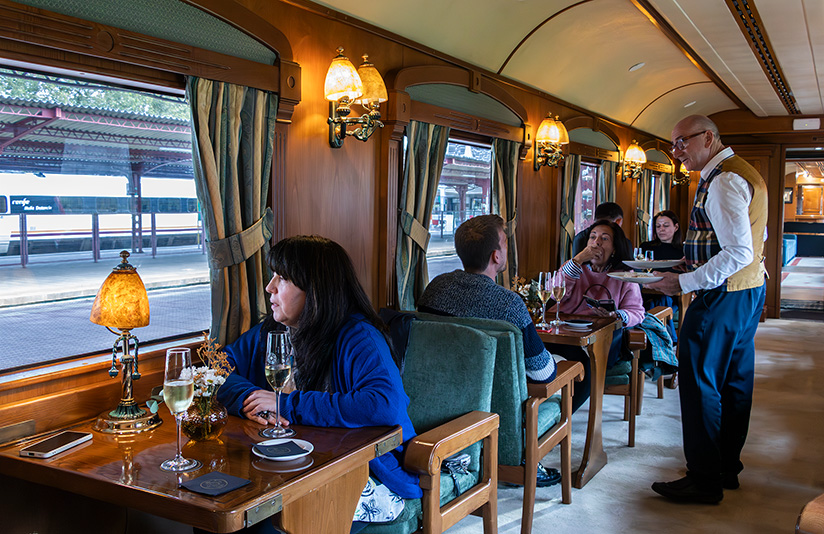
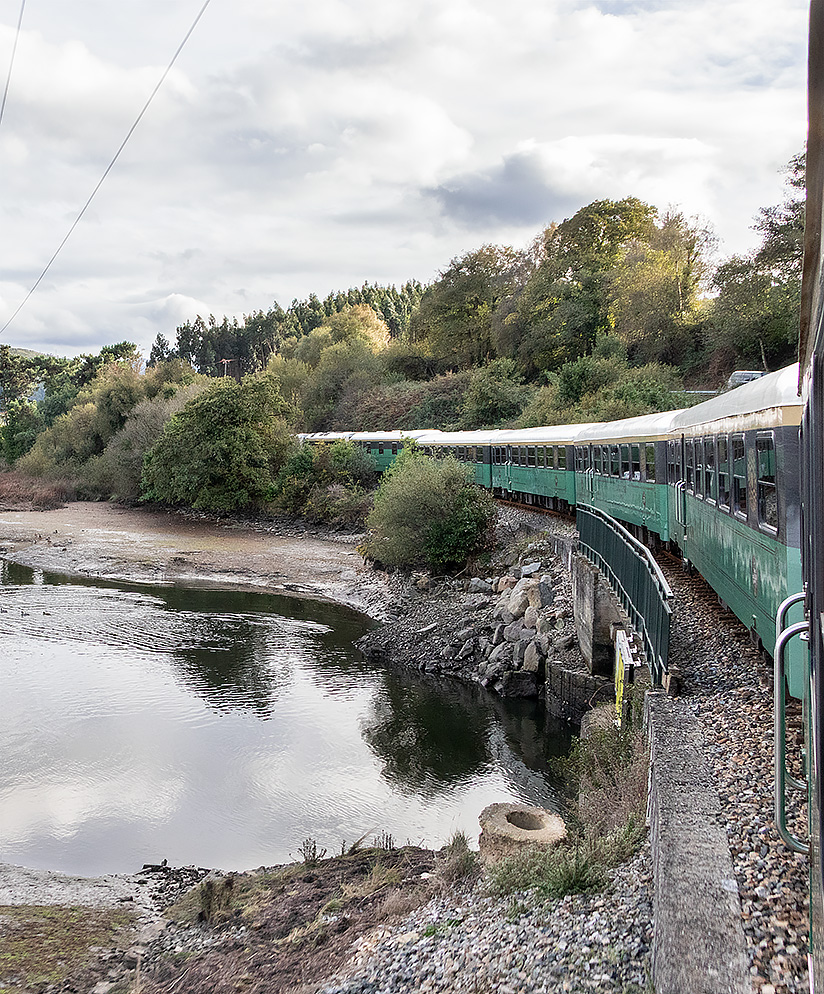
The green vintage train chugs along from Ferrol Station in Galicia, while the cava swirls in our glasses. The train attendants, dressed in blue pants, white shirts, and checkered vests, have joined us for a welcome toast in the train’s lounge car.
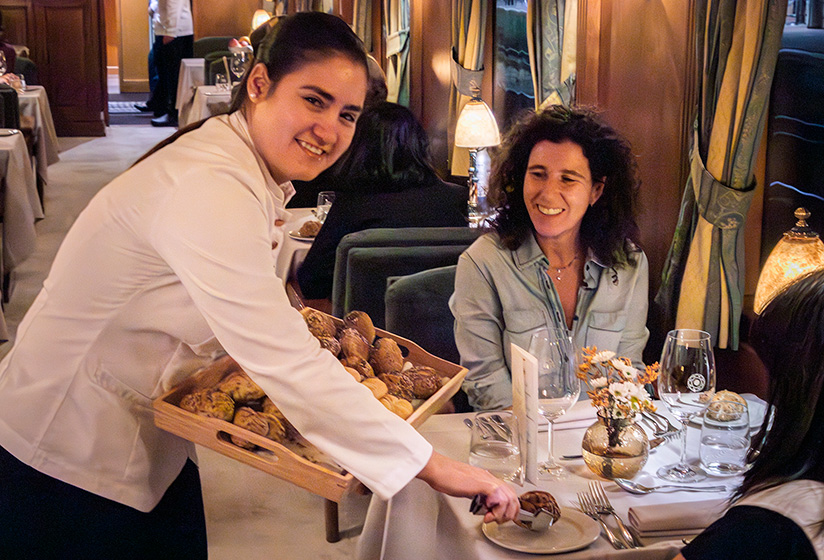
The car is lined with wood paneling and features wall sconces. The solid wooden tables, with small table lamps, are bolted down so that the glasses won’t tip over as the train winds its way along at 50–60 kilometers per hour.
 I’ve checked in at the Costa Verde Express, a luxury hotel on rails, where I’ll be spending the next three days and two nights as the train heads toward Oviedo, the capital of Asturias.
“The Costa Verde Express has been in service since 2020, following the modernization of the railcars from the El Transcantábrico route, which opened in 1983. The historic train, built in 1927, is 224 meters long. It has 13 cars and a locomotive. The cars include a lounge, a restaurant, sleeping cars, a kitchen, and a staff car,” says tour guide Joanna.
The Costa Verde Express usually runs between Santiago de Compostela and Bilbao, and the trip takes six days. However, I’ve chosen the mini version, which is a perfect long weekend trip running from Thursday to Saturday.
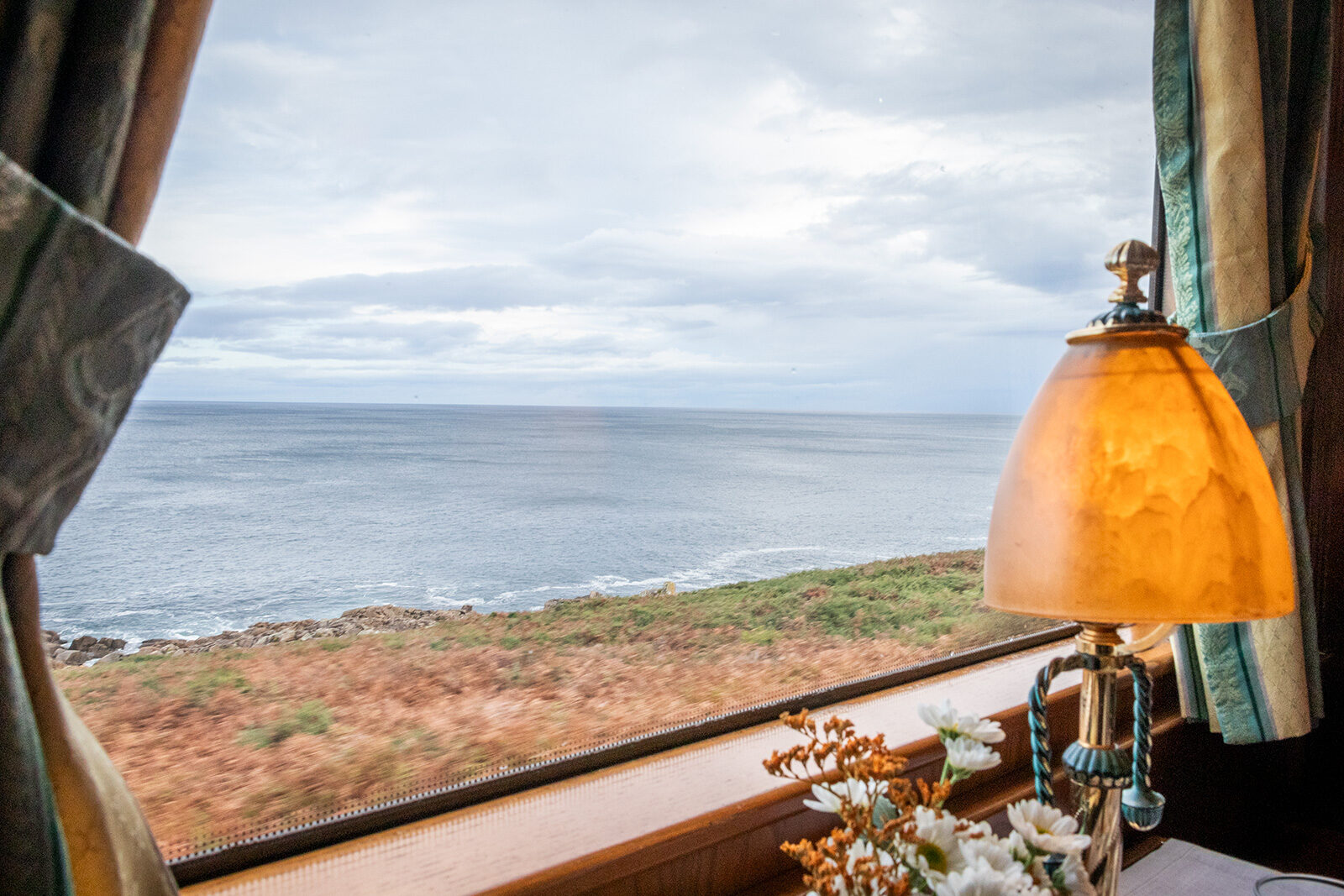
I have a first-class view from my window seat, where the table lamp casts a cozy glow, allowing me to enjoy the view as darkness slowly falls and my Spanish fellow passengers chat amiably in the background. The train whizzes through tunnels, over bridges, through vegetable gardens, fields with grazing cows and sheep, along the coast, and past mountains.
The coasts of Galicia and Asturias are lush, green, and very picturesque, so I’m enjoying the fact that, during the three days the trip lasts, I can take it all in at a leisurely pace.
 Daily guided tours with dedicated staff
The trip began in the pilgrimage city of Santiago de Compostela, where we checked into Spain’s oldest hotel, the beautiful parador, Hostal de los Reyes Católicos. There, we were welcomed by our tour guides, Joanna Wojcik and Carmen Alonzo Puente, who accompanied us throughout the entire trip.
Santiago de Compostela is a major transportation hub with both a high-speed train station and an airport. This makes it easy for all participants to get there, no matter where in the world they’re coming from.
After checking in, we were given a guided tour of Santiago de Compostela, which ended with lunch at the Parador. There are daily excursions that include lunch. We either take a tour bus or walk from the station and have lunch in the towns. I’ll come back to the excursions later in the daily schedule.
 After lunch, we’ll take a bus to Ferrol Station, where the train departs.
“The train runs on an old narrow-gauge railway that the miners in Bilbao once used to transport freight, and that railway ends in Ferrol,” Joanna explains.
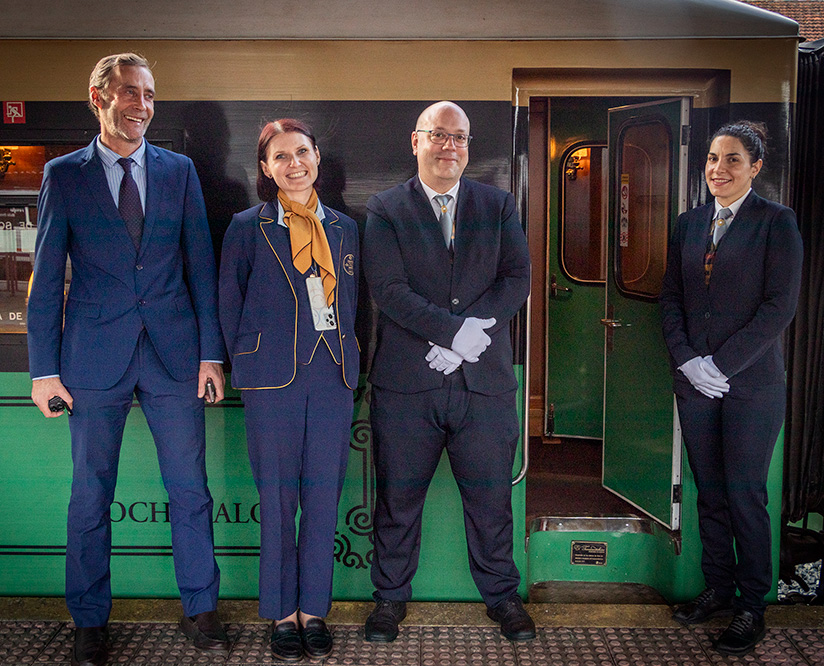
Some of the train staff are standing by the train, ready to welcome us. There are a total of 42 crew members on the Costa Verde Express, which can accommodate 48 passengers, and some of them have made sure my luggage is waiting for me in the suite. Since there are only 14 passengers on my trip, we are literally surrounded by service-minded staff.
 Gourmet Dinner with a Local Twist
The train has stopped in Viveiro, and after a visit to the town, dinner is ready to be served on the train. Every evening, the train stops at a station where passengers first go on an excursion. Dinner is then served while the train is stationary.
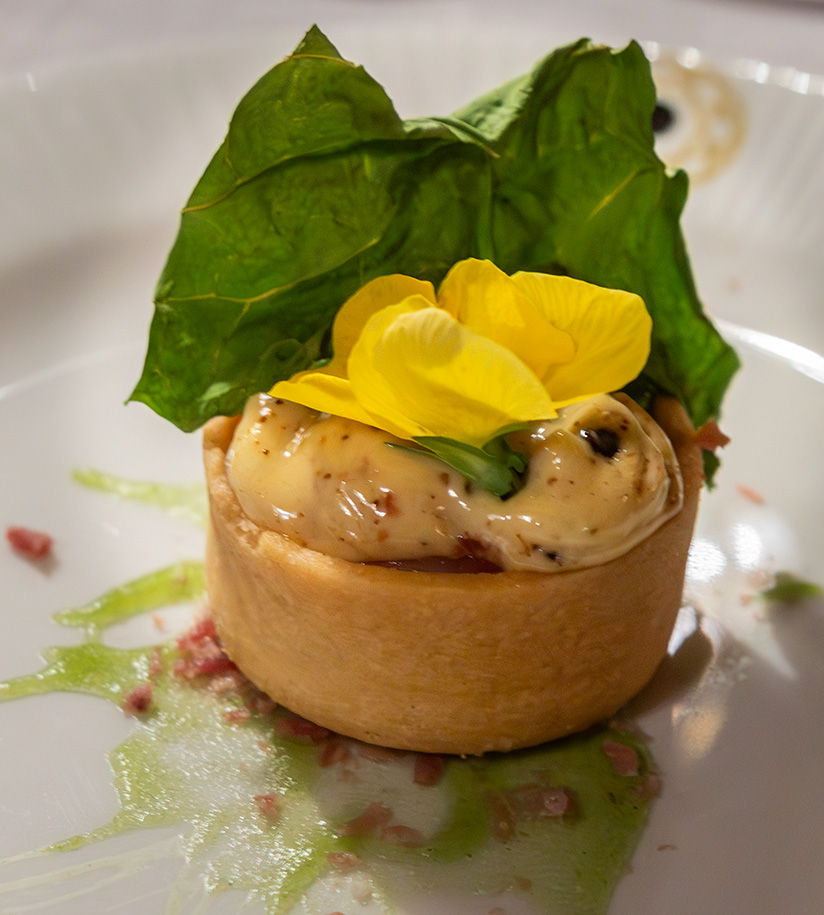
The waitstaff have switched to white jackets and black pants. Every evening, we’re served a four-course menu created by the train’s chefs, all of whom have backgrounds in Michelin-starred and gourmet restaurants. The menu shifts from Galician to Asturian cuisine as the train travels through different regions, with an emphasis on local ingredients and dishes.
During the trip, I enjoyed, among other things, plenty of fresh Galician seafood—such as shrimp, squid, and cod—as well as tender veal and beef from Asturias. We were also served Galician and Asturian cheeses. The northern coast of Spain is rich in apples, so naturally, an apple dessert was served one evening. To go with it, we were served some truly excellent local wines.
After dinner, we could enjoy a cup of coffee or a drink and chat with our fellow passengers in the lounge. On the last evening, the train staff provided drinks, group dancing, and entertainment.
 Suite with first-class service and wake-up calls
It’s time for me to retreat to my suite. The hallway in the sleeper car is narrow, so I have to squeeze my way through. When I run into a fellow passenger, he has to step into his suite while I pass by. There isn’t room for two people in the hallway at the same time.
The suite consists of a leather sofa, a small table, a wardrobe, and a bathroom with a shower. I received a complimentary package with toiletries, a bathrobe, and slippers so I can get ready for the night.
During dinner, the staff made sure to convert my sofa into a 120 cm wide bed. It now takes up most of the suite, but it’s cozy here. Although the suite has been modernized—including the addition of a bathroom—it’s elegantly decorated in a 1920s style, and I feel like a lady from a bygone era on a weekend getaway.
I sleep soundly in my bed while the train is stopped at the station. The train doesn’t run at night, precisely to ensure that passengers get a good night’s sleep.
At eight o’clock the next morning, I am awakened by the “Campanilla” (the morning bell). One of the train’s crew members walks through the sleeping cars with a large brass bell, ringing it to wake us up.
After a hot shower, I’m ready for the breakfast buffet, which is waiting for me in the dining car. Here you’ll find everything a hungry morning stomach could want: tortillas (Spanish omelets), ham, fruit, yogurt, croissants, freshly baked bread, cheeses, and local sausages. Plus, freshly brewed coffee, tea, and freshly squeezed juices.
While I enjoy breakfast, the train heads toward the next station, where we get off and get ready for the next day’s excursion. And while we’re on our day trip, the train continues on to the next station, where we’ll be picked up after the excursion. This is how the daily routine continues on the luxury train until we reach the final stop in Oviedo.
Although the train ride is short, it’s packed with exciting experiences in northern Spanish cities that often fly under the radar. Still, the train ride left me feeling as though I’d had plenty of time, and I was both rested and relaxed when I got off the train. It’s a trip I’d love to take again when I need a little extra pampering.
Day Trips on the Costa Verde Express
 Day 1: Santiago de Compostela and Viveiro
A few pilgrims have reached the final destination of their journey and are taking a well-deserved rest in Santiago de Compostela’s main square, Plaza del Obradoiro, where we meet up with our guide, Manuel.
For centuries, pilgrims have ended their journey along the famous Way of St. James at the city’s cathedral, which houses the relics of St. James. Santiago’s cathedral covers over 8,000 m² and has been expanded several times. As a result, it features a variety of architectural styles, including Romanesque, Plateresque, and Neoclassical. The square is also surrounded by the Bishop’s Palace and the Parador de los Reyes Católicos hotel. After the tour, we’ll have lunch in the hotel’s beautiful cellar.
First, we’ll take a walk through the narrow pedestrian streets around the cathedral. Here you’ll find beautiful squares, plenty of cafés, and souvenir shops in the capital of Galicia, which is home to about 95,000 residents, a large portion of whom are students. We’ll also visit the tranquil courtyard of the San Martín Pinario Monastery, the city’s second-largest religious monument.
 Viveiro’s Old Town and Easter Celebrations
The train stops for the night in the Galician town of Viveiro, and before dinner we’ll visit the old town with our local guide, Maria. We’ll meet her at the city gate, Carlos V, which is one of the few remaining sections of Viveiro’s old city wall.
Viveiro’s historic center is full of charming streets and squares and serves as a beautiful showcase for northern Spanish architecture. It is characterized by its wooden and wrought-iron balconies, which let in the sun in the cool north.
Viveiro’s annual Easter procession is famous. In front of the Church of San Francisco, a former monastery, stand three sculptures symbolizing the brotherhoods that participate in the Easter processions.
 Day 2: Playa de las Catedrales, Ribadero, and Luarca
The first stop is Playa de las Catedrales (Cathedral Beach), one of the most famous natural wonders on the north coast.
The beach is located 10 km from the town of Ribadeo and is called Augas Santas. It’s called the Beach of the Cathedrals because the cliffs have formed into pillars, vaults, and arches over 30 meters high that resemble soaring domes. When you walk along the beach, it feels like being in the nave of a cathedral.
Since it’s high tide on the day I visit the beach, that unfortunately means the arches aren’t visible. They can only be seen at low tide. Despite that, the beach is a beautiful place to visit. I really feel the power and grandeur of nature, and the views here are breathtaking.
We continue on to the nearby town of Castropol, where we’ll have lunch at the Casa Vincente restaurant while enjoying the view of the Eo River, which forms the natural border between Galicia and Asturias.
The Colonial Town of Ribadeo
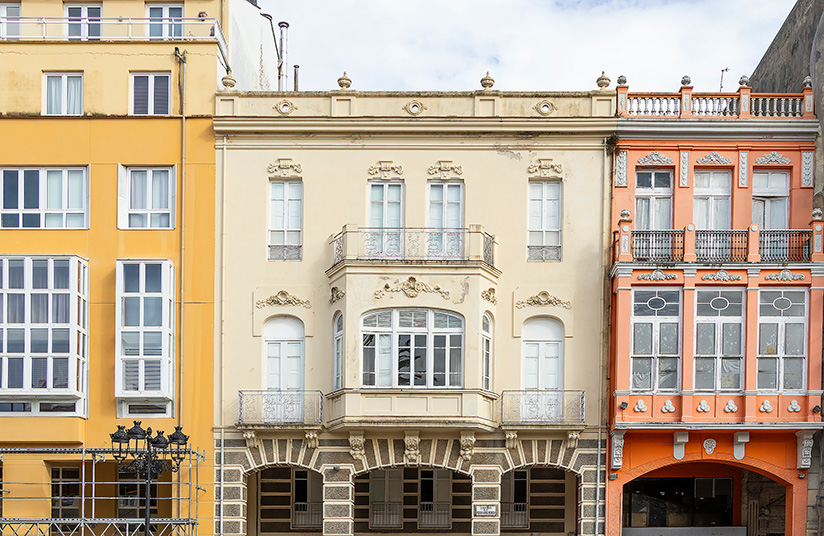
Ribadeo is located on the banks of the Eo River, in the Galician province of Lugo, which borders Asturias. It is quiet here in the town’s largest square, Plaza de España, when we arrive in the morning. The open square, with trees and lawns, is surrounded by colorful, stately houses.
Ribadeo is known for its colonial-style “Indianos” houses. They date from the late 19th to the early 20th century. It was here that some of the town’s emigrants (Indianos) returned from South America—especially Argentina—with wealth and a passion for building. In addition to building mansions for their own use, they modernized the entire town, embellished facades, and contributed to cultural life and the construction of schools and businesses.
Ribadeo’s small harbor (Puerto de Porcillán) has played an important role in the town’s history since Roman times, and it was one of the most important harbors on the Cantabrian coast in the 1800s. Today, it is home to yachts and recreational fishing boats, and the harbor is surrounded by several seafood restaurants that many pilgrims enjoy stopping by.
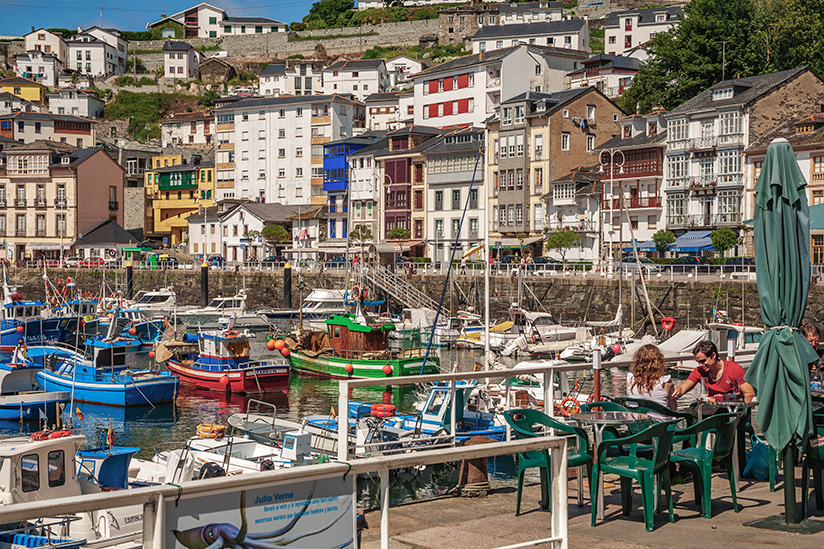
The White Fishing Village of Luarca
The train has traveled from Ribadeo to Luarca, and we have time for a panoramic tour of Luarca by bus before dinner on the train. Luarca is a whitewashed fishing village—the whitest town on the entire Asturian coast. The town is crossed by the Negro River and is known for its many bridges.
There are several lovely beaches here, and the highlight of our trip is the view of the oval-shaped fishing harbor and marina. It’s an incredibly beautiful sight to look down on the rocking fishing boats and the lights from the many seafood restaurants from the lookout point at the top of town as darkness falls.
We hop back on the train, which picks us up in the Asturian coastal town of Cudillero (which we don’t visit, however). From there, we travel to the final stop, Oviedo, where we’ll spend our last night.
 Day 3: Oviedo
After breakfast , we’ll wrap up with a guided tour of Oviedo, the capital of Asturias.
“Oviedo has 280,000 residents and has been an important stop for pilgrims long before Santiago de Compostela became famous,” Carmen explains as we stand in front of the city’s cathedral, San Salvador.
Pilgrims have been visiting the cathedral’s important collection of relics since the 800s. Among other items, it includes the Cross of Victory of Asturias from the Battle of Covadonga, which marked the beginning of the Reconquista. Spain’s oldest pilgrimage route, the Camino Primitivo, runs from Oviedo to Santiago.”
Oviedo is especially known for its beautiful streets and squares , with their colorful houses and hundreds of sculptures. Classic northern Spanish houses with wooden balconies and galleries mingle with impressive mansions in the city’s old center. Plaza Trascorrales is among the most beautiful. Here stands a famous bronze sculpture of a milkmaid with her donkeys, symbolizing the time when women from the countryside came to the city to sell milk, surrounded by a colorful array of buildings housing restaurants.
When the train ride ended, I decided to stay the night at the Soho Boutique in Oviedo so I would have a little more time to explore this beautiful city before flying home the next day.
About the trip on the Costa Verde Express
- The Costa Verde Express is a modernized, historic train from 1927 that runs along the green coast of northern Spain. The original (long) route from Santiago de Compostela to Bilbao takes six days.
- The mini version takes three days, starting in Santiago de Compostela and ending in Oviedo. The short route runs only a few times a year—primarily in October.
- My three-day trip cost 4,600 EUR. For two people, it costs 5,200 EUR in a shared suite.
- The price includes breakfast and gourmet dinners on the train, welcome drinks, toiletries, guided excursions, and lunch at restaurants in the cities you visit.
Learn more, find departure times, and buy a ticket on the Costa Verde Express website.